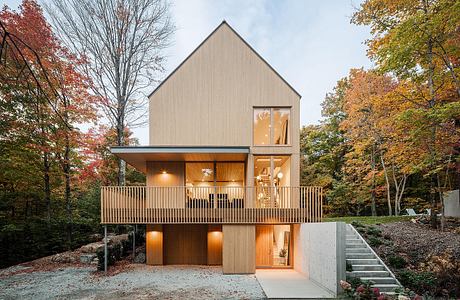
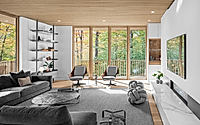
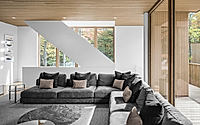
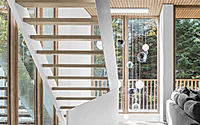
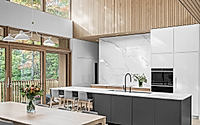
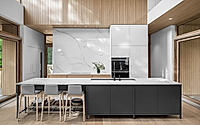
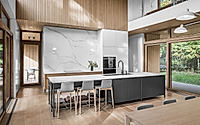
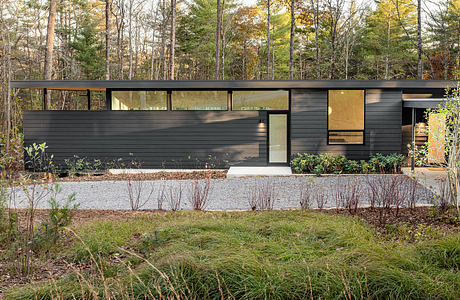
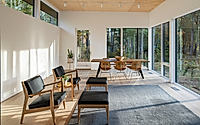
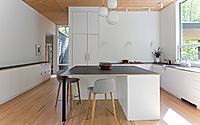
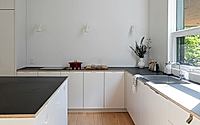
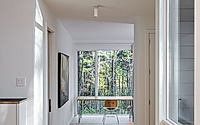
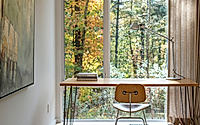
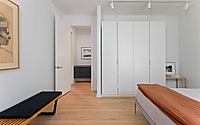
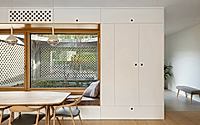
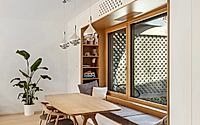
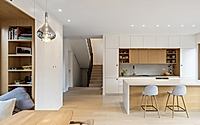
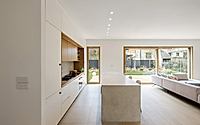
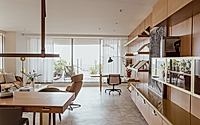
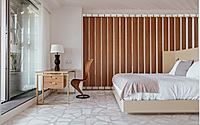
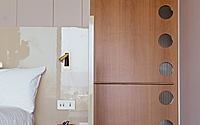
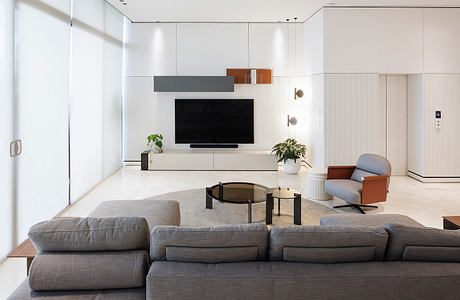
The Orford House, designed in 2022 by Thellend Fortin Architectes, is situated in Québec, Canada, next to the Parc national du Mont-Orford. This house is immersed in maple and fir forests, welcoming breathtaking views and natural light. The architectural style embodies a harmonious balance with its natural surroundings, showcasing a combination of modern and traditional elements through a dynamic interplay of vertical and horizontal lines.
Rusafova-Markulis architects designed a house titled Cabin House on a wooded suburban lot in Asheville, NC, USA. Completed in 2020, the retreat has a dark facade to help camouflage it within the forest, which the owner specifies will grow closer to the house in time. The design references traditional cabin interiors with stripped-back touches including exposed wooden frames, rough-sawn pine plywood ceilings, and warm pine floors.
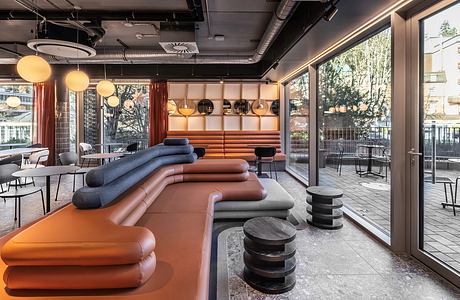
The Tribe Hotel in Baden-Baden, Germany, was designed by Studio Aisslinger to offer a balance of comfort, aesthetics, and functionality. Completed in 2023, the hotel features rooms with contrasting materials, bold colors, and elegant furniture.
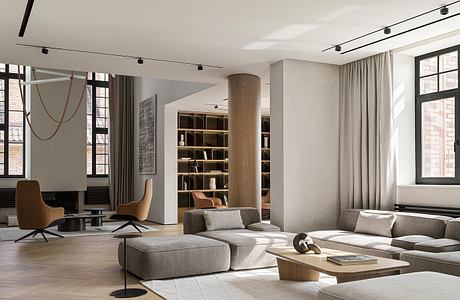
Belgium Project houses a weekend home designed by Sulina Design in 2024. Located in Belgium, it draws inspiration from a nearby lake and features natural, earthy tones and materials that echo the surrounding landscape. Originally a renovated property, the interior was reconfigured to meet the clients’ needs, including dedicating an entire floor to children and play.
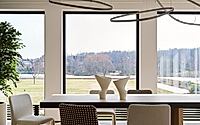
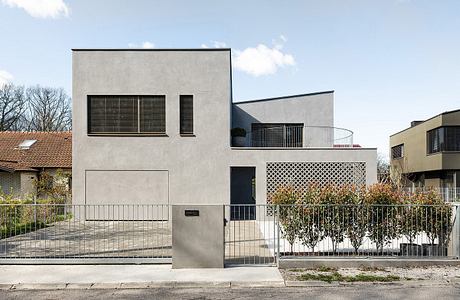
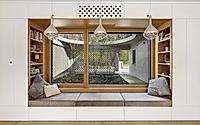
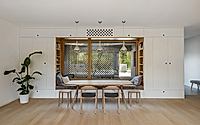
The Maksimir House by Bosnic + Dorotic in Zagreb, Croatia, designed in 2023, embodies a concept of interconnected segments forming a cohesive whole. Starting from a half-cube, the structure evolves through strategic subtractions, balancing internal and external spaces.
The design incorporates a central “cross” layout dividing service areas and living spaces, fostering harmony between interiors and outdoor courtyards. This introspective design, marked by elements like a filigree metal balcony, transforms occupants’ perceptions, ultimately revealing a newfound understanding of spatial unity.
Urban Cabane Antares is an apartment located in Barcelona, Spain. Designed by Georg Kayser and crafted in 2024, this property offers a sophisticated city lifestyle, blending streamlined design with practical details.
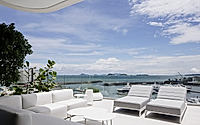
The GF House in Panama, designed by Mallol in 2019, is a stunning house that showcases the principle of cohesive materiality. Expansive windows and a contemporary façade create a beautiful balance of aesthetics, while a decor that features light colors harmonizes the overall design and elevates the perception of space.
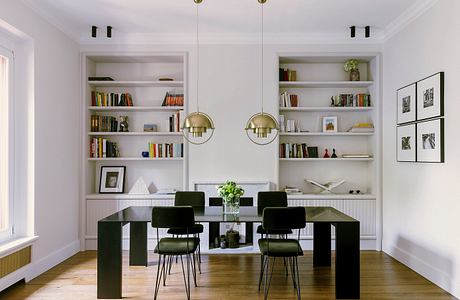
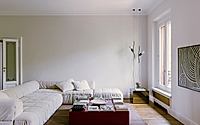
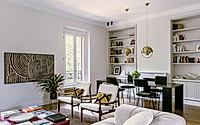
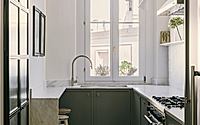
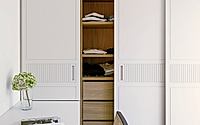
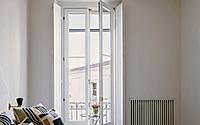
Casa MC, a superbly designed flat by Numero [10] architetti, stands gracefully in Milan, Italy. Finished in 2021, this remarkable endeavor showcases a smooth collaboration of contemporary architecture and timeless features, providing a seamless transition between the inside and outside, and fostering a hospitable atmosphere throughout the entire apartment.