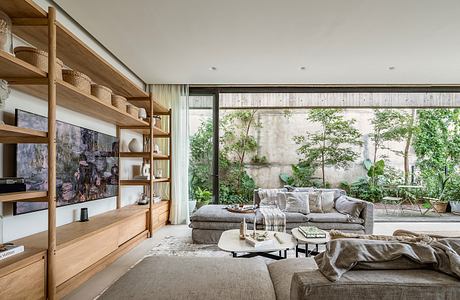
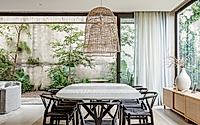
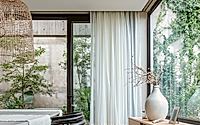
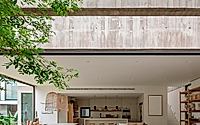
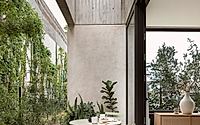
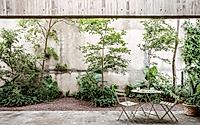
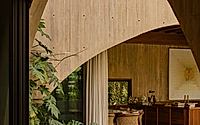
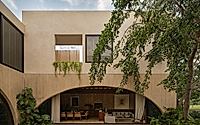
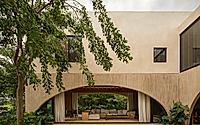
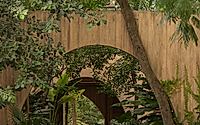
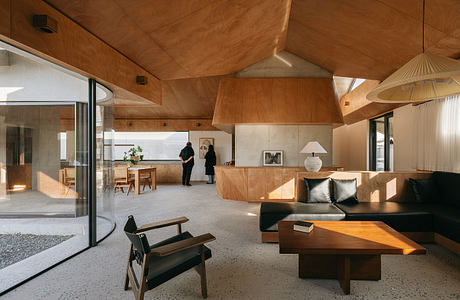
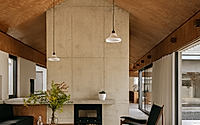
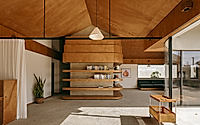
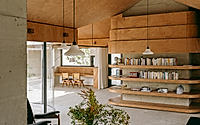
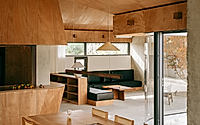
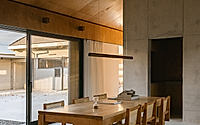
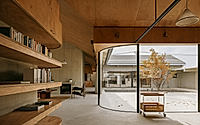
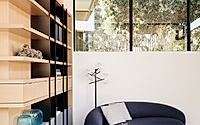
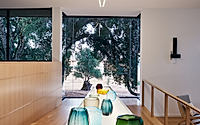
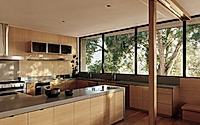
Entrelomas anchors a single-family house in Zapopan, Mexico, where V Taller answers dense urban conditions with an inward-looking concrete shell and garden-centered life. Behind the closed street façade, the project arranges social and private rooms around patios and a central courtyard, turning everyday routines for a young couple into a measured rhythm of light, shadow, and quiet air.
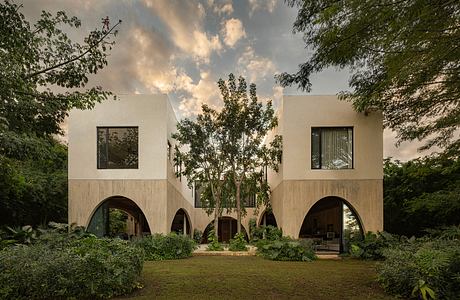
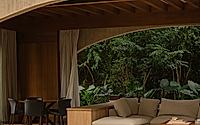
Casa Dragones anchors a contemporary house in Mérida, Mexico, with a grounded reading of climate and terrain by V Taller. The project reinterprets Yucatecan courtyard traditions through patios, arches, and planted voids that fold daily life into sequences of filtered light and shifting shade. Across its concrete base and lighter upper volumes, the house leans on local materials and open-air circulation to shape a calm, climate-responsive way of living.
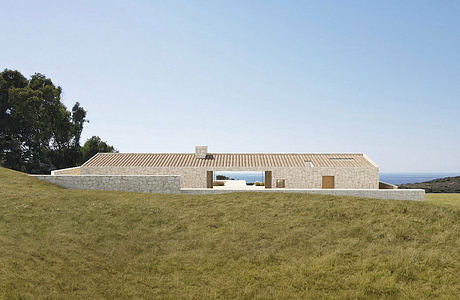
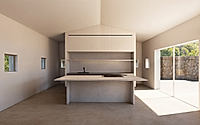
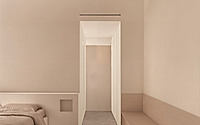
La Marinedda Residence sits on a sloping hillside in Sardinia, Italy, where Space4Architecture shapes a new coastal house from local stone and measured light. The single-story dwelling stretches low against the horizon, pairing an A-frame profile with a sheltered courtyard that answers the island’s wind, sun, and sea views. Calm interiors in pale finishes open directly to terraces and planted edges, giving the house a quietly contemporary yet regionally grounded presence.
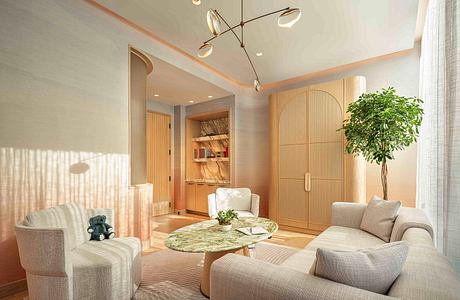
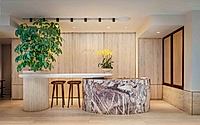
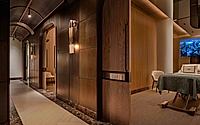
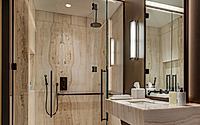
Atria Institute in New York transforms a medical facility in New York, NY, United States into a residential-style retreat by Rockwell Group. The project folds preventive care, advanced diagnostics, and hospitality into a layered interior where travertine, walnut, and gold leaf frame a calm experience. Patients move from lobby to lecture garden and private suites with a sense of rhythm rather than rush, supported by precise material choices and controlled light.
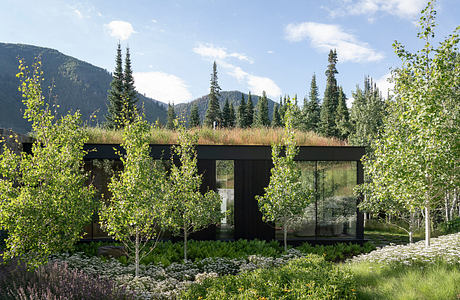
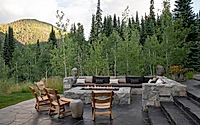
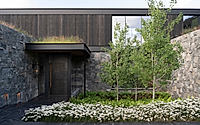
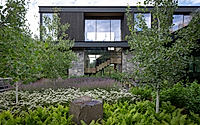
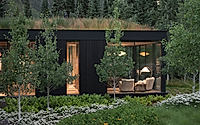
Hayden House settles into a high Colorado valley above Aspen, CO, United States, where forest and meadow meet at 8,500 feet. Design Workshop shapes the house as a year-round family retreat, building on regenerative strategies that protect most of the land while framing long views to distant peaks. Inside and out, modular pavilions, planted roofs, and restored ground plane tie domestic life to the seasons without overwhelming the fragile montane setting.
House of Cross stands in Beijing, China, as a new kind of rural house designed by chaoffice for three generations under one broad courtyard sky. The project rebuilds a family home and home office on a village plot, working within strict single-story regulations while rethinking how courtyards, roofs, and rooms connect daily life. Its cross-shaped plan sets up a quiet but precise geometry for shared routines and private retreats.
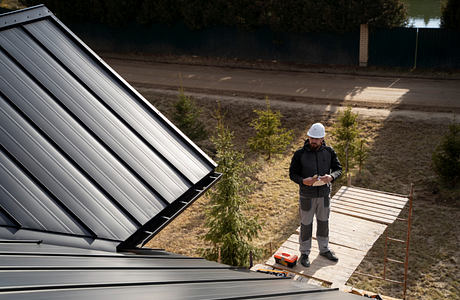
A gutter system’s primary function is to collect rainwater from the property’s roof and channel it safely away from the house. When functioning correctly, gutters protect siding, windows and doors and even landscaping from water damage. They also serve to safeguard your home’s foundation, as proper water diversion is the first line of defense against factors such as soil erosion and hydrostatic pressure. Without an efficient gutter system, your home becomes vulnerable to serious structural issues and costly repairs.
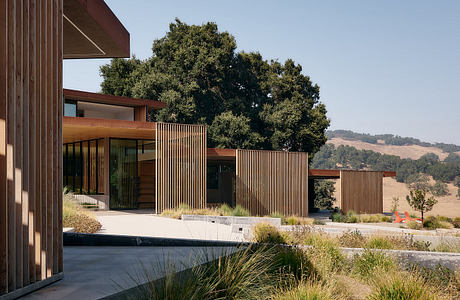
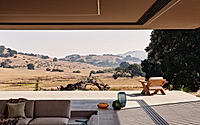
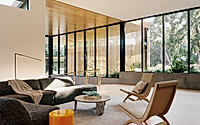
Meadow House sits within the secluded Santa Lucia Preserve near Carmel-by-the-Sea, CA, United States, shaped by Mark English Architects. The house answers a multigenerational Korean-American family’s brief for a Californian home with a distinctly Korean heart, set against strict conservation rules and a powerful meadow landscape. What results is a low, Z-shaped residence where indoor-outdoor living, measured light, and layered privacy give daily life a deliberate rhythm.