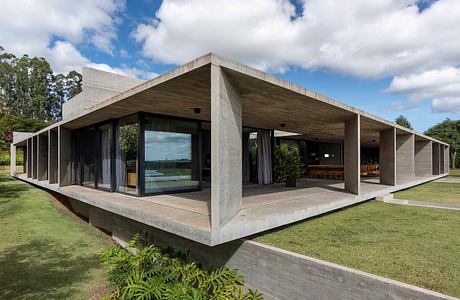
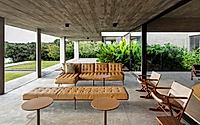
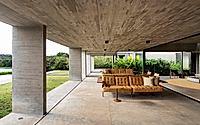
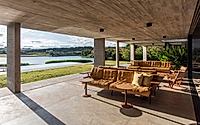
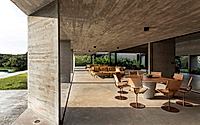
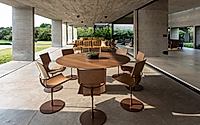
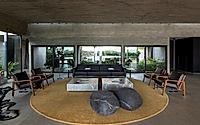
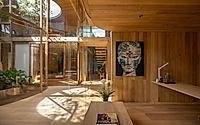
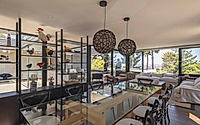
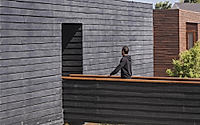
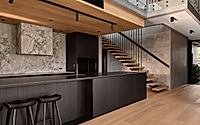
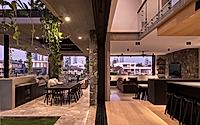
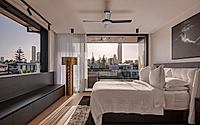
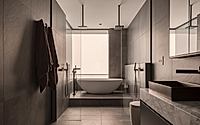
Paula House is a house in São Paulo, Brazil, designed by Luciano Kruk arquitectos. Set within a development on the city’s outskirts, it responds to a landscape of lagoon, golf course, and garden with a low, carefully organized plan. The owners’ interest in Brazilian art and culture helped shape a home intended to reflect daily life while keeping a clear architectural focus.
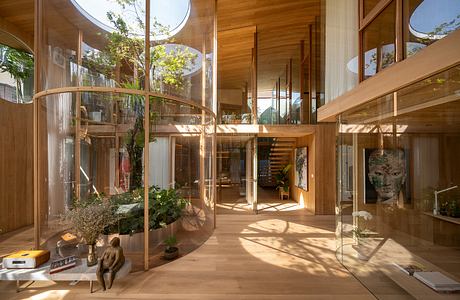
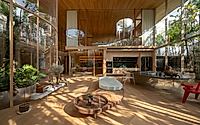
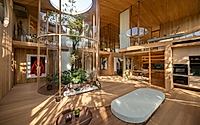
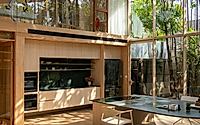
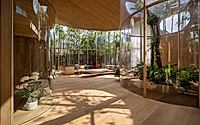
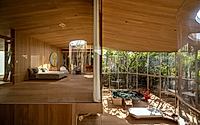
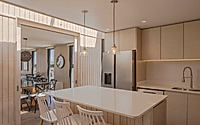
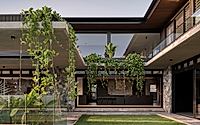
Terrarium House compresses the chaos of Ladprao, Bangkok, Thailand into a quiet inward world shaped by Unknown Surface Studio. Conceived as a private house wrapped around existing trees, the project turns a constrained, landlocked plot into a luminous courtyard dwelling. Within its stone-lined entry and glass-edged rooms, daily life gathers around a planted core where light, shade, and crafted timber carry most of the architectural weight.
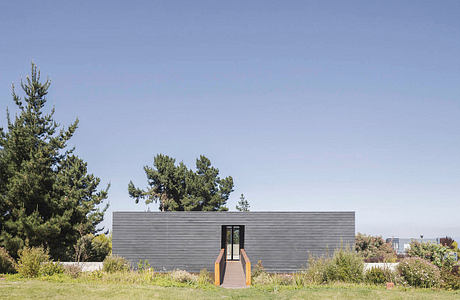
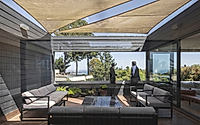
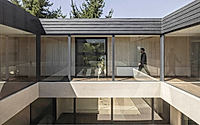
Claustro House anchors a hill town in Zapallar, Chile, with a clear, almost classical idea reworked for family life. Espiral Arquitectos centers the house on a cloistered courtyard, drawing movement inwards and light from above, while a two-level plan separates social rhythms from retreat. A private exterior and a porous core create a deliberate contrast that suits the coastal setting and a multigenerational routine.
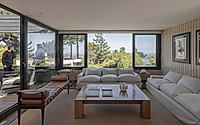
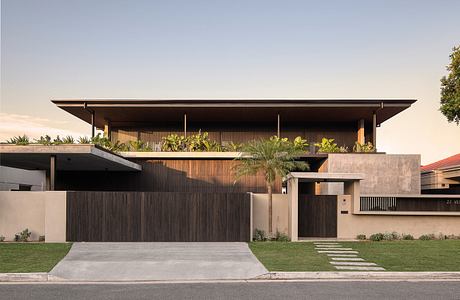
Vespa anchors a young family’s house on the Gold Coast, Australia, by Habitat Studio Architects. The subtropical retreat pairs a monolithic western facade with a hovering roof, deep overhangs, and lush planting that draw breezes and temper glare. Inside and out, rooms pivot around a generous courtyard, balancing outward living with refuge, while concrete, timber, and black detailing keep the palette grounded in durability and calm.