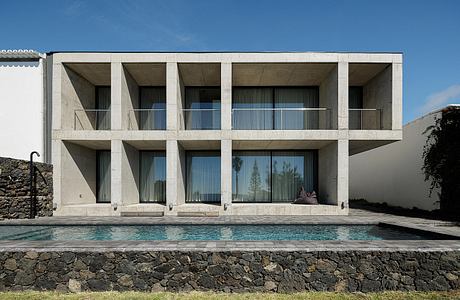
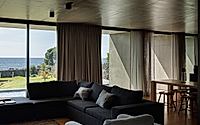
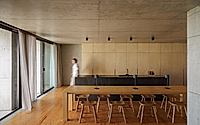
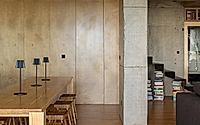
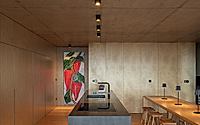
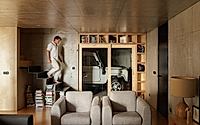
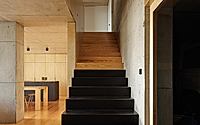
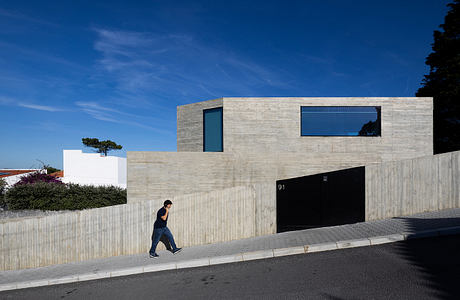
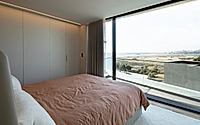
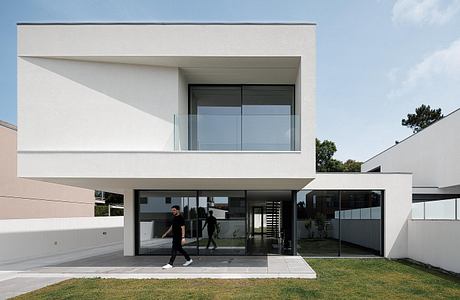
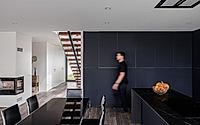
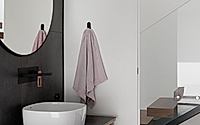
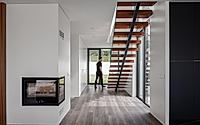
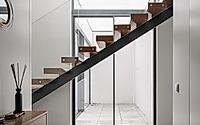
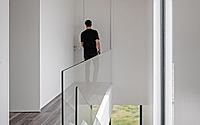
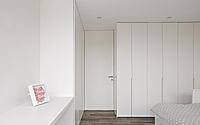
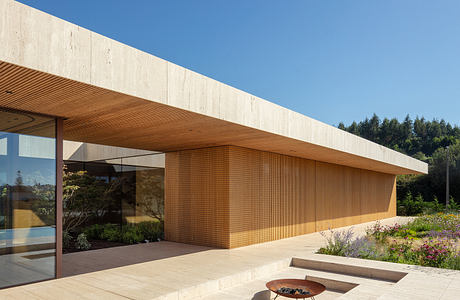
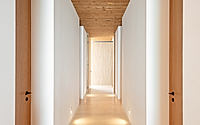
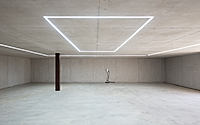
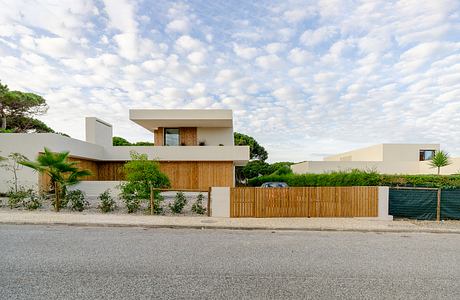
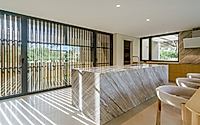
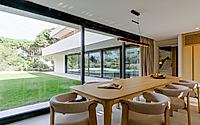
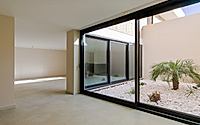
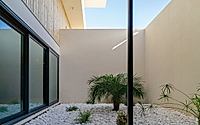
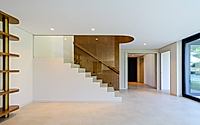
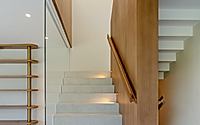
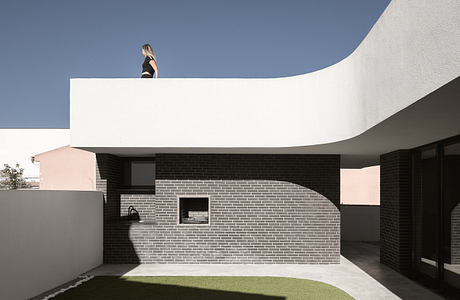
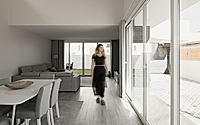
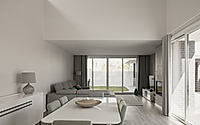
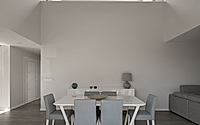
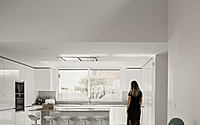
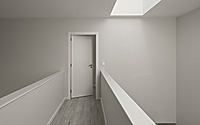
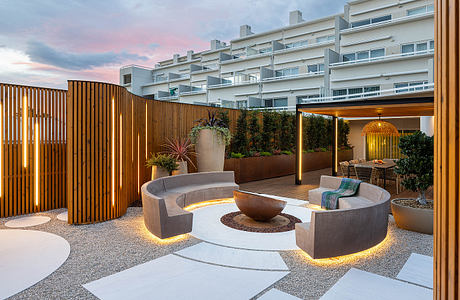
Casa da Rocha Quebrada sits on the southern coast of São Miguel in Lagoa, Portugal, a concrete house by SO Arquitetura & Design. The project belongs to the parents of one of the studio’s founders, so the brief strips back every nonessential move and pairs a mineral exterior with a warmer interior. Exposed concrete, sheltered openings, and a simple plan respond to the harsh Atlantic edge without losing a sense of quiet domestic life.
House_JA sets a concrete profile on the slopes of Vila Nova de Gaia, Portugal, by éOp-arquitectura e design. The three level house tracks the natural topography, stepping from a discreet street front to wide openings that catch the sea, the Douro estuary, the river, and Porto beyond. Inside, social rooms, bedrooms, and leisure areas align around those shifting views with a clear, landscape-led logic.
Casa dos Sobreiros II sits in Póvoa de Varzim, Portugal, as a rigorously ordered house by Urbanpolis that orients daily life around light and sequence. The home uses two primary axes, a courtyard heart, and a south-facing garden edge to choreograph how family, guests, and views move through the rooms. Continuous white surfaces and precise volumes underline a calm, contemporary character rooted in clarity rather than excess.
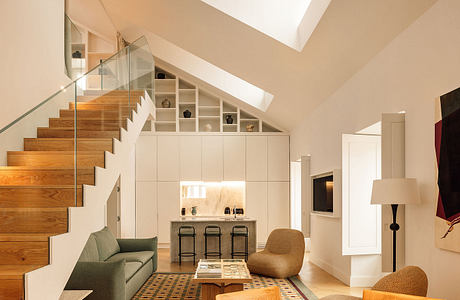
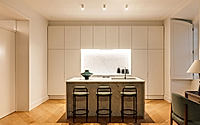
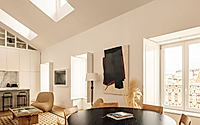
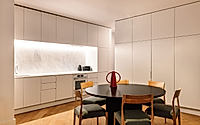
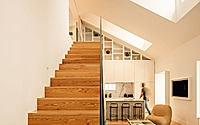
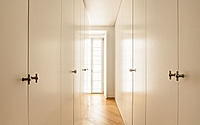
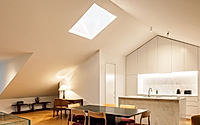
Prédio Fanqueiros 156 returns a rare surviving apartment building in Portugal to architectural clarity under the hand of João Tiago Aguiar. Behind its restored envelope, the project uncovers historic structure, Pombaline commercial depth, and calm domestic rooms where new interventions negotiate with centuries-old fabric. Every move stays measured, so memory, light, and proportion regain control of the everyday routines threaded through this rehabilitated urban dwelling.
AirOuse steps lightly onto the riverbank in Vila do Conde, Portugal, a low-slung house by Ernesto Pereira that leans into air, water, and light. Across its long plan, the project contrasts a fully glazed social wing with a more cloistered private realm, using warm timber and stone to hold the two together. The result is a calm domestic landscape where daylight, reflections, and easy movement define everyday life.
Casa Nau 64 settles beside the Óbidos Lagoon in Portugal, where [i]da arquitectos aligns the house with stone pines and wind off the water. The project organizes a single-family house into measured horizontal layers that answer sun, shelter, and garden in equal measure, turning a tight coastal plot into a quiet, outward-looking retreat.
Pinhal Conde da Cunha House stands in Seixal, Portugal, as a compact house by Estúdio AMATAM that turns a constrained plot into an articulated ensemble of volumes. The project pulls interior and exterior into a single gesture, using a continuous ribbon, a dark ceramic base, and a central void to choreograph how light, movement, and daily life unfold throughout the home.
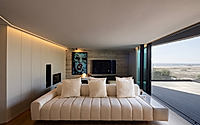
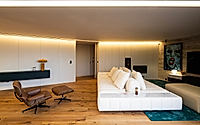
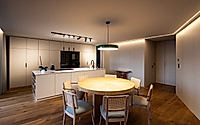
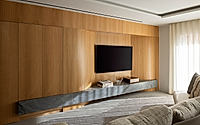
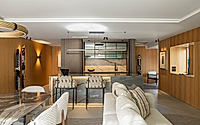
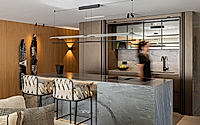
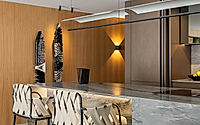
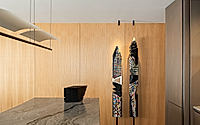
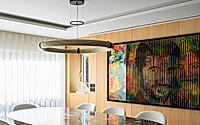
Cabedelo Apartment is a reimagined apartment in Viana do Castelo, Portugal, by Ricardo Azevedo Arquitecto. The project turns an anonymous seaside dwelling into a coherent arrangement of interior rooms and large exterior terraces, calibrated to daily rituals and social life. Across indoor volumes and generous outdoor platforms, it reframes a familiar housing model into a home oriented toward shared meals, leisure, and the long coastal horizon.