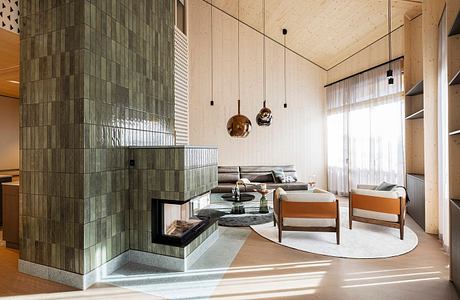
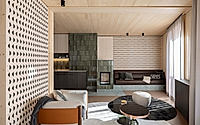
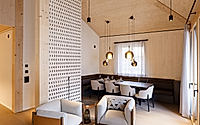
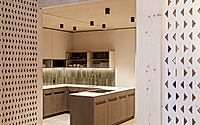
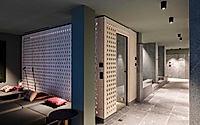
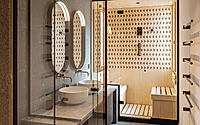
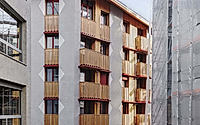
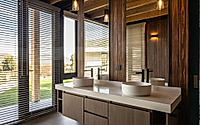
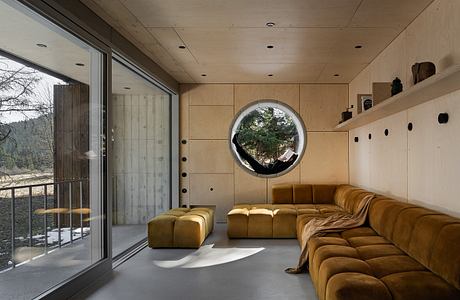
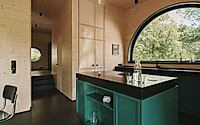
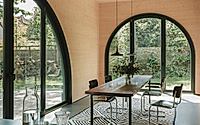
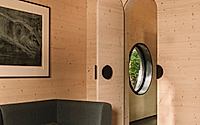
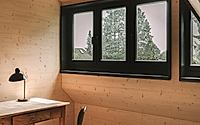
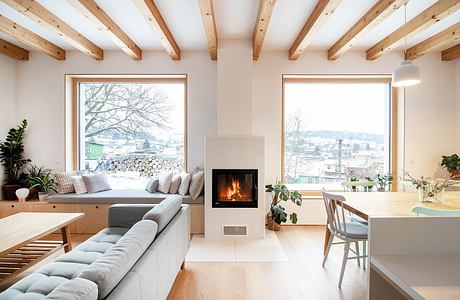
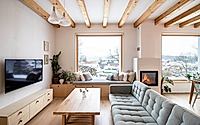
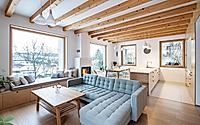
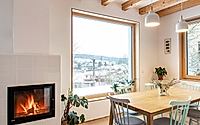
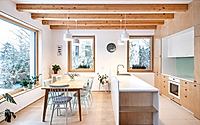
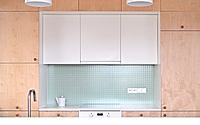
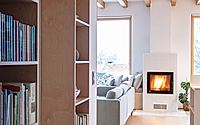
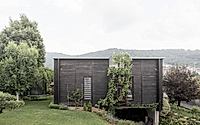
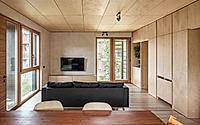
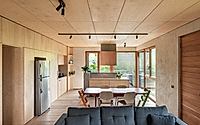
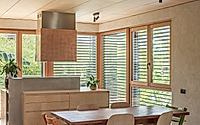
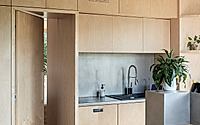
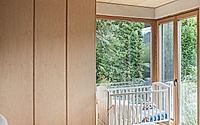
Apartment House AVA sits in the dense heart of Andermatt, Switzerland, where OOS shapes an alpine apartment house tuned to contemporary life. The project gathers high-end timber apartments and shared wellness rooms within a compact volume that nods to its village neighbors. Inside, pale wood, patterned screens, and a ceramic hearth set a calm mood while anchoring residents firmly in the mountain setting.
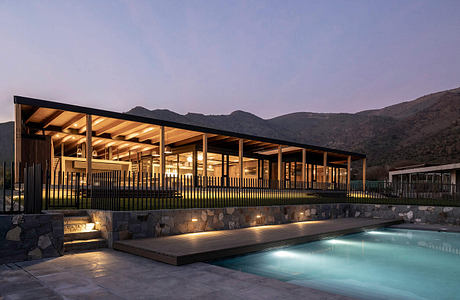
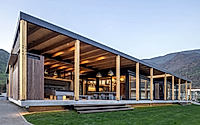
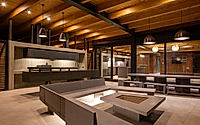
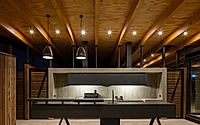
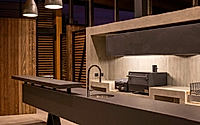
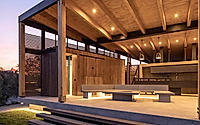
Chicureo House stretches low across its golf-course edge in Colina, Chile, a precise single-family house by Nicolas Loi Architects. The project organizes domestic life between a concrete plinth and a deep timber roof that temper the harsh sun while keeping living areas connected to the landscape. Generous interstitial zones pull daily routines outdoors, from barbecues to poolside evenings, so the house reads as a long porch facing the fairways.
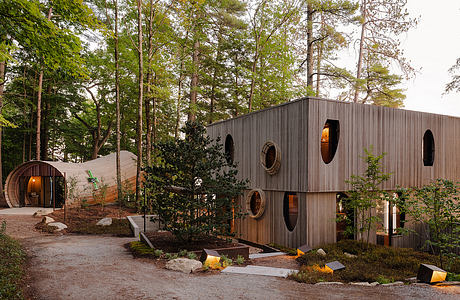
Tree House stands just off Squam Lake in Holderness, NH, United States, where Alchemy Architects compress a house into a precise, wooded footprint. The compact Passive House retreat draws on prefabricated construction and digitally crafted timber to shape a series of rooms that open wide to water, forest, and filtered northern light.
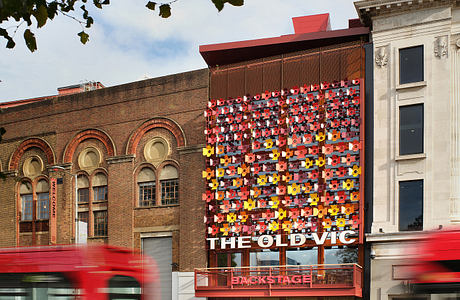
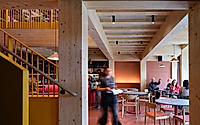
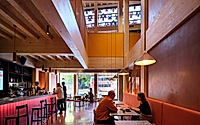
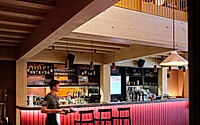
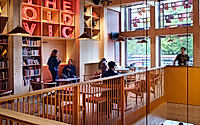
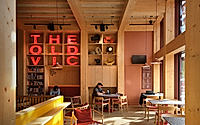
Backstage at The Old Vic expands the Grade II* listed theatre in London, United Kingdom, with a new charitable wing by Haworth Tompkins. The project folds a café, learning centre, rehearsal rooms and event venues into one extension, giving the institution a daily civic presence beyond performance nights. With community access, sustainability and accessibility embedded from the outset, the building reframes how a historic theatre can work for its neighbours as much as its artists.
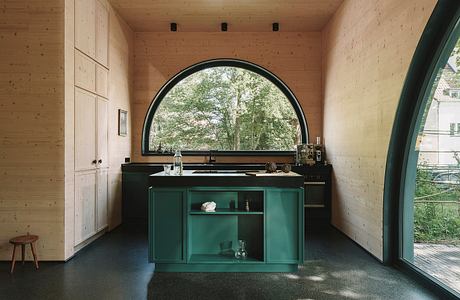
Borová Lada Cottage stands beyond the village in the Bohemian Forest, its late 19th-century frame renewed by Studio Plyš with a measured, material-forward hand. In Borová Lada, Czech Republic, the renovation sustains a cottage typology while opening it to light, garden, and shared use. The project reads as a calm rural house, not a showpiece, with interventions that respect memory and make room for new life.
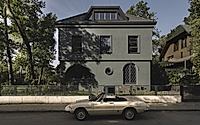
Greenkamp sits in Berlin, Germany, on one of the last open parcels within the historic Eichkamp estate. Designed by Atelier ST, the house answers a village-like context of trees, schools, and small homes with a compact form and precise material contrasts. It’s a family house with a quiet stance, tuned to the rhythms of the Grunewald and the legacy of early twentieth-century planning.
House Beneath the Cross Hill sits on a gentle slope in Rokycany, Czech Republic, a modest house by Hurá Studio for the architect’s parents. The timber-forward interior gathers daylight through large, square windows and a measured plan with shared rooms at grade. Calm and personal, the home favors craft over show and keeps a direct line to the landscape.
Casa Yakisugi sits in Sorisole, Italy, where the foothills of Bergamo shape its outlook and rhythm. Designed by Edoardo Milesi & Archos in 2022, the single-family house turns toward the garden and the mountain horizon rather than the surrounding residential fabric. Charred larch, fair-faced concrete, and a pale birch interior set a clear dialogue between sturdy enclosure and warm refuge.