Kilmory House Reimagines English Elegance for a Modern Gothic Retreat
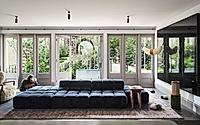
Kilmory House sets a dramatic scene inside a 1913 Arts and Crafts estate in Sydney, Australia, where designer Jillian Dinkel crafts an apartment devoted solely to entertaining. Reworking former bedrooms into a pilates studio, playroom, and art studio, she leans into English tradition with a modern gothic edge, creating a secondary home that treats staying in as an evening out.


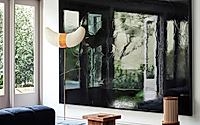
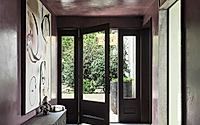
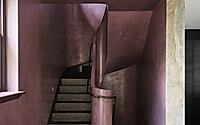
Soft evening light slips across the old Arts and Crafts detailing, catching carved timber and deep reveals before fading into darker, moodier corners. Guests arrive not to a family dwelling but to an apartment conceived entirely for dinner parties, late-night conversations, and lingering departures.
This secondary home sits within a 1913 estate in Sydney, reworked by interior designer Jillian Dinkel as an apartment dedicated to entertaining. The project keeps the building’s historic bones while reorganizing rooms around a clear social program: cook, dine, gather, and play. Every move is judged by how it performs on a busy night when the guest list is full and the lights burn low.
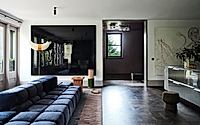
The brief is unapologetically specific, and that clarity shapes each decision. Traditional English references run through the home, filtered through a modern gothic lens that favors shadow, depth, and drama over nostalgia. Former bedrooms lose their domestic role and take on new lives as a pilates studio, a playroom, and an art studio, so the apartment becomes a kind of private club rather than a conventional residence.
Reworking The Floor Plan
The existing three-bedroom layout never suited a home used exclusively for entertaining, so the plan is loosened and reassembled around a commercial grade kitchen and grand dining room. Circulation now flows between zones that support different phases of an evening: preparation, arrival, dinner, and after-dinner wandering. Rooms that once held beds are repurposed for movement, games, and making art, shifting the rhythm from private retreat to shared experience. Walls, doors, and thresholds still respect the estate’s hierarchy yet now guide guests through a deliberate social sequence.
Kitchen As Performance
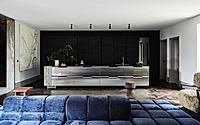
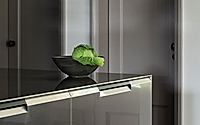
A commercial grade kitchen anchors the apartment, built not only for function but for spectacle when multiple courses roll out over the night. Equipment and layout support professional-level cooking, so hosts can cater larger gatherings without sacrificing pace or polish. The room works as a backstage engine during big events and a relaxed hub when a smaller group gathers around a bottle opened on a quiet Friday. Its presence signals that hospitality here is serious work and genuine pleasure.
Dining Room Drama
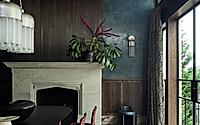
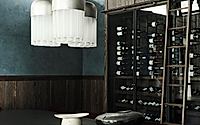
The grand dining room becomes the emotional center, borrowing from English tradition to frame long tables, layered lighting, and theatrical sightlines. Guests sit within the estate’s historic shell, yet the modern gothic tone gives dinners a charged, almost cinematic quality. Attention to proportion keeps the room from feeling overblown; gatherings can shrink to an intimate handful without losing warmth. Every surface, from wall treatment to table setting, supports conversation that stretches late into the night.
From Bedrooms To Studios
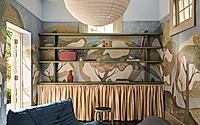
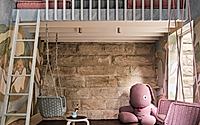
In a bold programmatic shift, the original bedrooms turn into a pilates studio, a playroom, and an art studio, each tied back to the idea of staying in. Daytime hours might hold movement sessions in the pilates room or messy creativity in the studio, setting up stories that spill into evening talk. The playroom gives guests and their families a place to loosen up away from the table, so the apartment serves multiple ages without losing its grown-up mood. These converted rooms make the home feel less like accommodation and more like a richly equipped host’s domain.
Powder Room As Destination
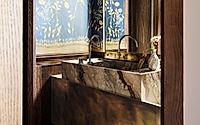
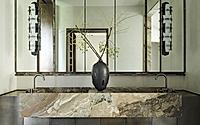
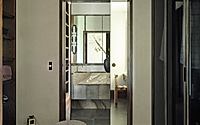
A wow-factor powder room is treated almost like a tiny venue, designed to rival the client’s favorite nightspots. Guests step away from the main rooms into an atmosphere charged with color, texture, and perhaps a hint of theatrical lighting. This small volume punctuates the evening, giving people a momentary reset and a story to recount back at the table. It turns a functional pause into part of the entertainment ritual.
By the time the last glass is cleared, the apartment has done its work, supporting every phase of the gathering without pushing itself forward. Historic walls hold the energy of the night while the reimagined plan quietly channels people from one moment to the next. In Kilmory House, staying in becomes a deliberate choice, not a compromise, played out inside a grand old estate tuned to modern rituals of company and conversation.
Photography by Dave Wheeler
Visit Jillian Dinkel