Vachnadziani Winery by Laboratory of Architecture #3
Vachnadziani Winery stands in the Alazani Valley of Vachnadziani, Georgia, where vineyards meet the distant line of the Caucasus Mountains. Designed by Laboratory of Architecture #3, the winery folds production, hospitality, and ritual into a single sculpted volume that reads more like an estate than a factory. Guests move from landscape to interior as if passing through a contemporary echo of Georgia’s long winemaking tradition.
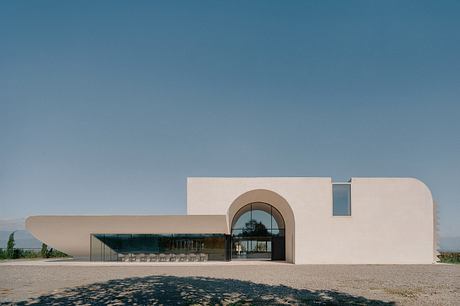
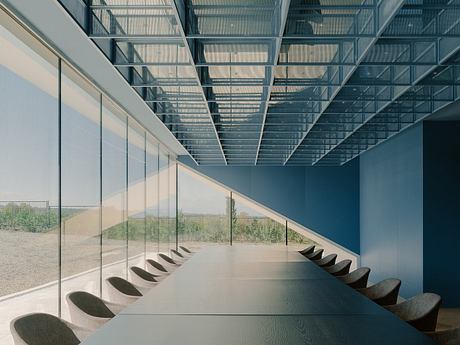
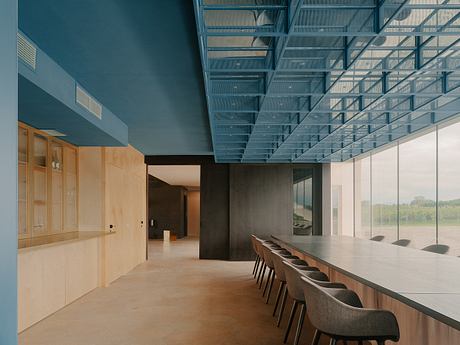
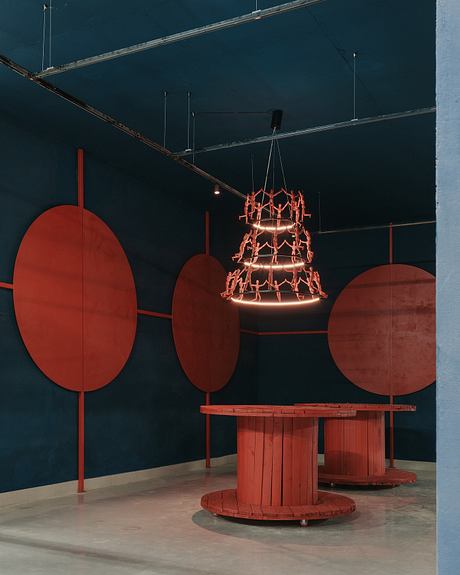
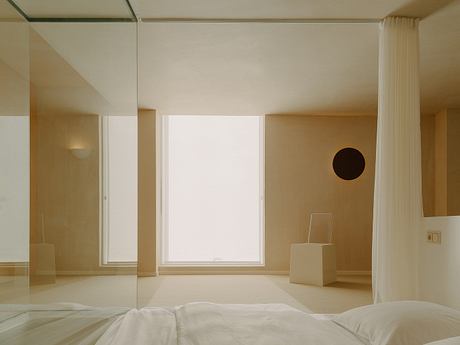
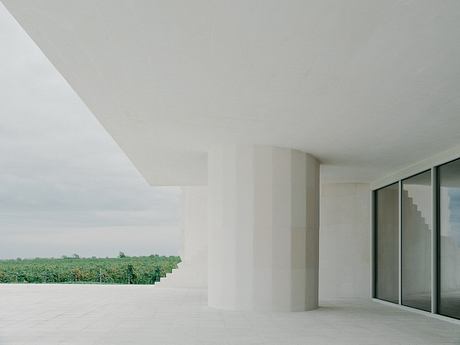
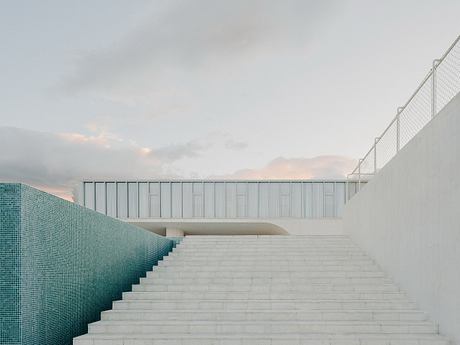
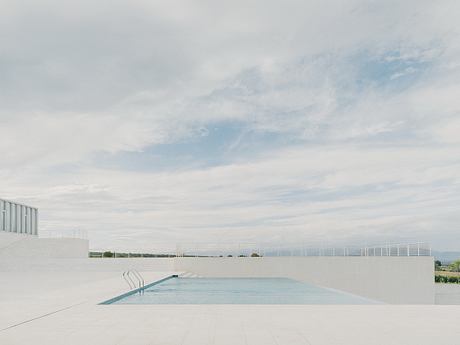
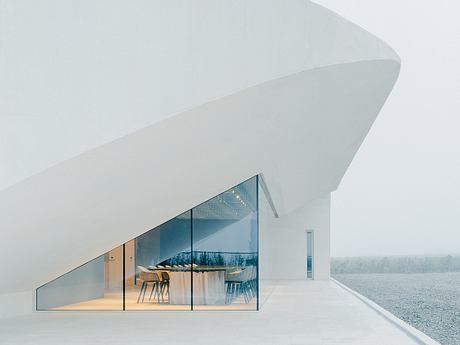
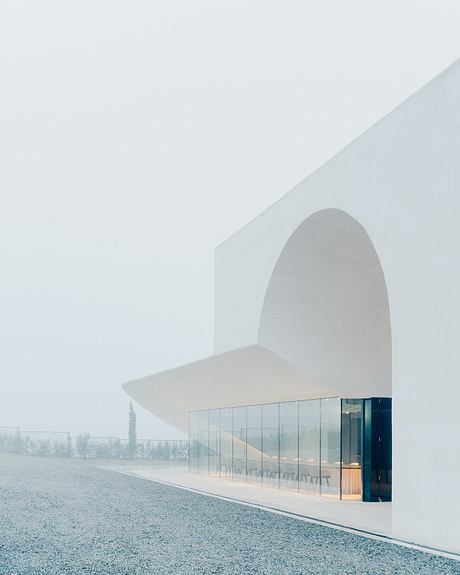
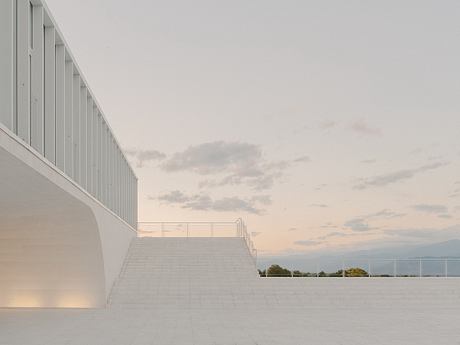
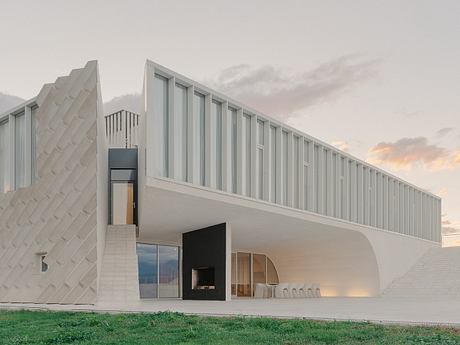
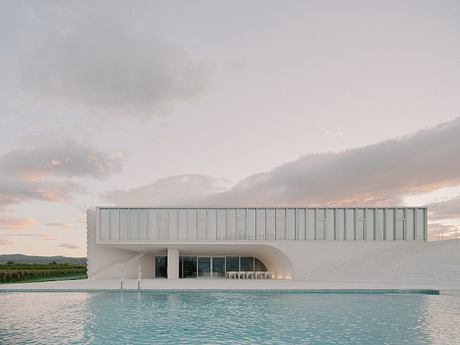
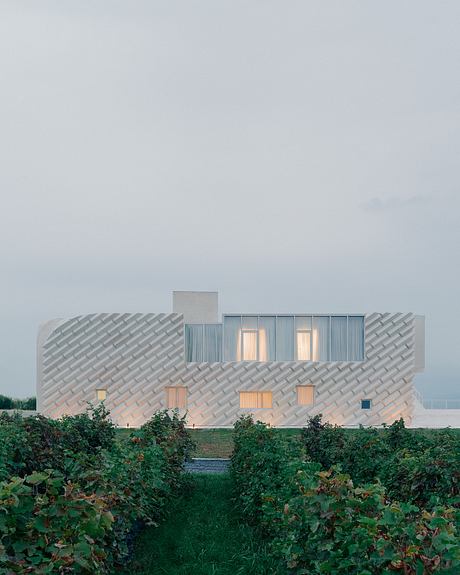
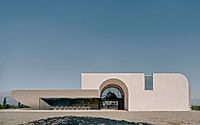
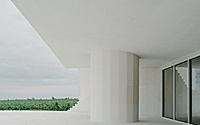
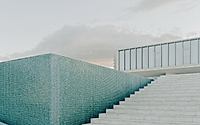
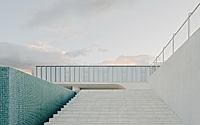
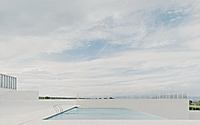
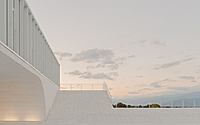
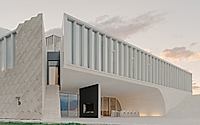
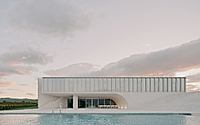
Approaching from the vineyards, the winery reads as a single carved body set against the Caucasus skyline. Shadows sink into deep openings, and light traces the monolithic edges as the building steps toward the water in front. One path cuts straight toward the north-facing facade, where a grand stair leads down into the vines.
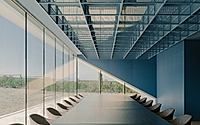
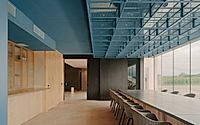
This is a winery with a compact hotel, reception, conference room, and restaurant, all gathered in Vachnadziani, Georgia under one sculptural roof. Laboratory of Architecture #3 treats winemaking here as both industry and ritual, translating medieval tectonics into contemporary volumes without turning the building into a literal historical replica. The project leans on form and material to hold that tension between sacred tradition and present-day hospitality.
Shaping The Monolith
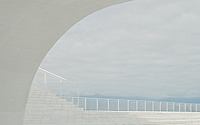
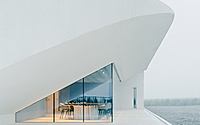
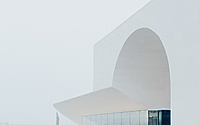
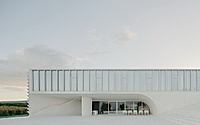
From a distance, the structure reads as if it were hewn from a single boulder. Closer in, sharp pauses in the massing break the silhouette, dividing each side into distinct architectural themes. Arched voids cut through these heavy volumes, so historical and modern constructive logics meet in the same frame without collapsing into pastiche. Strong horizontals anchor the building to the ground, while elevated segments and openings lift portions of it clear of the terrain.
The effect is a deliberate balance of weight and suspension. One moment the building feels firmly planted in the valley floor, the next it seems to hover above its reflection in the reservoir. Sculptural masses step and fold, keeping the exterior legible as a series of monolithic pieces rather than a single, mute block. Those moves make the winery read less like a factory complex and more like a domestic-scale estate that happens to house production.
Earth, Gloss, And Shadow
Material character drives the contrast. On one side, hand-sculpted walls hold a tactile surface, catching light in irregular strokes that reinforce the connection to soil and craft. Opposite that, glossy and cold planes cut into the composition and reflect sky, water, and vineyard rows as they shift through the day. This pairing of rough and polished finishes does not soften the mass; it sharpens it.
Dark gaps between volumes read as intentional silences in the composition. Those shadowed seams register as breaks where one architectural idea stops and another begins, keeping the building from becoming a single continuous shell. The contrast between earthbound texture and reflective skin also helps the structure recede at moments, letting the landscape and reservoir pull into the visual field.
Tectonics In Section
The production wing tucks into the slope, so the industrial core stays visually subdued. From the valley, the roofline and upper walls suggest a modest estate, while the main staircase drops down toward the vineyard and factory zone. That move preserves the ritual character above, where visitors linger, while below the working heart of the winery operates in partial concealment.
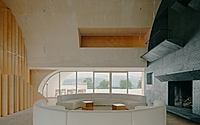
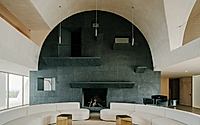
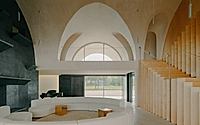
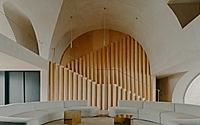
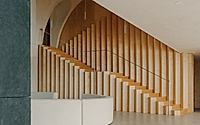
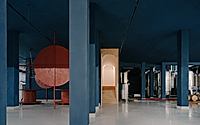
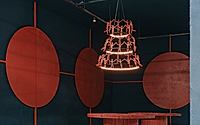
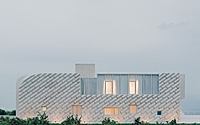
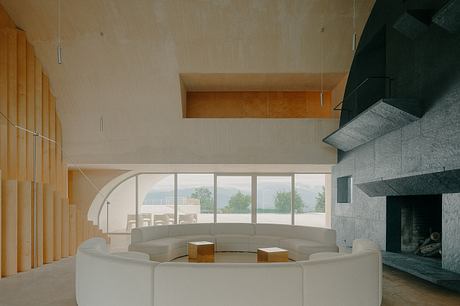
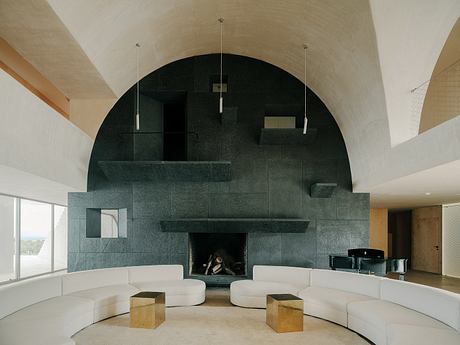
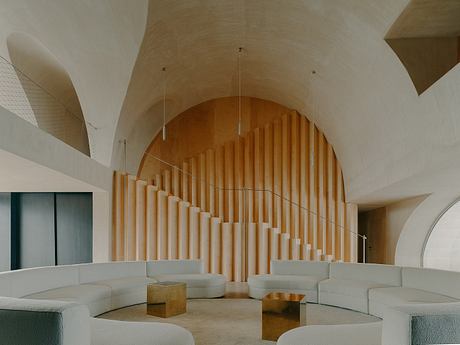
A double-height central hall organizes the interior. In spirit, this tall room recalls a medieval castle hall, anchored by a fireplace and over-seen by a stair with organ-like geometry. The stair’s fragmented, particle-like form echoes related motifs on the eastern facade, knitting interior and exterior tectonics together in section rather than only in elevation.
Monochrome Rooms And Ritual Color
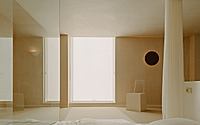
Inside, a monochrome palette sets a calm base. Wood and plaster share closely tuned textures, so surfaces shift subtly from one material to another instead of relying on strong color breaks. Small, controlled color inserts punctuate this quiet field, drawing from Georgian fresco tradition to establish a muted yet intentional chromatic layer. Those accents sit sparingly, so they read as moments of ritual focus rather than decoration.
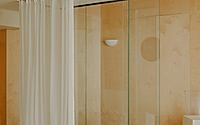
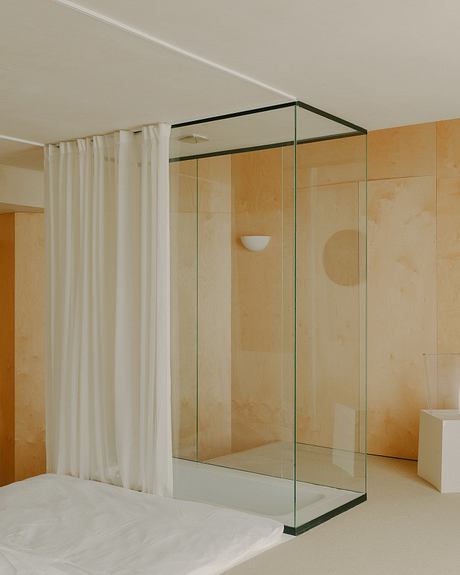
Hotel rooms slide into a more intimate register. Drapery builds a boudoir-like atmosphere, softening edges and filtering light for guests who stay overnight. The same material discipline continues here, but on a gentler scale that suits rest instead of collective gathering. Across the building, tectonic decisions and finishes shape how each room mediates between production, hospitality, and the ceremonial role of wine.
As evening falls over the Alazani Valley, the monolithic volumes sit dark against the pale line of the Caucasus. Light from the double-height hall and hotel windows glows within carved openings, catching traces of wood grain and plaster relief. The building holds its ground between earth and reflection, a composed mass set quietly among vineyards that have long supported Georgia’s winemaking rituals.
Photography by Grigory Sokolinsky
Visit Laboratory of Architecture #3