Casa Ona by Paloma Bau Studio
Casa Ona anchors a layered renovation by Paloma Bau Studio in Valencia, Spain, reworking a 1925 fishing house in the historic Cabanyal district. The project refines a once dark, partitioned dwelling into a coastal home where sand-toned floors, surf-ready storage, and Mediterranean textures echo the owner’s seafaring roots. Every room now orients daily life toward the nearby water and the memory of the neighborhood’s working past.


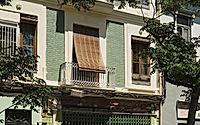
Filtered daylight slips across sand-colored flooring, catching on textured tile and old brick before settling into the quiet corners of the house. From the street, restored wooden shutters and carpentry recall Cabanyal’s fishing past while hinting at the renewed interior within.
Casa Ona is a 1925 house in Valencia’s seaside Cabanyal district, reworked by Paloma Bau Studio into a contemporary Mediterranean home. The renovation leans on color, material, and furniture to connect every room back to the sea and the neighborhood’s heritage. Interior surfaces, lighting, and crafted pieces draw out that coastal character rather than overwrite it.
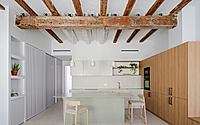
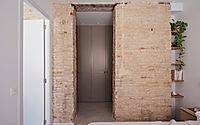
What was once a dark, heavily partitioned dwelling now reads as a continuous sequence, structured by a sand-toned floor and punctuated by bold color moments. Existing elements like the timber structure, loft, and red brick load-bearing wall remain in place, while new volumes, movable pieces, and generous living areas respond to current patterns of use.
Layered Mediterranean Palette
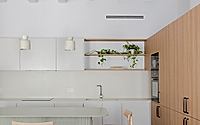
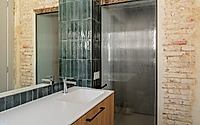
The project’s palette begins underfoot, where a continuous sand-colored floor runs through the house and recalls the long beaches of Bolonia in Cadiz. Above this quiet ground, the living area gathers around a central island in washed green tile with turquoise Silestone, its color and texture echoing the sea’s movement. Neutrals in the open kitchen, paired with oak wood, keep the background calm so the island reads as a tidal core. Throughout, brown and gray tones play against a vivid, bright blue in the main bathroom, calling to mind the Costa Brava and open water.
Rooms For Coastal Living
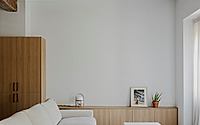
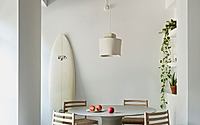
Life in the house centers on the open living and kitchen area, where the continuous floor links cooking, lounging, and gathering into one fluid zone. The kitchen opens directly to the living room, so daily routines move without interruption between preparing meals, sharing them, and relaxing nearby. In the dining area, wooden and rope chairs reference Mediterranean terraces, while a microcement coffee table anchors the seating group with a sturdy, tactile presence. Linen and cotton textiles soften the composition and support a relaxed rhythm suited to a resident who moves between sea and city.
Heritage Elements Retold
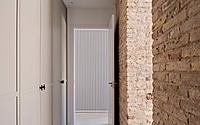
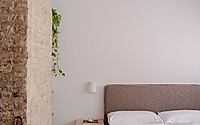
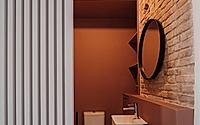
Rather than erase the building’s age, the renovation uncovers its structure and treats it as a narrative thread. Stripped-back surfaces reveal the timber frame and the old load-bearing wall that once formed the rear façade, now integrated into the new layout. In the private rooms, the preserved red brick wall holds original openings that link dressing room, bedroom, and bathroom, turning former exterior windows into interior light filters. At the street, restored wooden carpentry and traditional Alicante shutters return the façade to its historic character and keep the house aligned with Cabanyal’s protected streetscape.
Crafted Details And Light
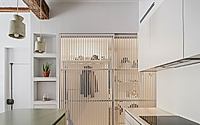
Permeable lacquered wood paneling lines the living area, concealing storage for surfboards and a compact bathroom inspired by Cala Rotja in Menorca. That insert folds contemporary habits into the house without disturbing the restored envelope. Decorative lighting, developed with artisan Adriana Cabello, uses clay pieces in varied grain sizes and finishes, from textured to glazed, to echo the project’s earthy palette. Functional lighting hides in ceilings and built structures so the crafted fixtures carry the visual weight and gently mark corners, thresholds, and gathering points.
Back in the main rooms, light washes across sand-toned floors, colored tile, and exposed brick, tying old and new into a coherent coastal interior. The house now holds the owner’s surf gear, family memories, and daily routines with equal ease. As the shutters open toward the Mediterranean air, Casa Ona reads as both renewed home and quiet record of a fishing neighborhood still close to the sea.
Photography by David Zarzoso
Visit Paloma Bau Studio