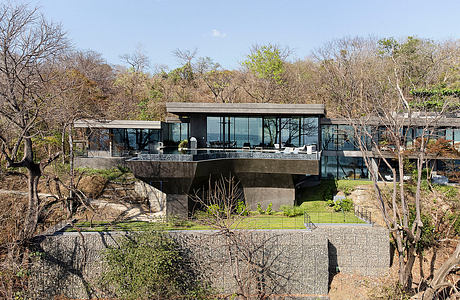
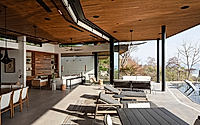
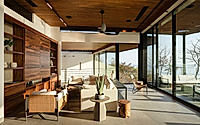
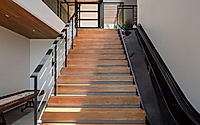
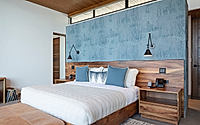
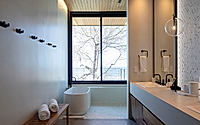
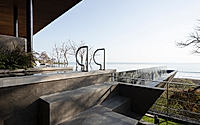
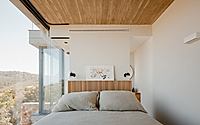
House of Vid and Higurea sits on a cliff above Ostional, Costa Rica, where the Pacific wind and turtle nesting cycles set the rules. Designed by LSD architects, the house reads as a single level from approach, yet slips down the slope to preserve views and the site’s fragile rhythms. It’s a house first, but its stance is environmental—quiet, resolved, and tuned to place.
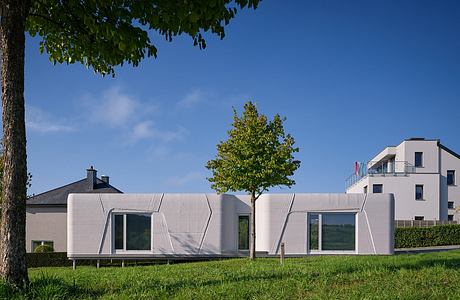
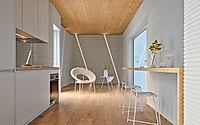
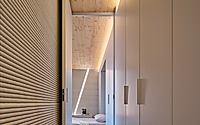
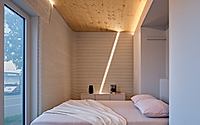
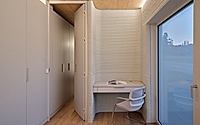
Tiny House LUX lands in Niederanven, Luxembourg as a compact house by ODA Architects, conceived with the municipality as a real-world pilot for missing-middle housing. The project addresses narrow, leftover parcels with on-site 3D concrete printing, a wood frame, and a swift build schedule. It’s small, but rigorous. Clear standards, local materials, and a digitally driven process push the model toward replicability without sidestepping national performance benchmarks.
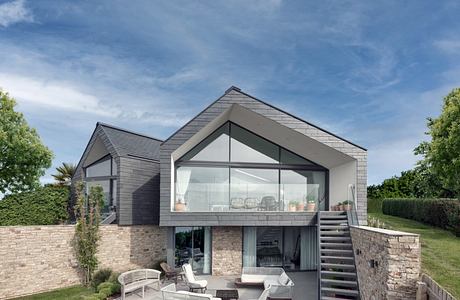
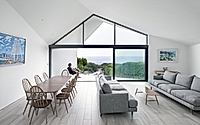
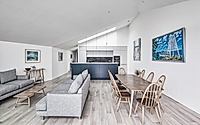
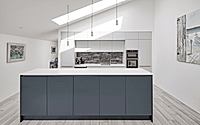
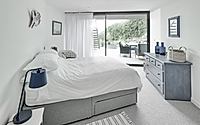
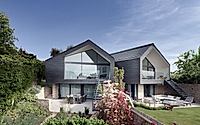
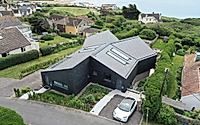
Jurassis House lands on a steep plot in Dorset, England, United Kingdom, where the Jurassic Coast’s protected landscape meets village grain. Designed by AR Design Studio, the multi unit housing project resolves strict planning constraints while staging long views to Charmouth and the English Channel. Two dwellings read as a single-storey bungalow at the street, then open to two levels at the rear, turning the slope into an asset.
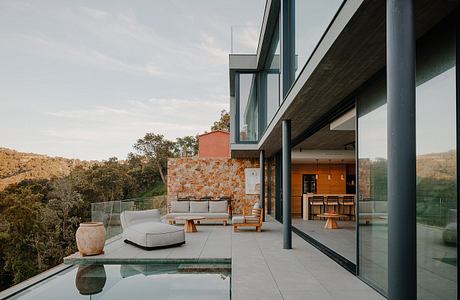
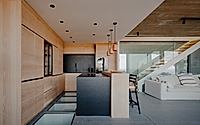
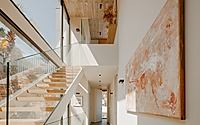
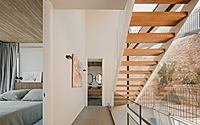
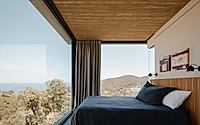
Between Sea and Stone sits on a steep hillside in Sa Riera, Spain, with long views to the Mediterranean. Designed by Pepe Gascón Arquitectura as a second residence, the house steps down in platforms that connect daily life to the slope. Four staggered levels organize summer routines, drawing light and breeze across rooms while keeping bedrooms tucked away. It reads as a measured descent, calibrated for mornings by the water and shaded afternoons.
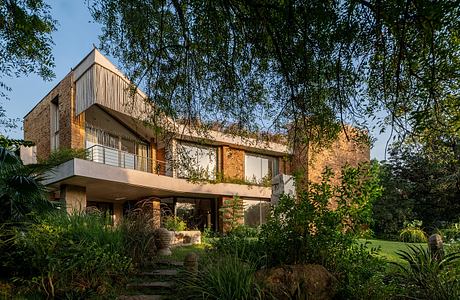
Shilamay sets a family’s daily rhythm in Ahmedabad, Gujarat, India, where stone, lime, and planted courtyards temper sun and heat. Designed by Naman Shah as a house for his own household, it folds reclaimed wood and playful elements into durable, lived-in rooms. The result isn’t precious or remote; it’s a home tuned to games, chores, and weather.
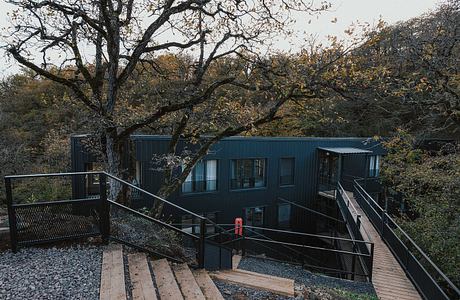
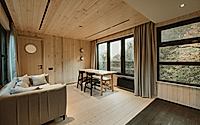
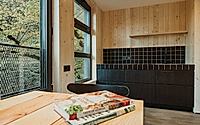
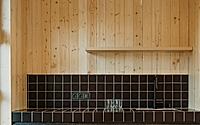
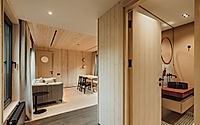
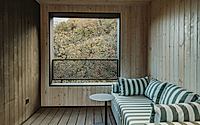
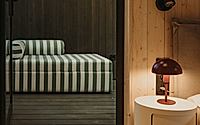
Hotel KHIDI sits in Kiketi, Georgia, a compact hotel by Elene Skhvitaridze that looks into a canopy of oaks. Dark metal volumes step along the hillside while timber-lined rooms bring a quiet, natural warmth to the interior. Guests move across bridges and decks to reach suites with broad windows and inset terraces, where the palette stays simple and calm.
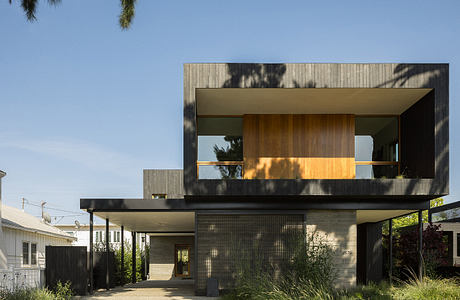
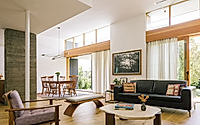
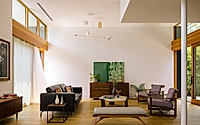
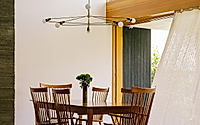
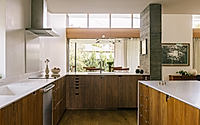
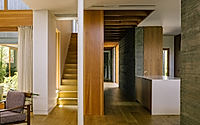
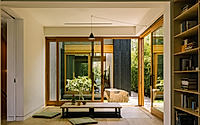
Translators’ House stands in Culver City, CA, United States, a family home by Jacobschang Architecture that threads scholarship, culture, and daily life. The house centers on an L-shaped poured-concrete spine and a chain of gardens, shaping movement and framing moments of quiet in a suburban lot. It reads as measured and calm, with a yakisugi rainscreen and a plan tuned to light, air, and routine.
House 111 sits in Curitiba, Brazil, with a renewed modern presence by Rafaela Bender Arquitetura e Interiores. The house underwent a complete overhaul, aligning a crisp new facade with calm, cohesive interiors. Inside, a restrained palette and measured detailing anchor day-to-day life while the courtyard and pool draw light through generous glazing.