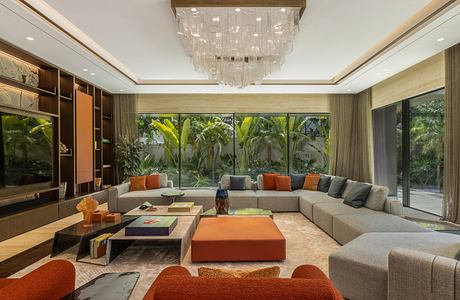
Villa Imperiale rewrites expectations of residential luxury in Dubai, UAE, trading quiet minimalism for exuberant maximalism. Etereo Design shapes this house in Emirates Hills as a tailored home for a young European family, where vivid color, layered materials, and expressive objects frame daily life. Every room carries its own mood, yet the narrative threads back to a shared taste for Italian craft and unapologetically bold interior character.
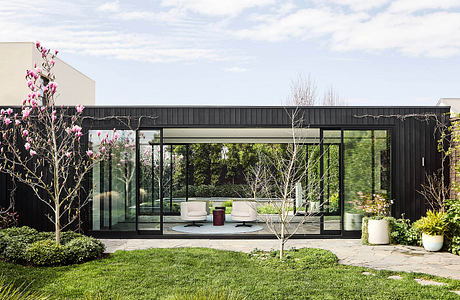
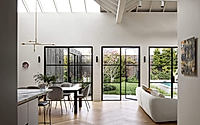
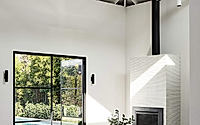
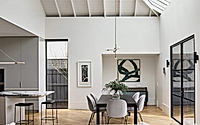
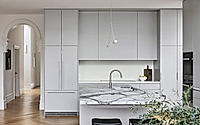
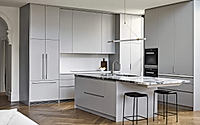
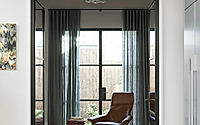
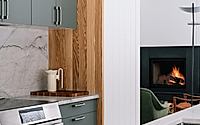
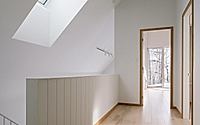
Day House sets a Victorian home in Malvern, Melbourne, Australia into a new rhythm for contemporary living. IF Architecture reworks the historic residence and later addition into a layered family house that pairs restored character with a composed modern palette. Across garden-facing rooms, poolside terraces, and reconfigured interiors, the project builds a calm sequence where period detail, crafted joinery, and considered material shifts give each room its own clear mood.
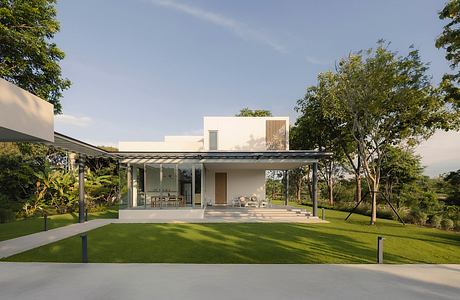
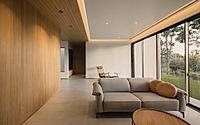
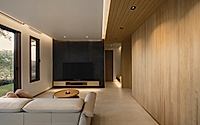
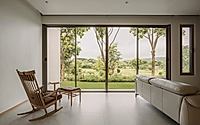
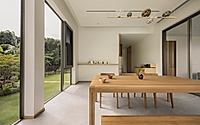
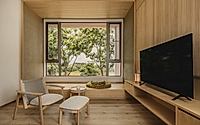
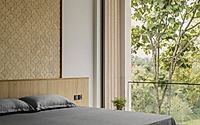
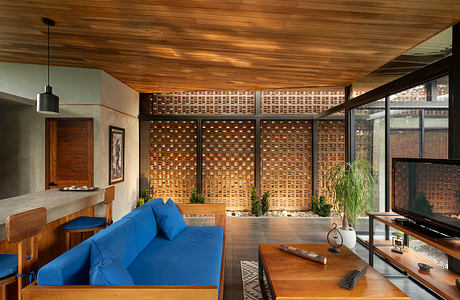
Pak Chong House sits on an elevated plot in Nakhon Ratchasima, Thailand, where S+S Architects draw the house out toward long farmland and mountain views. Designed as a private residence, the project balances exposure and shade while leaning into the owner’s preference for a Modern Japanese aesthetic, with wood-rich interiors that stay calm even in the hot afternoon sun.
Baw Beese sets a quiet scene on the shoreline of Hillsdale, United States, where Disbrow Iannuzzi organizes a vacation retreat for several generations at once. The project divides the house into smaller cabin-like volumes so grandparents, parents, and guests can share the property or live independently, moving between them through glazed links. Each wing holds its own rhythm, yet the whole compound stays tied to the lake, the trees, and long weekends together.
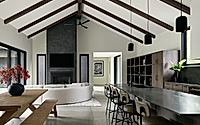
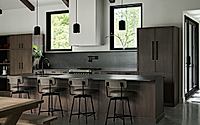
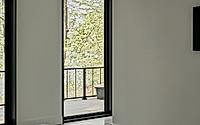
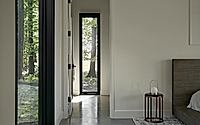
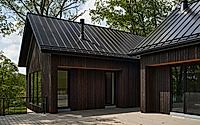
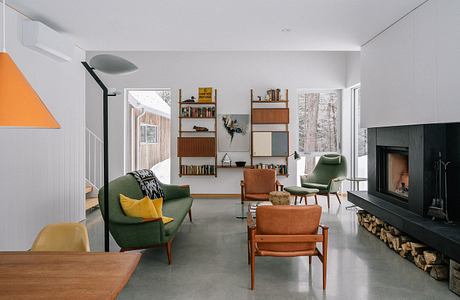
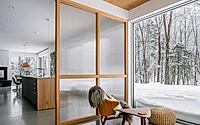
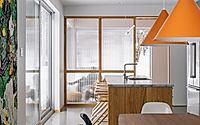
Chalet du Ruisseau sits on a wooded, sloping site in Potton, United Kingdom, where EM Architecture draws the house toward a stream and its mature trees. The chalet’s paired volumes, verandah, and terraces choreograph daily life between forest and water, while the owners’ mid-century modern pieces lend the interior a grounded, lived-in rhythm. Inside and out, the project turns vernacular cues into a calm, contemporary retreat.
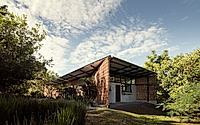
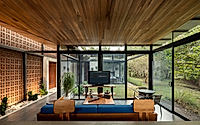
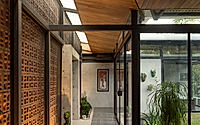
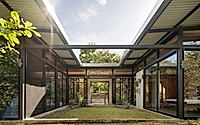
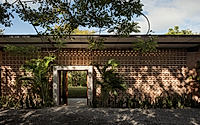
Residencia Chavarria stands in Puntarenas, Puntarenas Province, Costa Rica, as a low, porous house by Carazo Arquitectura that trades thick walls for garden-filled thresholds. Composed around an interior courtyard and wrapped in modular brick, the home reads as a continuous exchange between enclosure and vegetation. Shifting between open and sheltered zones, it reworks domestic life for a humid coastal climate and lets everyday routines unfold in tandem with light, air, and greenery.
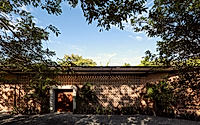
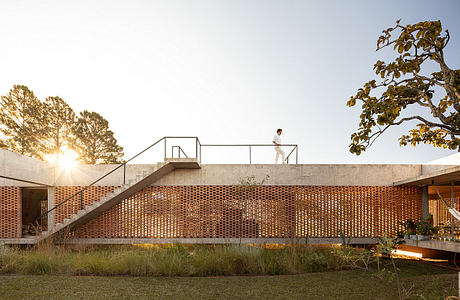
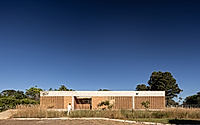
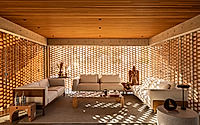
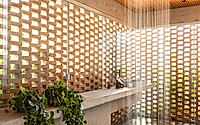
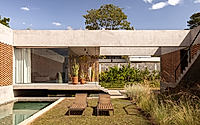
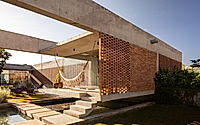
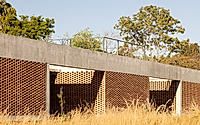
Casa Tupin sits within a gated community on Brasília’s Park Way, where BLOCO Arquitetos shapes a concrete house around a calm interior court. The single-family residence leans on exposed structure, suspended slabs, and native cerrado vegetation to link its social rooms and private wings while holding onto the loose character of the surrounding landscape. Inside and out, the composition keeps the house airy, open, and tuned to the Brazilian plateau light.
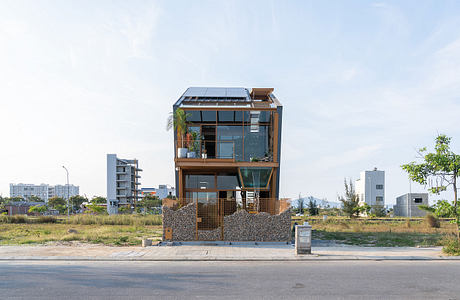
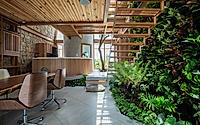
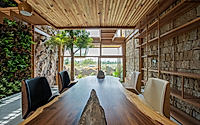
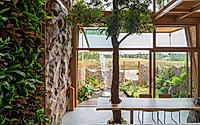
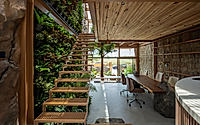
Ga.o House sets out a calm yet ambitious hybrid environment in Hòa Hải, Ngũ Hành Sơn, Đà Nẵng, Vietnam, conceived by 85 Design as both office and home. The prefabricated steel structure wraps working rooms, gardens, and compact living quarters around light, air, and water, translating Vietnam’s push toward sustainable urban growth into a very local, very tactile experiment. Staff and residents move through planted terraces, waterfalls, and double-height volumes tuned to the tropical climate.