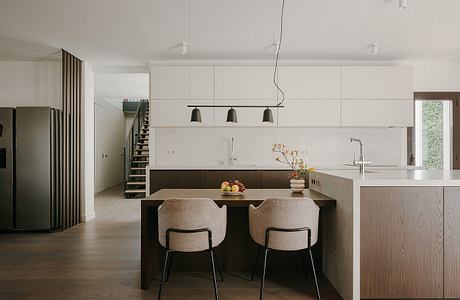
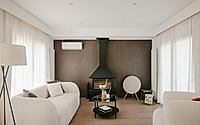
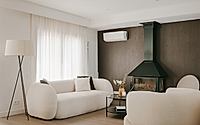
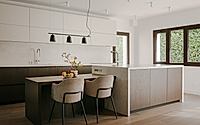
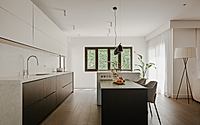
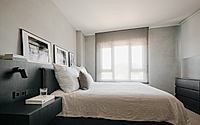
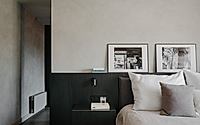
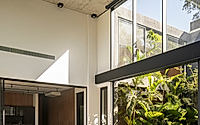
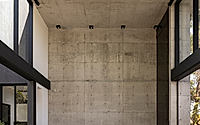
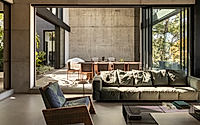
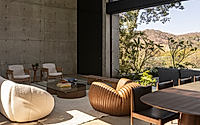
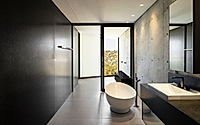
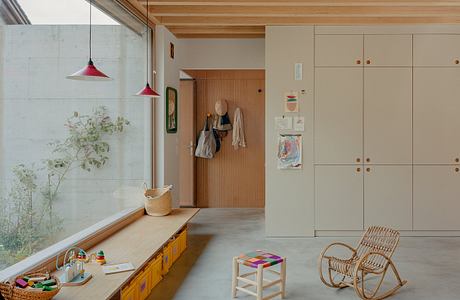
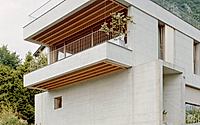
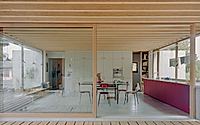
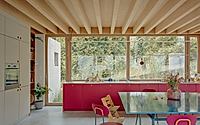
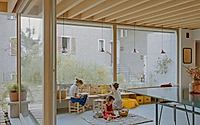
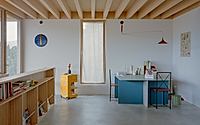
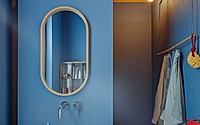
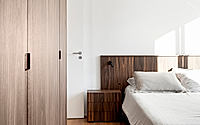
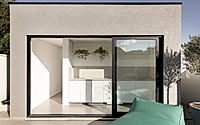
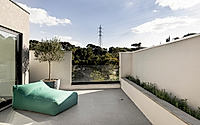
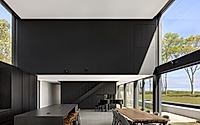
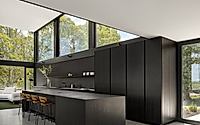
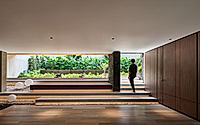
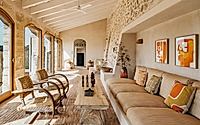
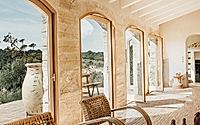
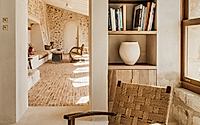
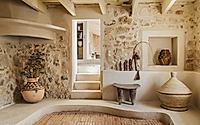
Casa Morera unfolds as a house in Sant Cugat del Vallès, Spain, crafted by ZHUD studio in 2024. Set within a residential context, the project focuses on daily living and rhythm rather than gesture, using clear planning moves to shape the experience of home. It reads as a composed residential work with a measured stance, where the plan steers the atmosphere and pace.
Concrete House occupies a steep lot in Goiânia, Brazil, where Dayala e Rafael Arquitetos Associados organize living across two tiered levels. The house reads as low, confident horizontals—social rooms flow at grade to a pool terrace, while a closed upper volume gathers the private rooms. Structural clarity drives the project, using long spans, cantilevers, and a lean material palette to settle the home into its terrain without heavy earthwork.
House in Pazzallo stands in Lugano, Switzerland, with a measured presence that suits its residential setting. Designed by Acerbi – Zaccara, the house reads as careful planning translated into everyday comfort, with circulation and rooms laid out to serve daily rhythms rather than dictate them. The result places use at the center, with calm transitions and clear routes guiding movement from morning to night.
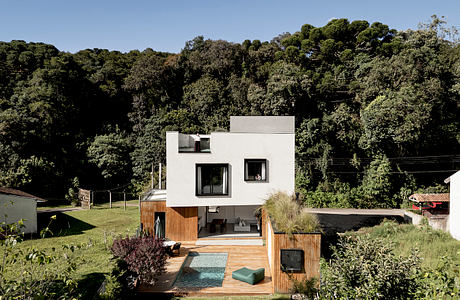
The Luna House, designed by Nommo Arquitetos and located in Curitiba, Brazil, was completed in 2024. Nestled within the untouched Atlantic Forest landscape, the house reflects the light around it, contrasting subtly with the surrounding nature.
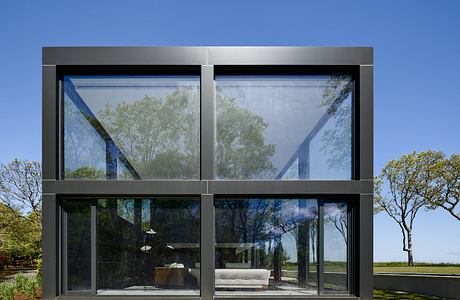
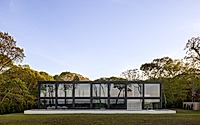
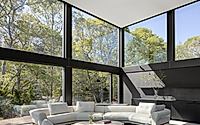
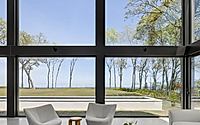
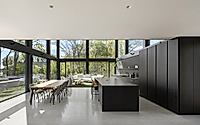
Nestled on a bluff in East Hampton, New York, Frame House by Worrell Yeung explores transparency and privacy through a modular steel frame and glass design. Echoing influences from Mies van der Rohe’s work, the residence maximizes natural views of Gardiners Bay while integrating sustainable features like photovoltaic panels.
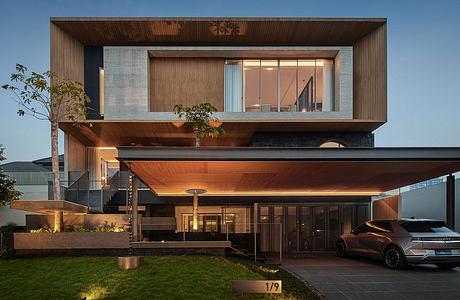
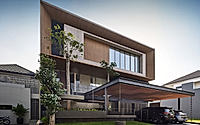
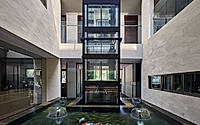
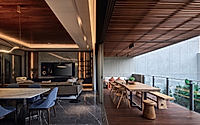
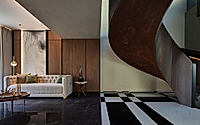
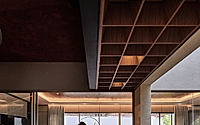
Niji House by Patio Livity, located in Tangerang, Indonesia, is a modern home prioritizing comfort and environmental efficiency. Designed in 2024, the house features a central core integrating various elements, including a skylight and koi pond, to enhance natural light and airflow.
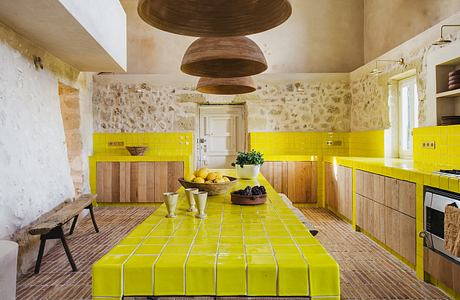
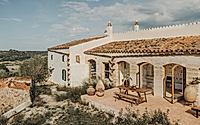
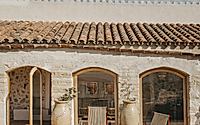
Atelier du Pont has renovated Estancia San José in Menorca, Spain, transforming an old ruin into a 300-square-metre summer residence with Minorcan influences. Featuring arched Iroko windows and stone facade, the house combines raw materials with vibrant elements like an acid yellow kitchen.
The organic forms and textured finishes throughout the interior pay homage to local craftsmanship, while the garden is a natural setting surrounded by garrigue and wild olive trees.