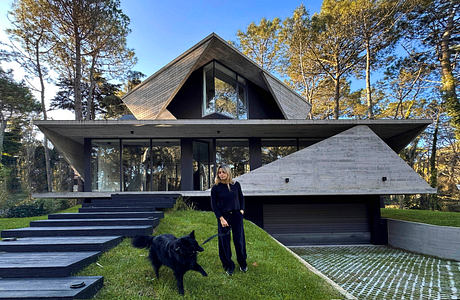
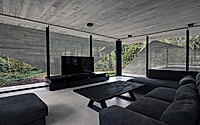
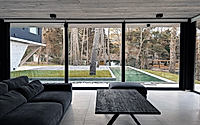
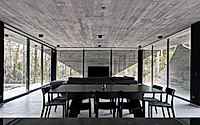
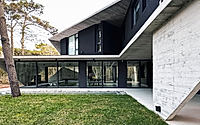
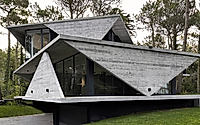
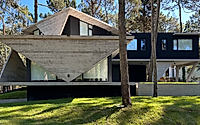
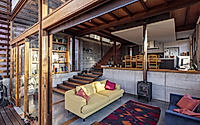
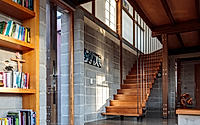
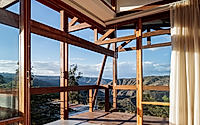
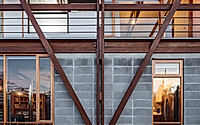
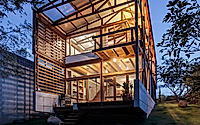
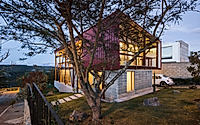
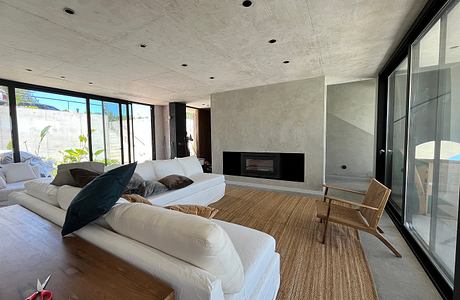
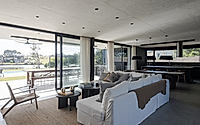
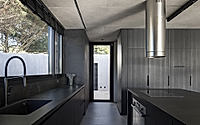
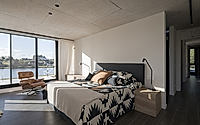
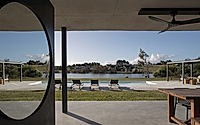
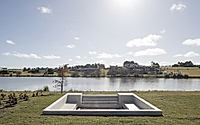
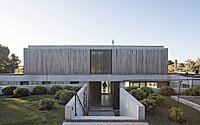
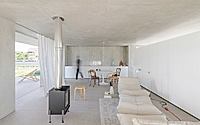
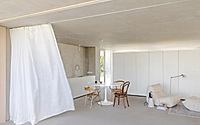
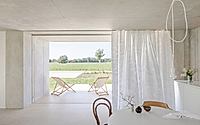
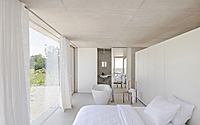
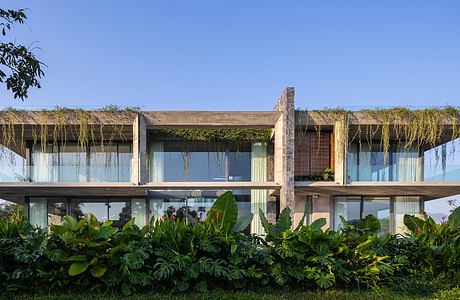
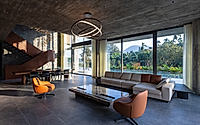
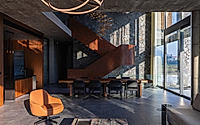
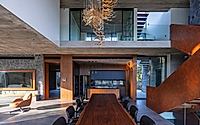
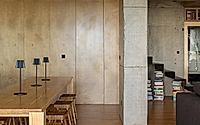
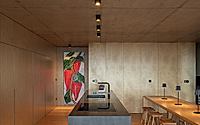
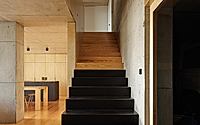
Origami House is a house in Cariló, Argentina, by Diacono Arquitectos. Set among native pine trees on the Atlantic coast, it rests on a 1,500-square-meter site without altering the trees or the ground level. The project translates an origami idea into reinforced concrete, pairing a strong structural presence with careful control of light, wind, and views.
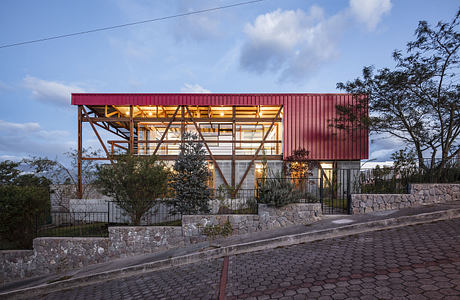
Casa Viteri Vergara is a house in Quito, Ecuador, designed by MCM+A Taller de Arquitectura for a narrow corner site in Nayón. Completed in 2018, the project responds to a steep slope, broad mountain views, and a warm, dry climate with a mixed structural system of concrete and wood. Its arrangement follows the plot’s long axis, setting social and private areas in clear relation to terrain, light, and privacy.
Casa Pueblomio sits in Manantiales, Punta del Este, Uruguay, where KLM architects work with slope, wind, and light to shape a coastal house. The project anchors itself half a level into the ground, turning terrain, patios, and planted edges into buffers between domestic life and the wider gated community. Concrete and natural wood frame everyday routines against a calm landscape, with upper-level rooms pulled back for privacy and long views.
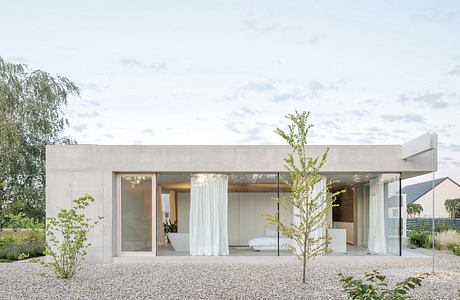
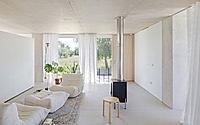
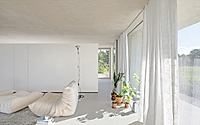
House on the Edge of the Plain sits at the soft edge of Murska Sobota, Slovenia, where suburban plots meet the long horizon of the Pannonian plain. Skupaj Arhitekti use a spare, low house to translate that threshold condition into architecture, pairing exposed concrete with loose gravel and generous glazing. The result is a calm, minimalist house that reads as part landscape, part dwelling.
Dora Villa sets a concrete cube against the broad fields and low hills of Quốc Oai, Hanoi, Vietnam, its profile reading clearly from the suburban edge. PAK architects arrange this house as a family retreat, where verandas and voids negotiate between raw structure and the changing climate. Inside and out, the project balances compressed thresholds and expansive rooms so daily life stays close to light, air, and the surrounding greenery.
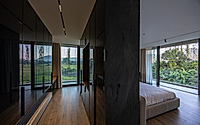
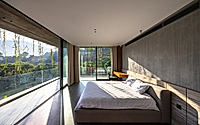
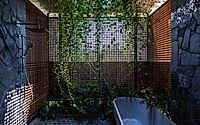
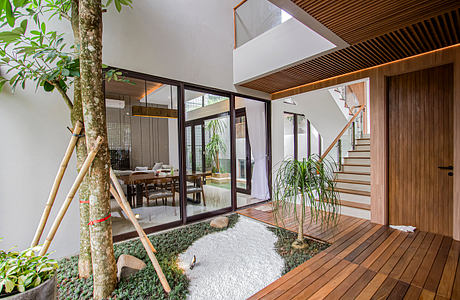
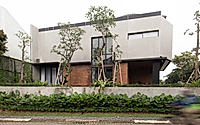
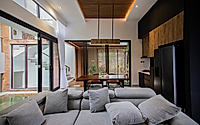
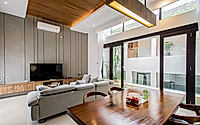
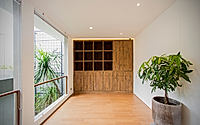
AGR House sets a quiet yet assertive presence in Bintaro, South Jakarta, Indonesia, where DSI Architect shapes a house around climate and daily rhythm. The residence uses split-levels, terraces, and a warm interior palette to tune movement, light, and landscape to the tropical setting. Within this layered arrangement, rooms shift between retreat and sociable gathering, reflecting an owner whose routines favor solitude yet still welcome structured moments of connection.
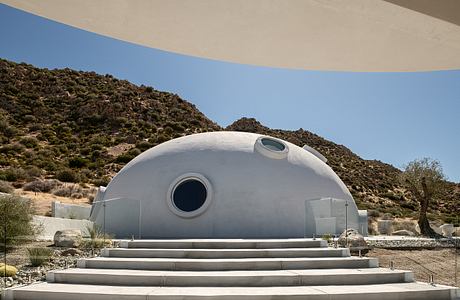
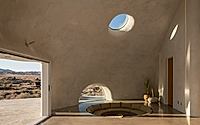
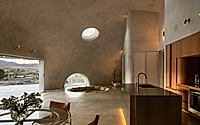
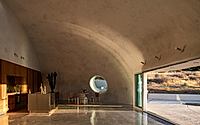
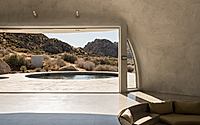
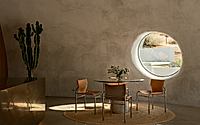
Hata Dome stands on foothills above the Sawtooth Mountains in the United States, its white concrete curve reading against scrub and sky. Designed and built by Anastasiya Dudik as a 2024 house, the project folds future primitive ideas into a minimal, object-like dwelling where circular openings choreograph light and views.
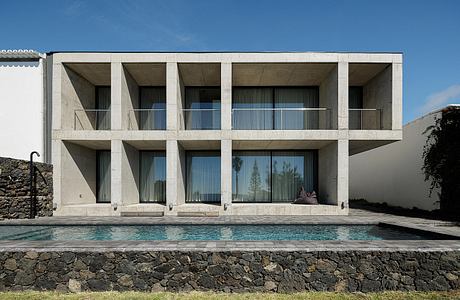
Casa da Rocha Quebrada sits on the southern coast of São Miguel in Lagoa, Portugal, a concrete house by SO Arquitetura & Design. The project belongs to the parents of one of the studio’s founders, so the brief strips back every nonessential move and pairs a mineral exterior with a warmer interior. Exposed concrete, sheltered openings, and a simple plan respond to the harsh Atlantic edge without losing a sense of quiet domestic life.