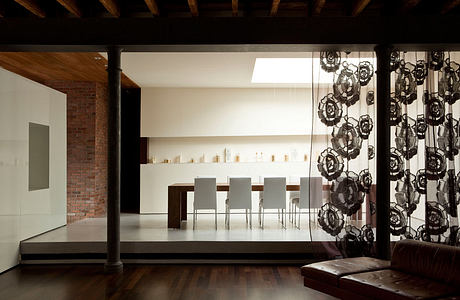
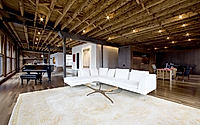
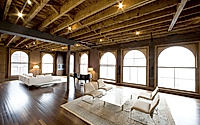
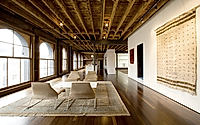
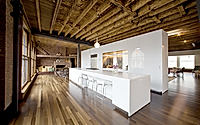
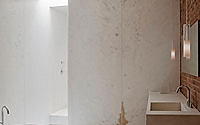
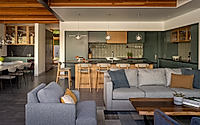
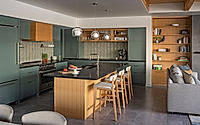
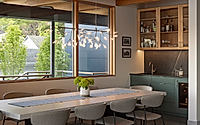
Wooster Loft is a 2008 loft renovation on Wooster Street in Manhattan, New York, NY, United States, designed by Dub Studios. Working within a broad existing floor plate, the project strips away layers of sheetrock to recover cast-iron columns, old brick walls, exposed joists, and tall windows, then places private rooms toward the back so daylight can reach deeper into the home.
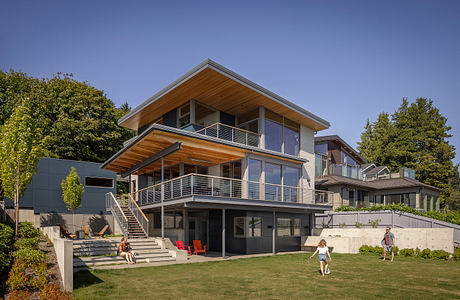
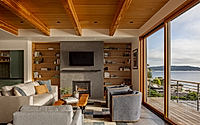
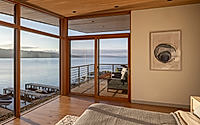
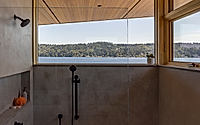
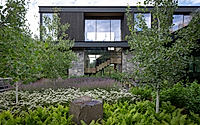
Lake Washington Residence sits between the Burke-Gilman trail and the water in Seattle, WA, United States, by Studio Zerbey Architecture + Interiors. The house stretches across a rare double lot, pairing tall lakeside glazing with layered decks and a green-roofed volume that answer both the shoreline setting and the region’s gray, wet seasons. Inside, a warm modern character frames everyday family life against the changing light on the lake.
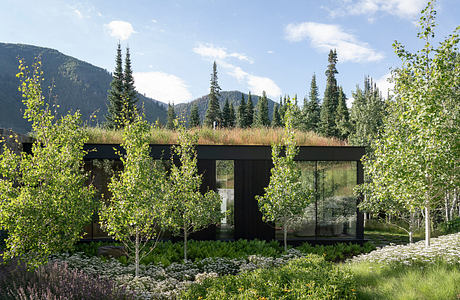
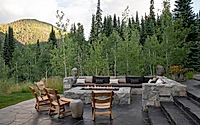
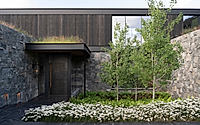
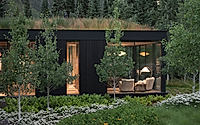
Hayden House settles into a high Colorado valley above Aspen, CO, United States, where forest and meadow meet at 8,500 feet. Design Workshop shapes the house as a year-round family retreat, building on regenerative strategies that protect most of the land while framing long views to distant peaks. Inside and out, modular pavilions, planted roofs, and restored ground plane tie domestic life to the seasons without overwhelming the fragile montane setting.
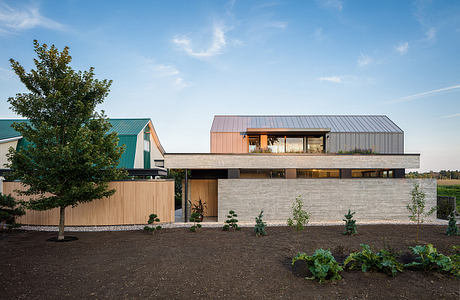
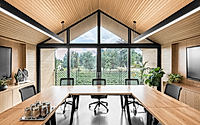
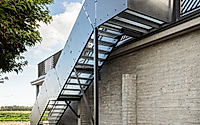
Les Récoltes sits on farmland in L’Assomption, Canada, where Thellend Fortin Architectes rethink a working farm as a precise, linear workplace. The expansion turns a utilitarian building into a hub for administration, commercial production, and rooftop cultivation, threading new geometry between existing barns. Inside and out, the project ties daily agricultural work to a clear structural rhythm that runs from soil to skyline.
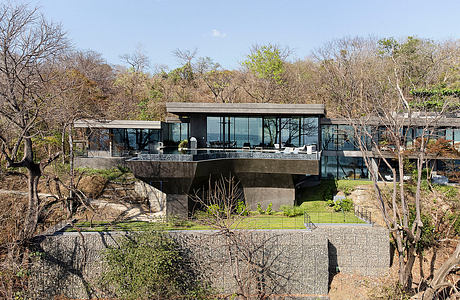
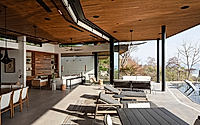
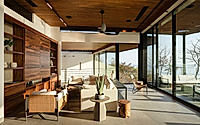
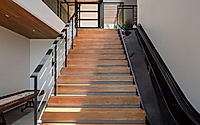
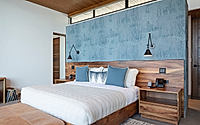
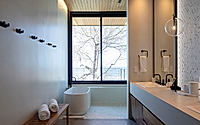
House of Vid and Higurea sits on a cliff above Ostional, Costa Rica, where the Pacific wind and turtle nesting cycles set the rules. Designed by LSD architects, the house reads as a single level from approach, yet slips down the slope to preserve views and the site’s fragile rhythms. It’s a house first, but its stance is environmental—quiet, resolved, and tuned to place.
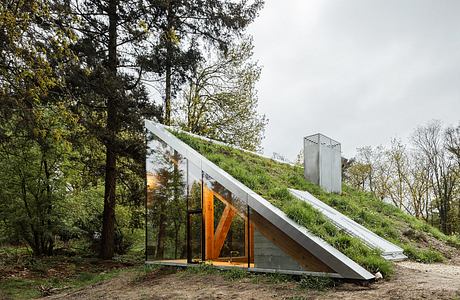
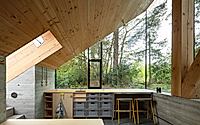
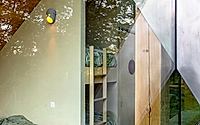
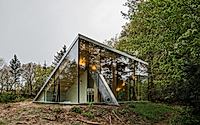
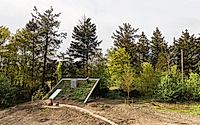
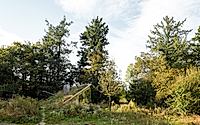
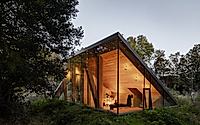
Kazemat Koningsweg sets a quiet tone on the Veluwe in the Netherlands, where JCR Architecten crafts a hideout that recedes into the land. The small holiday house occupies a former military compound now shared by housing, workplaces, and eleven compact retreats, and it meets the brief with angular restraint and a camouflaged stance. Sunken into the ground, it reads like a bunker from afar yet opens to treetop views and light within.
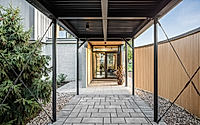
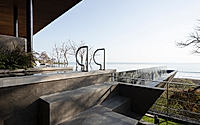
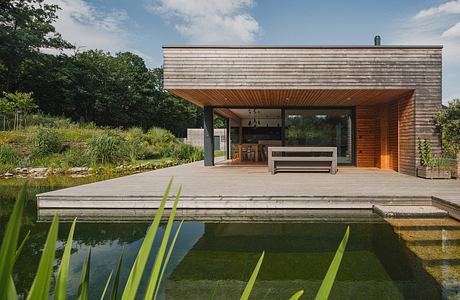
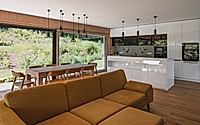
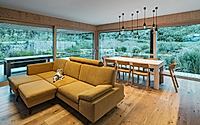
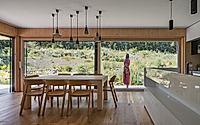
Villa Above the Water sits in the Czech Republic as a family house shaped by anticipation. Designed by 3AE, the low-slung home turns inward toward a private garden rather than outward to a landscape destined to develop. The L-shaped property uses the site’s gentle slope and a swimming pond to build its own world at the edge of a village near Prague.
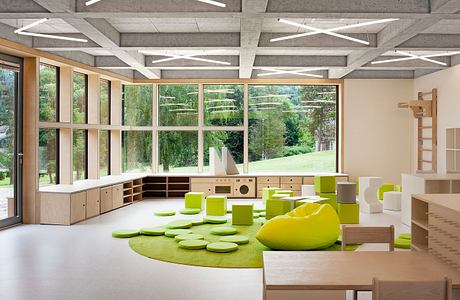
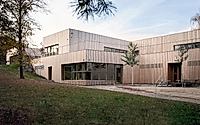
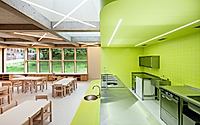
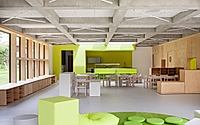
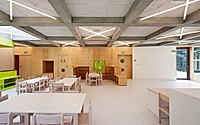
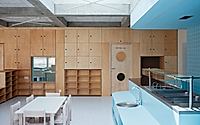
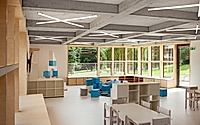
Fulnek Kindergarten sits in the northern reach of its garden site in Fulnek, Czech Republic, designed by XTOPIX architekt as a compact, low-slung school. The building orients its life to the south, where courtyards cut into the slope and open classrooms to views of the château across town. Calm materials, a legible plan, and child-scaled thresholds shape a daily rhythm of arriving, playing, and gathering.