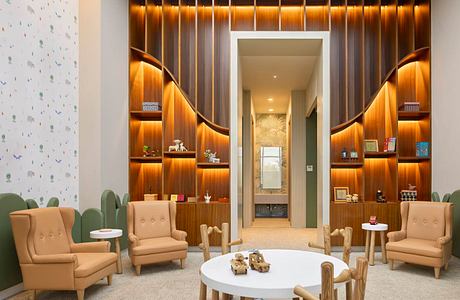
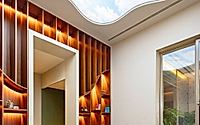
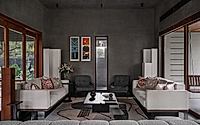
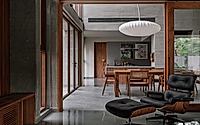
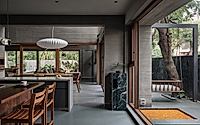
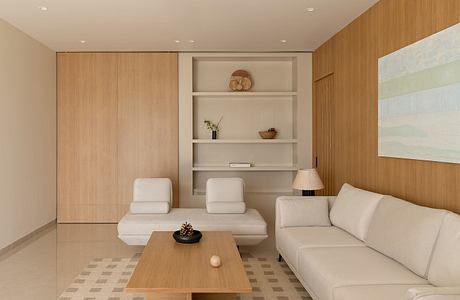
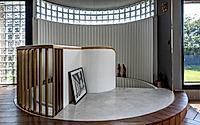
Godrej Woods Clubhouse is a 40,000-plus-square-foot clubhouse in New Delhi, India, designed by Rachna Agarwal in 2023. The project bridges indoor rooms and the outdoors, using biophilic ideas and a restrained palette to keep the atmosphere calm, welcoming, and rooted in daily use. Across its levels, the plan shifts from social spaces to wellness areas without losing a residential feel.
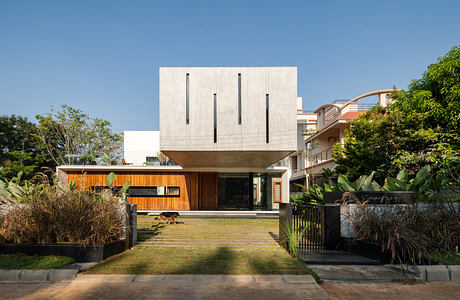
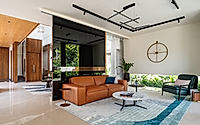
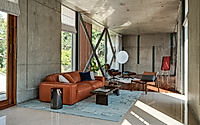
The Long House is a four-bedroom house in Bengaluru, India, designed by Crest Architects. Set in a quiet gated neighborhood, it responds to a client’s brief for a direct, efficient, and intentional home. A 24-foot cantilever, an H-shaped plan, and a restrained material palette give the residence its clear order.
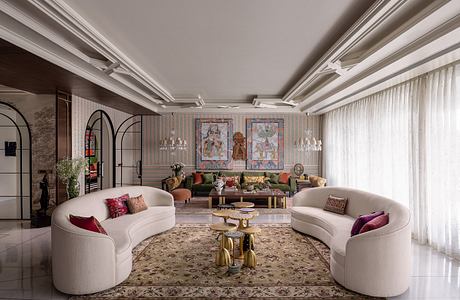
The House of Collected Time is a 9,500-square-foot apartment in Delhi, India, designed by Disha Subramanium. Conceived as a home with visible layers rather than a fixed single language, it brings traditional craft, classical proportion, Deco motifs, and modern composition into active conversation. Across its rooms, art, material contrast, and varied atmospheres give the residence a sense of character built over time.
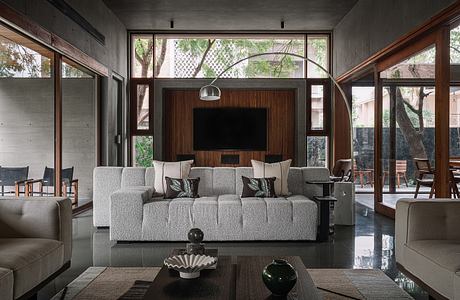
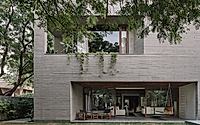
MS House by Studio Saransh rises among nine mature neem trees in Ahmedabad, India, turning a Brutalist concrete shell into a porous, climate-aware family home. The architects organize the house around a central double-height bay that frames the canopy, threading courtyards, verandahs, and shaded terraces so daily rituals stay in step with breeze, filtered sun, and the soft acoustics of water.
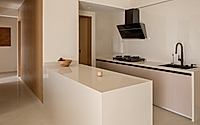
House of Quiet Balance sets a low, composed tone from the moment someone steps into this house in Kolhāpur, India by ORV Architecture. The residence arranges pale stone floors, blond wood, and quiet textiles into a restrained interior that feels both urban and deeply relaxed. Every room continues the same measured language so the home reads as one calm sequence rather than a collection of separate zones.
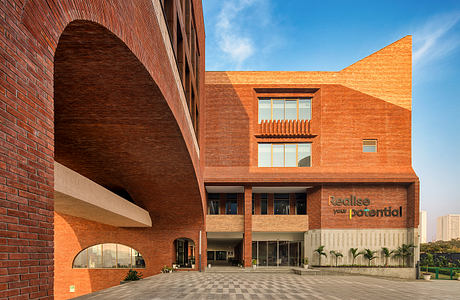
Wellington College International sets a new benchmark for K-12 education in Pune, India, where ARCOP Associates shapes the campus and Education Design International crafts its interiors. The college unfolds as a contemporary learning environment that balances heritage references, community-focused planning, and adaptable teaching clusters across its generous grounds. Students move through a network of courtyards, terraces, and flexible rooms that support both quiet study and energetic collaboration each day.
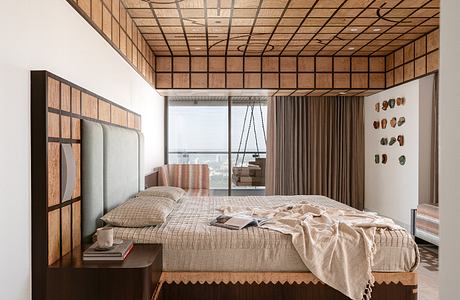
Gingham Dreams crowns a 25th-floor apartment in Mumbai, India, with a vivid sense of order and play. Conceived by MuseLAB for a three-generational family, the home replaces conventional luxury with gingham-patterned marble, saturated color, and a social core that draws people toward long views of the Arabian Sea. Every room carries the grid in a different register, turning daily rituals into small encounters with pattern and craft.
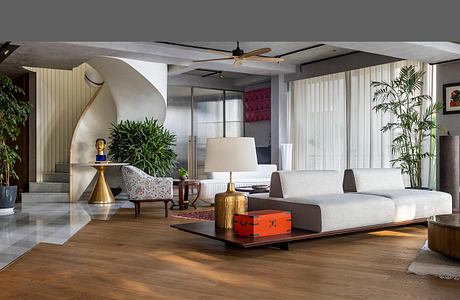
A45 rises as a 5,900-square-foot penthouse in New Delhi, India, shaped by Architecture Discipline for a single owner with a serious love of art. The home stretches along the treetops, wrapped in glass and carved around a sculptural stair, setting up a calm urban aerie where collections, light, and measured material choices drive every room. What results is a precise yet warm retreat above the city’s dense texture.