Il Casale Celato by Westway Architects
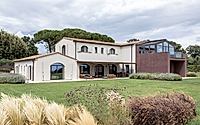
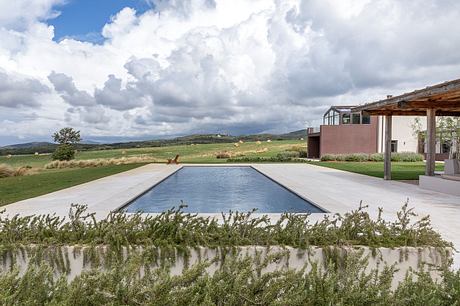
In Capalbio, Italy, Westway Architects crafted Il Casale Celato, a 700-square-meter (7,535-square-foot) house designed in 2025. The project combines a rustic farmhouse aesthetic with a central core featuring a circular staircase, natural materials, and expansive glass walls, creating an interior that is both transparent and deeply connected with landscape. Windows become “visual corridors” that captures views across Monte Argentario to the sea. The home is accented with a stone pool and summer kitchen.


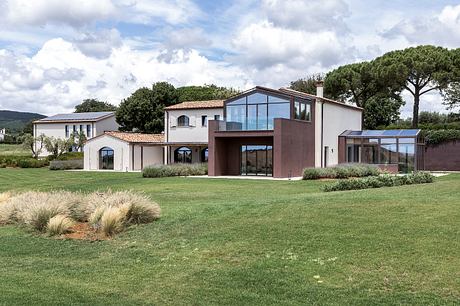
In a privileged corner of the Tuscan countryside, where the hills slope down toward the sea and the gaze stretches between Monte Argentario and the village of Capalbio, stands “Il Casale Celato” (The Hidden Farmhouse), a project by the Rome-based studio Westway Architects – Luca Aureggi, Maurizio Condoluci, and Laura Franceschini. A work that translates the dialogue between landscape, rural identity, and contemporary living into architecture.
With its 700 square meters, the farmhouse follows the path of tradition while reinventing its forms and perspectives. The client and the local government required a design that respected the identity of traditional rural farmhouses, and Westway Architects managed to harmonize this constraint with an architectural language characterized by lightness, transparency, and design rigor.
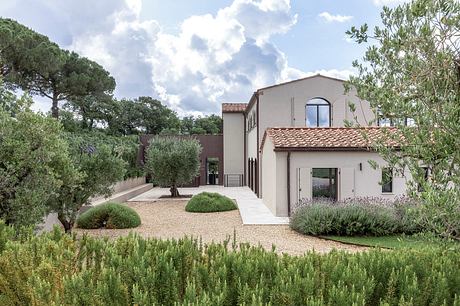
The project begins with a natural element: two large maritime pines that defined the main visual axes from the start, guiding the entrance and shaping a narrative framework around the landscape. The terrain’s configuration allowed the house to be developed on two levels, concealing much of the lower living spaces from view upon arrival. A true “game of subtraction,” where the house only reveals itself as you move through it.
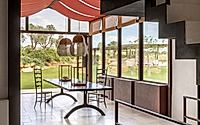
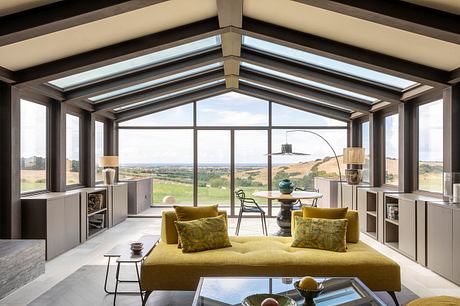
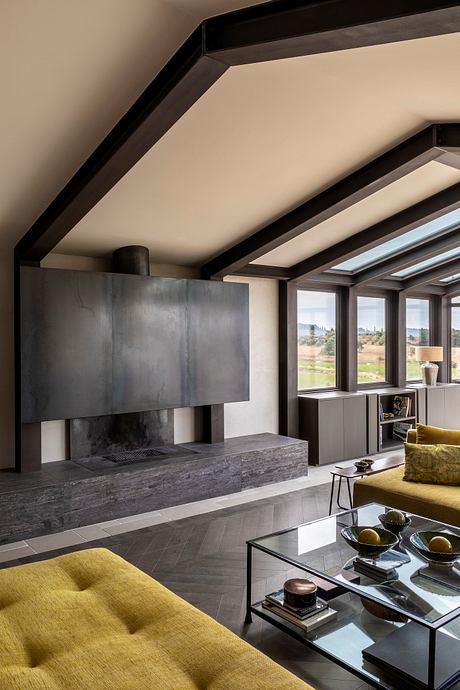
Upon entering—on what corresponds to the first floor of what initially appears to be a traditional farmhouse—you are greeted by a hallway that welcomes guests and unveils a space and light unimaginable from the outside, opening toward the landscape and the sea beyond. Ahead lies a living area, half of which is a glass-and-steel structure, including the roof, extending into a terrace with a glass balustrade to allow an uninterrupted view of the horizon.
“Views and visual corridors are a fundamental element of the project,” explains architect Laura Franceschini. “We created ‘windows’ onto the landscape, privileged observation points that let one fully enjoy the surrounding scenery. Each window frames something. The house’s orientation, the window placement, and the interior layout were all carefully studied to create true ‘visual channels’ that link the interior with the exterior, the built with the natural.”
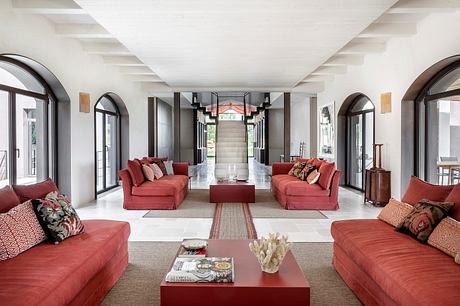
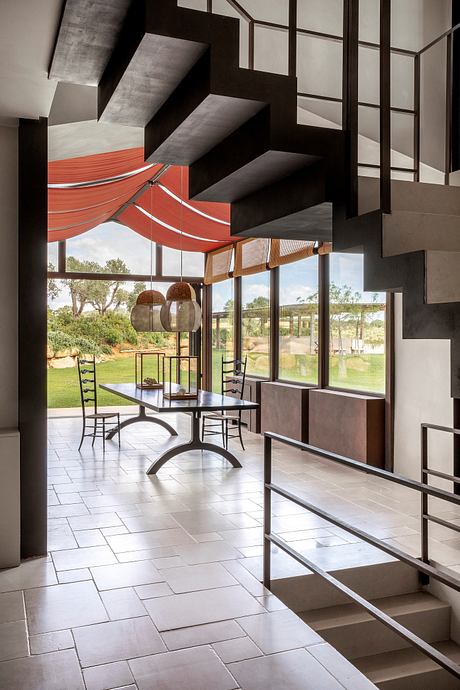
From the hallway, a sculptural staircase begins – the central pivot of the home, a connective core for the spaces and levels. With its sinuous path and warm light, it invites exploration of the other rooms. The stone cladding is the same as the flooring, creating a sense of continuity throughout.
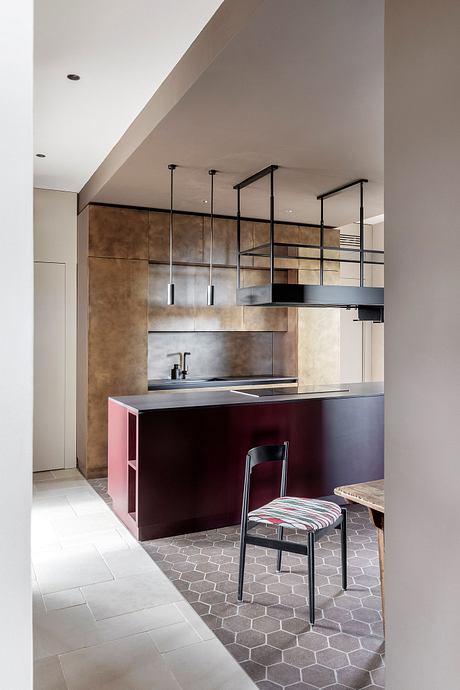
On the ground floor, the large kitchen is hidden behind a textured wall in bronze-effect wood, maximizing the space for the living area. The dining room is located in the greenhouse, which can fully open on one side to create a physical continuity between indoors and outdoors.
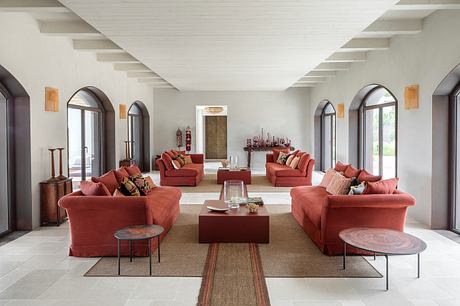
The ground-floor living area opens onto two symmetrical, mirror-like lounges framed by large arched openings that capture light at every time of day. Outside, a portico embraces two ambiences: one facing the sea with a pergola for summer days, the other a stone patio with a centuries-old olive tree, serving as an intimate retreat during colder seasons.
The five bedrooms, each with an en-suite bathroom, are distributed across the two levels. The garden includes a stone pool seamlessly integrated into the landscape and an open-air structure with a summer kitchen.
“Respect for the site, connection with the landscape, usability of the house, and the client’s needs guided us in this project,” concludes Luca Aureggi. “This allowed us to create a prestigious, tailor-made home for the family who lives in it.”
Photography by Serena Eller, Francesco Marano
Visit Westway Architects