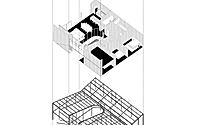
Casa Páramo by PAE
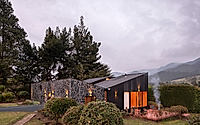
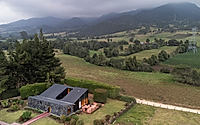
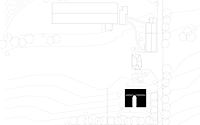
Located in La Calera, Colombia, Casa Páramo was designed by PAE and embodies a vernacular design style. The house is situated in the Chingaza moorland area of the eastern mountain range of the Colombian Andes, at over 2,900 meters above sea level.
Characterized by self-management and traditional building methods, PAE‘s design references the temporality and growth typical of traditional Colombian rural architecture.


Contextual Setting and Design Inspiration
This house is located in the area surrounding the Chingaza moorland in the eastern mountain range of the Colombian Andes, at more than 2,900 meters above sea level. The project is rooted in the temporality and growth of traditional Colombian rural architecture over time, characterized by self-management, the use of traditional building systems, and the constant addition of spaces based on the inhabitants’ needs. This results in an unfinished, vernacular and adaptable architecture.
Concept and Volume Structure
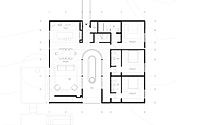
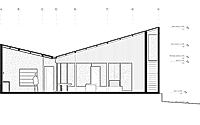
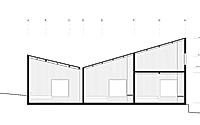
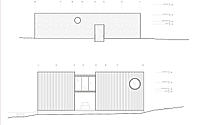
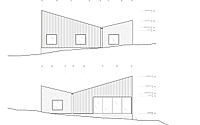
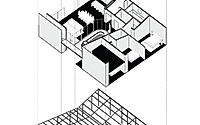
In this context, the main conceptual strategy is based on the creation of two large volumes that, on the one hand, accommodate the basic functions of a rural house and, on the other, allow for the incorporation of a broader program that engages with the surrounding landscape, accommodating a more significant number of uses.
Basic Functions Built Using Slate Stone
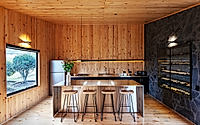
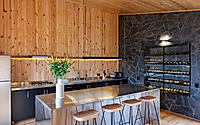
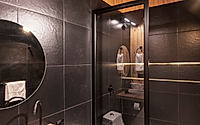
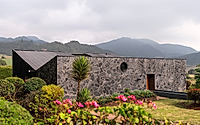
The smaller volume uses a stereotomic and a heavier language, using slate stone, with small openings that frame views and allow controlled natural light to enter. This first volume houses a traditional house’s basic and essential functions, such as the kitchen, bathroom, and bedroom.
Additional Functions and Materials
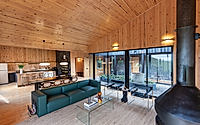
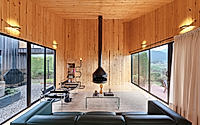
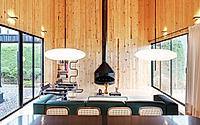
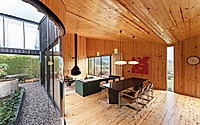
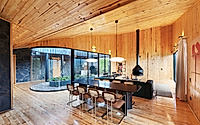
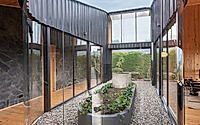
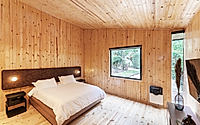
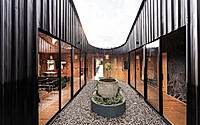
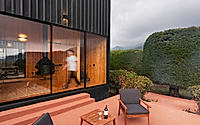
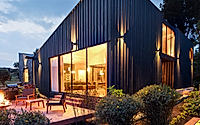
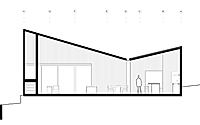
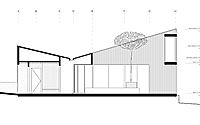
The second volume complements the house with a more expansive space, enveloped by a black metal siding designed to capture solar radiation from the surrounding environment and bring it inside. The interior is lined with pine wood to mitigate the cold temperatures typical of a climate that can drop below zero.
Climatic Design Elements with Natural Features
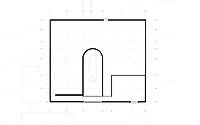
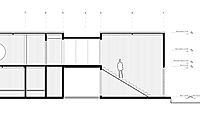
Additionally, a central courtyard, oriented from east to west, breaks the rigidity of the mass, facilitating an interior circulation bathed in sunlight and creating an ideal space for the growth of a yarumo tree at the center of the courtyard. The pronounced height of this space allows for a double-height area that emphasizes the chimney in the social zone, whose exhaust pipe is exposed to ensure thermal comfort at all times.
Connection, Circulation, and Outdoor Spaces
A glass bridge also connects the social area to the study, creating a space for contemplation of the dynamics of the surroundings, where mist and mountains are in constant dialogue within this specific ecosystem. Finally, the house extends to the exterior using red-tinted concrete platforms, which enable an underground access ramp, an outdoor activity deck, and a small bathtub.
Photography courtesy of PAE
Visit PAE