Apartment O — A Walkable Bookshelf Recasts Living Across Two Levels
Apartment O lands inside a 1930s attic in Suttgart, Germany, where SOMAA rethinks a compact apartment into a vivid, flexible home. The project turns two small units and a former storage loft into one open interior anchored by a cook’s kitchen and a walkable bookshelf stair. It’s an urban retreat that swaps hard partitions for soft boundaries and surprise gestures, from a secret bathroom door to a curtain that reveals a workplace on demand.


Morning light slips through a new roof window and lands on the timber floor. From the landing, the eye moves across beams, up a bookshelf stair, and out to the TV tower.
The apartment sits at the top of a 1935 building, reworked by SOMAA into one flowing home. What began as two compact dwellings and a storage loft gains a clear sequence driven by daily life: cook, gather, rest, and work without hard breaks.
Open the Plan
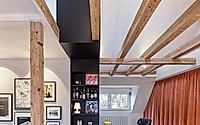
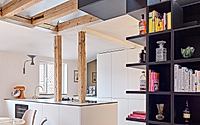
Non-load-bearing walls come out, and the ceiling opens between the living level and the former attic. The original layout split the floor into two small apartments: 44 m² (474 sq ft) and 67 m² (721 sq ft), with a cramped loft above. Now a central kitchen organizes the plan, tying the dining area, sleeping zone, and a hidden bathroom into one legible loop. The result stays generous and light, with direct relationships between rooms instead of corridors.
Curtain Sets Boundaries
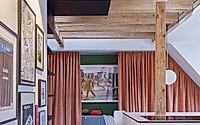
Along the party wall, a full-length curtain replaces a solid partition. Drawn closed, it dampens sound and softens glare, turning the main volume into a calm living room. Then the room pivots — the curtain pulls back to reveal a workplace and storage, switching the apartment from social to focused within seconds. The textile edge reads as a gentle threshold (and a bit of theater) rather than a wall.
Bookshelf Becomes Stair
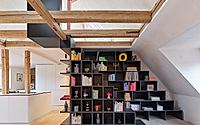
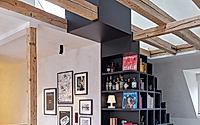
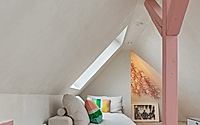
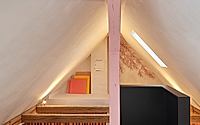
A custom black MDF element does two jobs at once. It works as a walkable bookshelf that climbs to the upper level, connecting daily reading within reach to the elevated retreat. With the old beam structure now visible, views stitch across dining, work, and the lofted sitting area, turning the vertical move into part of the living routine. The upper room, once storage, faces vineyards and locks onto Stuttgart’s TV tower through the large roof opening.
Hidden Rooms, Clear Rituals
The bathroom tucks behind a cabinet door, edited out of sight to keep the living core uncluttered. Around the kitchen, the plan holds distinct rituals without fuss—cook on the island, sit at the table, slip behind panels when the day ends. Flexibility arrives through precise moves rather than gadgets. A quiet reveal becomes the daily rhythm.
Warm Materials, Bold Notes
Material choices stay grounded and tactile. Lye-washed Douglas fir from the Black Forest sets a warm base underfoot, while black MDF adds graphic weight at the stair. Salmon-red beams lace a controlled shot of color overhead, and soft textiles tune acoustics and privacy across the long wall. The palette reads calm yet assertive, built to age well under real use.
Late sun rakes across the fir boards and the stair’s dark grain. The apartment breathes as one room that can close and open at will, paced by simple gestures and good light.
Photography by Zooey Braun
Visit SOMAA