Moldova’s Hobbit Houses: Earth-Sheltered Cabins by a Moldovan Lake
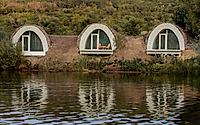
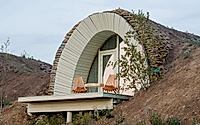
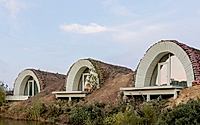
Moldova’s Hobbit Houses settles into a lakeside wake park near Pănăseşti, Moldova, where three earth-sheltered cabins read as shaped mounds in the grass. Designed by LH47 ARCH, the hotel turns unused shoreline into a quiet retreat that faces the water and hides its mass in the land. Inside, local craft and timber work carry the idea forward without fuss.


Low mounds lift from the lakeside and catch the light. From the shore, glazing slips between earthen curves while grasses drift over the roofs in a soft, continuous line.
This is a trio of small rental cabins within a wake park near Pănăseşti, conceived by LH47 ARCH as an earth-sheltered hotel. The focus is material and build: local timber, straw, clay, and living roofs work together to steady temperature, cut energy loss, and restore a quiet stretch of land.
Bury The Cabins
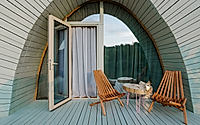
Each structure sits partly in the ground so the domed profiles read as landscape first. The move reduces exposed surface and creates a sense of protection while panoramic glazing turns the rooms toward the water. A green roof returns soil and grasses to the site and softens the outline of the built form. It’s a gentle intervention, not a billboard.
Pack Straw Walls
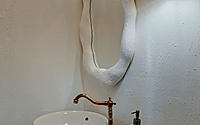
Walls are packed with straw bales — a rural technique once common here — then finished with clay-and-straw plaster and a breathable lime wash. Straw brings insulation without synthetics; clay absorbs excess humidity and releases it when the air runs dry, creating a steady indoor microclimate. The result feels simple and robust, with performance rooted in material behavior rather than mechanical complexity.
Raise Living Roofs
Timber frames crafted by local specialists support layered soil held by a mesh system developed by the studio. Over time, grasses colonize the roofs and stitch the cabins back into the embankment. The assembly cuts embodied carbon compared to steel or concrete and tempers summer heat while holding warmth through colder months. From a distance, the roofs read as living ground.
Build With Precision
Floors and foundations arrive prefabricated in sections, then align on site with tight coordination. Low-tech doesn’t mean loose; it means knowing where to adapt and where to standardize. The approach kept the footprint light and the process legible, while allowing on-the-spot refinements to strengthen junctions and improve longevity. Practical craft, not nostalgia.
Craft Inside Warmth
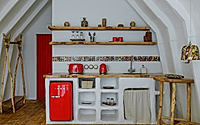
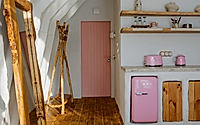
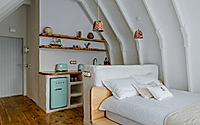
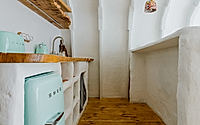
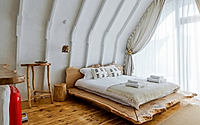
Inside, the material story continues with handmade beds, kitchens, and fittings in timber. Ceramic lighting and small decorative pieces vary cabin to cabin, so no interior repeats the next (a nod to vernacular improvisation). The rooms feel contained yet open, their curved shells gathering warmth while the glazing sets the lake as a moving picture.
By dusk, the grassed roofs fade into the slope and the water carries the day’s last color. Under the mounds, straw, clay, and wood keep an easy, stable climate. The construction reads quiet but exacting — a small, convincing case for building with what the ground already knows.
Photography courtesy of LH47 ARCH
Visit LH47 ARCH