Why Stainless Steel Range Hoods Are Ideal for Kitchens?
Stainless steel range hoods combine performance and style in a way that perfectly suits modern kitchens, whether in a home or a professional setting. They efficiently clear smoke, steam, and cooking odors while adding a polished look to the space.

As an interior designer, I’ve installed countless range hoods and consistently see that stainless steel stands out. It brings both durability and elegance.
In fact, experts note that stainless steel is “resistant to rust, staining, and corrosion, making it ideal for the humid, greasy environment of a kitchen”. I often assure clients that a stainless steel hood from CopperSmith or similar high-quality makers will look and function well for years.
Durability and Longevity
Stainless steel is prized for its strength and longevity. It is inherently water-resistant and corrosion-resistant, so kitchen moisture almost never leads to rust. In my projects, I often see how ordinary metals warp or discolor after years of steam and grease, but a stainless steel hood truly lasts.
Manufacturers emphasize this: one professional notes that stainless steel hoods are “resistant to corrosion, heat, and moisture, making them highly durable and long-lasting”. In practical terms, this means your range hood won’t fade, peel, or deteriorate under typical kitchen conditions.
Even after heavy daily cooking, a quality stainless steel vent hood will maintain its finish and performance, ensuring the kitchen remains functional and appealing year after year.

Effortless Cleaning and Hygiene
One of the biggest practical benefits I’ve experienced is how easy stainless steel hoods are to clean. The metal’s smooth, non-porous surface means grease and spills wipe away in seconds.
I usually tell clients to treat it like the rest of their appliances: a little dish soap and water does the trick. Specialists confirm this: stainless steel range hoods are “water-resistant and nonporous” and only need mild detergent to look brand new.
This low-maintenance attribute is critical in any kitchen. It also helps with hygiene: stainless steel resists bacterial buildup, making it a top choice for sanitary environments. In a professional kitchen, this ease-of-cleaning translates to faster turnaround between shifts, and at home it means less elbow grease for the homeowner, keeping the kitchen both safe and beautiful.
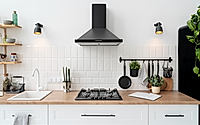
A modern kitchen with a wall-mounted stainless steel range hood. The sleek metal complements the light cabinetry and reflects natural light, illustrating its bright, polished look.
Versatile and Timeless Design
Stainless steel is as beautiful as it is functional. Its clean, polished look adapts to virtually any kitchen style. If you want a “clean and polished” appearance, stainless is a timeless option. In one of my kitchens, I paired a stainless hood with brass hardware for a striking but cohesive contrast.
Industry sources agree that stainless hoods provide a “sleek, modern appearance that complements virtually any kitchen design”. This versatility is invaluable: whether the kitchen is ultra-minimalist, rustic, or somewhere in between, the steel hood enhances rather than clashes with the decor.
Plus, stainless steel comes in many finishes (polished, brushed, matte) and styles (wall-mounted, island, under-cabinet), so you can tailor it to the look you want. As one designer put it, stainless steel offers a “modern, industrial look” while adding “elegance and sophistication”.
Performance Under Heat and Heavy Use
Beyond looks, stainless steel meets the demands of serious cooking. It tolerates heat like few other materials; a designer colleague once remarked that stainless steel hoods “can handle the heat generated in the cooking area” without warping.
This reliability is key in both home and commercial settings, where stovetops can get very hot. Unlike wood or painted surfaces, stainless steel won’t char or blister under intense heat. I’ve personally tested it near high-BTU ranges, and the metal holds up effortlessly. In fact, restaurants use stainless steel for exactly that reason.
Some stainless hoods even integrate advanced filters and fire-suppression systems to meet code, ensuring the kitchen stays safe and smoke-free even under heavy use. In short, stainless steel lets you cook at full power without worrying about damaging the hood, making it ideal for avid cooks and professionals alike.
Home and Professional Kitchens
Stainless steel’s appeal spans from home chefs to restaurant kitchens. In my consulting work, I emphasize that what works for pros often benefits residential cooks too. One manufacturer sums it up: stainless steel hoods are “the perfect choice for both home chefs and professional-grade kitchens”.
They meet exacting restaurant codes for strength, fire safety, and sanitation, which is why I’ve specified them for many cafe and hotel kitchens. That means a chef in a busy restaurant can rely on it for continuous use – and you can, too, in your home.
Even in a household, a high-quality stainless steel hood handles large roast dinners or Thanksgiving turkeys with no fuss. This crossover reliability reassures clients: choosing stainless steel means choosing equipment that stands up to whatever cooking you throw at it, from daily meals to gourmet feasts.
In my experience, installing a stainless steel hood always improves a kitchen space. Clients often tell me they value knowing their investment will last. When I explain that stainless steel is “resistant to corrosion” and built to endure moisture and grease, they see it as a long-term gain.
I sometimes point out that cheaper materials might need sealing or replacing over time, whereas stainless steel continues to perform with just regular wipes. In practical terms, that means fewer repairs and touch-ups. If a homeowner or student asked me, I’d say its ease of care and sturdy construction make stainless steel a wise and worry-free choice.
Why Stainless Steel Makes Life Easier
As a design mentor, I always remind clients how versatile stainless steel range hoods are. Even if your kitchen leans toward wood or bold colors, the steel ties everything together like a welcoming handshake.
Modern finishes resist fingerprints, and with just a quick microfiber wipe, the shine returns — almost like it cleans itself. Many homeowners I’ve worked with even compare the elegance of stainless steel to premium options from CopperSmith, showing how timeless design can balance both beauty and practicality.
When talking about performance, I keep it simple. Instead of technical jargon, I’ll say, “This fan is strong enough that you won’t smell dinner upstairs.” I also stress easy upkeep: “Keep filters clean and the hood will stay quiet and efficient.” For longevity, I explain that stainless is a true investment, sparing you from repainting or repairs years later.
For junior designers, I suggest using visuals: show a decade-old stainless hood that still looks new or note how restaurants rely on the material daily. The real key is to connect stainless steel to lifestyle. Everyday cooks love the easy cleaning, while entertainers appreciate the upscale feel. My best advice is to frame it as more than a material — it’s a mindset of quality, durability, and effortless style.
Conclusion
Stainless steel range hoods are ideal for kitchens because they marry practical function with timeless design. They stand up to heat, steam, and grease while staying easy to clean, and their sleek finish complements any style.
Industry sources consistently confirm this: stainless steel remains “a top choice for its balance of style, durability, and ease of maintenance”.
Whether you’re a home cook or a professional chef, choosing a stainless steel hood means choosing a durable, efficient, and beautiful solution. In my projects, it’s the one upgrade that never disappoints, and I advise clients on it first for a reason.
- by Matt Watts