Roam Ranch by Baldridge Architects
Roam Ranch steps out across a working landscape near Fredericksburg, United States, as a ground-up house by Baldridge Architects for ranchers rooted in modern life. The 4,362-square-foot single-family home ties together daily living, business operations, and education on a property devoted to sustainably raised bison and turkeys. Under one extended roofline, the project recasts central Texas vernacular for a family moving from city rhythms to ranch work.


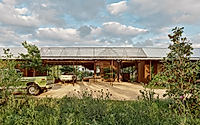
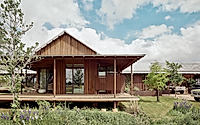
Light catches the long roof as it stretches across the working ranch, drawing a thin shadow line between pasture and domestic life. From a distance, the house reads as one calm, continuous gesture that gathers a cluster of rooms, porches, and work zones beneath its sheltering span.
At its core, Roam Ranch is a single-family house on a central Texas ranch, designed by Baldridge Architects to reconcile everyday living with a demanding rural enterprise. The plan respects a preexisting kitchen and bedroom building, folds in new volumes for sleeping, working, and gathering, and still keeps a legible, ranch-bred order. That order hinges on a contemporary reading of the dog-trot, where separated volumes share one roof and a breezy passage becomes the social and functional heart.
Dog-Trot Reinterpreted
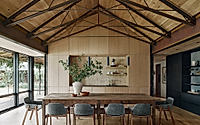
The plan distills the traditional dog-trot into a clear, modern sequence. Bedrooms, offices, gym, great room, and carport line up as distinct volumes, yet all sit beneath a single overarching roof. Between them, circulation works like the breezeway in older ranch houses, giving a sense of outdoor passage while still belonging to the interior routine. That organizing move keeps the home legible even as it absorbs the layered demands of family life, business hosting, and on-site education.
Volumes Under One Roof
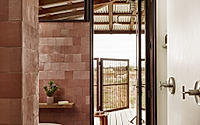
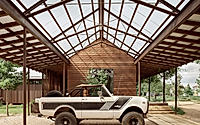
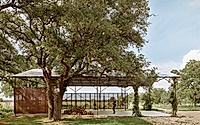
The existing kitchen and detached bedroom remain intact, treated as anchors rather than obstacles. New volumes meet them under the extended roofline, turning scattered buildings into a single address. Corrugated polycarbonate roofing ties old and new together and forms an entry and carport that glow with daylight while still matching the original ranch structures. That entry point becomes a hinge, pulling guests through carport, breezeway, and into the great room in a sequence that feels intuitive and precise.
Living With The Workload
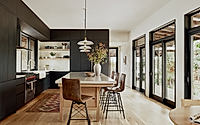
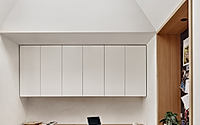
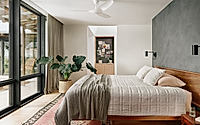
The house must hold podcasts, educational events, and daily ranch operations without losing the feel of a home. Work areas sit within the same roof as bedrooms and the gym, but their placement in discrete volumes preserves a sense of separation when needed. Circulation quietly negotiates that overlap, routing guests toward gathering rooms and outdoor zones while allowing the family to retreat to more private quarters. That balance comes from planning rather than gadgets, and it keeps the building ready for both quiet days and full events.
Construction In Motion
One of the project’s most demanding constraints is continuous occupation during construction, newborn and all. The plan anticipates phasing, allowing parts of the house to function while others undergo work, so the family and business never shut down. Circulation routes and service zones are drawn with both the finished condition and the interim stages in mind, though none of that complexity reads in the final arrangement. What remains is a clean, resolved sequence that belies the logistical knots it quietly solved.
Precise Moments Of Transition
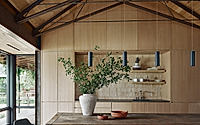
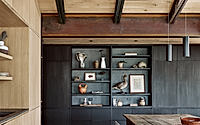
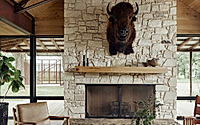
Within the broader order, small details sharpen the way one room gives way to the next. A raw stone hearth meets the floor with a slim quarter-inch reveal, letting the continuous surface slide past and easing the visual shift from living zone to hearth. Flitched wood and steel structure hides inside the roof profile to support compound cantilevers, so overhangs read as effortless extensions rather than labored assemblies. Those careful transitions keep the long house from feeling monotonous, giving each movement from one volume to another a subtle sense of occasion.
As the day drops and the corrugated roof picks up the last low light, the house reads again as a single quiet line on the ranch. Rooms within that line still serve podcasts, family dinners, early workouts, and visiting guests. The plan holds steady, giving the owners a clear way to move through work and home while the life of the ranch continues around them.
Photography by Casey Dunn
Visit Baldridge Architects