Buddha’s House by Peny Hsieh
Buddha’s House turns an apartment in Neihu, Taipei, Taiwan into a hybrid gallery and residence by designer Peny Hsieh. The project arranges a substantial Vajrayana Buddharupa collection within a calm, contemporary interior that still respects ritual and display. Living, meditating, and viewing art happen in rooms that read as both home and micro-museum, where light, shadow, and a measured palette guide the eye and settle the mind.
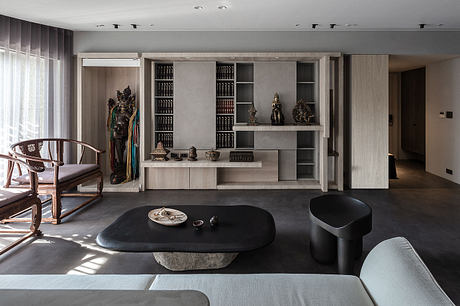
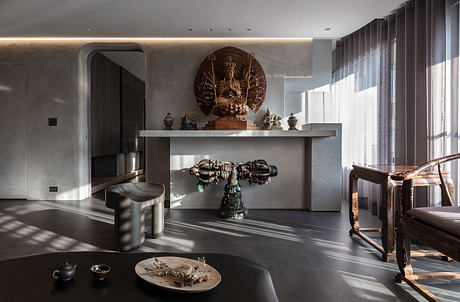
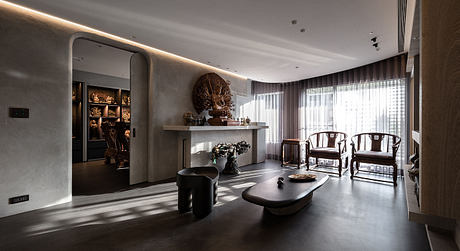
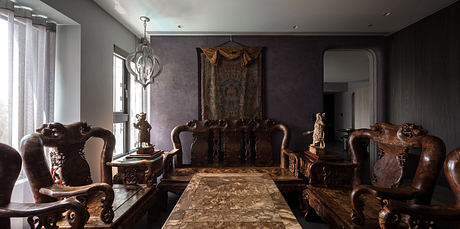
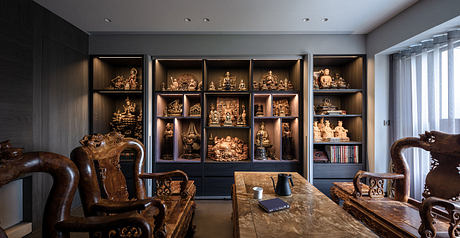
Late afternoon light slips through gauzy curtains and tracks across dark flooring, brushing carved timber chairs and a low, stone-based coffee table. Shadows pool around the Buddharupa arranged on shelves and plinths, so the apartment reads more like a small gallery than a conventional living room.
This apartment in Neihu, Taipei, Taiwan, by designer Peny Hsieh, is conceived foremost as a setting for an extensive Vajrayana Buddharupa collection. The home acts as a sanctuary where daily rituals, quiet meditation, and art appreciation share the same rooms. Interior composition stays restrained so that gray surfaces, purple accents, and dense wooden furniture frame the sculptures with clarity rather than compete with them.
Shaping A Gallery Living Room
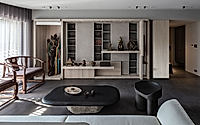
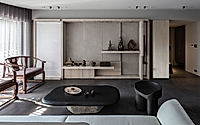
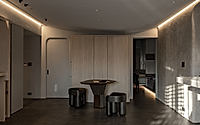
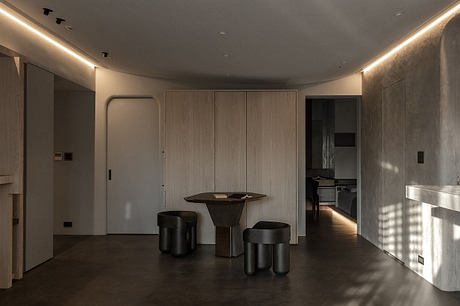
The main living area opens as a calm, continuous volume anchored by a linear display wall that mixes shelving, cabinets, and niches. Pale wood cabinetry and gray wall planes create a neutral field, letting bronze and painted figures hold visual weight. A low black table set on a stone base and compact stools keep seating close to the floor and encourage an unhurried posture. Traditional wooden armchairs line the window edge, so daylight silhouettes their carved profiles against sheer curtains.
Light, Shadow, And Devotional Objects
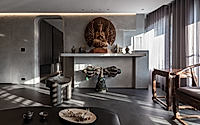
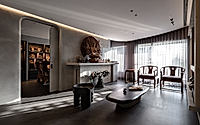
Natural light plays a central role, sliding in bands across concrete-toned flooring and up onto a prominent altar-like ledge that supports a large central Buddharupa. Behind and around the sculptures, concealed lighting washes walls and shelves, giving each figure a defined presence without glare. The gray palette absorbs some of this brightness, so the room never feels harsh and the objects retain depth. Carefully tuned contrast between sunlit areas and darker corners encourages slow viewing and quiet movement.
Arched Thresholds And Quiet Transitions
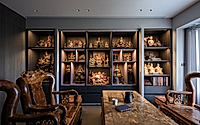
Curved openings soften the transitions between public and more private rooms, replacing sharp corners with arched lintels that read like drawn lines in three dimensions. One arch frames the entrance to a darker display room where shelving wraps the walls, creating an immersive environment for more concentrated study of the collection. Overhead, a continuous slot of indirect lighting traces the ceiling edge, guiding circulation and giving the apartment a gentle perimeter glow. Doors and storage panels sit flush with walls, so thresholds remain calm and visually uninterrupted.
Dense Furnishings And Purple Accents
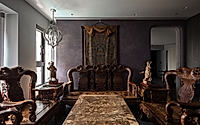
In the dedicated viewing and gathering room, heavy carved wooden chairs and a stone-like central table introduce weight and ceremony to everyday sitting. Behind them, a deep purple wall supports textile and sculptural pieces, echoing the color that, in the concept, carries the aura of the Buddha. Built-in shelving here is darker and more enclosed, with warm lighting that pulls each object forward like a small stage. This contrast between dense furniture, rich color, and controlled illumination reinforces the room’s role as both salon and shrine.
A Calmed Bedroom Retreat
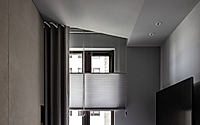
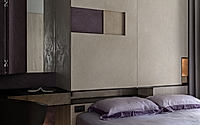
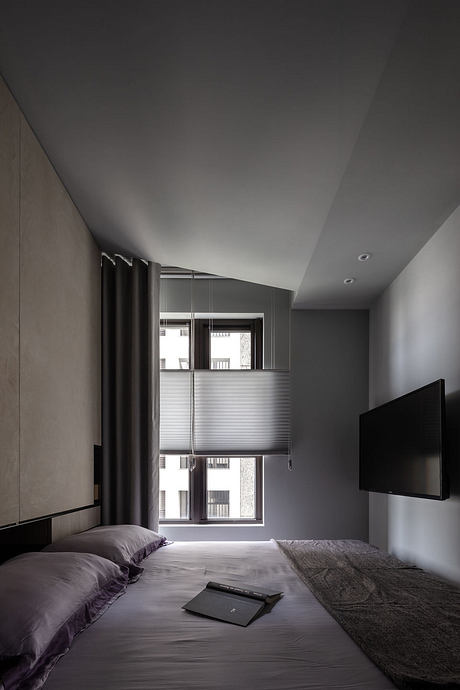
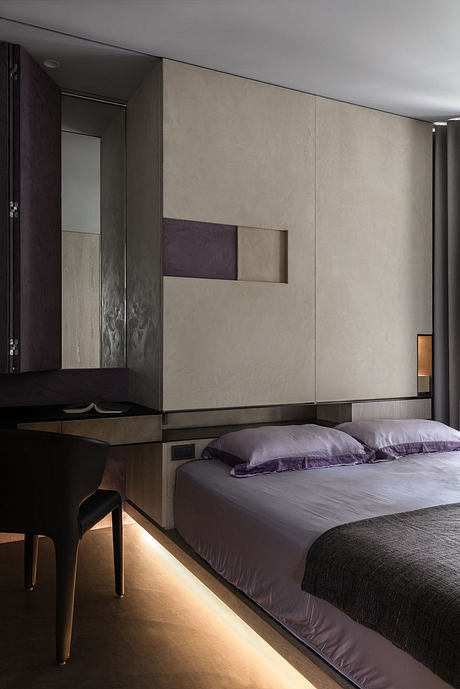
The bedroom shifts the palette slightly lighter while still holding the project’s gray and purple thread. A padded headboard wall folds around the corner into a compact desk zone, with recessed niches that echo the display language from the main rooms. Under-bed lighting floats the platform above the floor, giving the sleeping area a quiet, weightless quality. Window treatments and a limited arrangement of bedding keep the room spare, so it supports rest without distracting from the day’s rituals.
By night, when natural light drops away, the apartment glows from its concealed coves and lit shelves, turning the Buddharupa into primary lanterns. Residents move between living, meditating, and resting in an environment that stays consistent in tone yet subtly shifts in depth and brightness. The result is a home that handles a remarkable collection with care, using a reserved palette and composed furnishings to keep daily life and devotion in steady balance.
Photography courtesy of Peny Hsieh
Visit Peny Hsieh