Breeze House — Monsoon-Breezed Courtyards Shape Relaxed Family Life
Breeze House sets a quiet yet confident tone for terrace living in Singapore, where Mark 12 Architects centers passive performance and day-to-day comfort. This house rethinks the intermediate terrace type around a continuous breezeway that pulls in monsoon winds, daylight, and greenery. Inside, contemporary living unfolds across open volumes that blur the line between interior rooms and semi-outdoor courts, giving the residents a close, changing relationship with climate and weather.


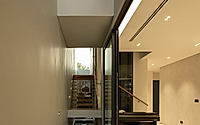
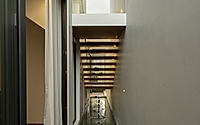
A long, slender void runs the length of the terrace, drawing light, air, and the sound of water deep into the house. Soft daylight washes across interior walls while vegetation and balconies lean into the breeze.
This intermediate terrace house in Singapore, designed by Mark 12 Architects, uses passive design principles as its primary engine. The project organizes daily life around climate, guiding wind, rain, and sun through a linear breezeway that moderates temperature and enriches everyday routines. It is a contemporary home tuned to tropical conditions, so comfort grows out of air movement, shade, and filtered light rather than mechanical spectacle.
Breezeway As Living Spine
Running the full length of the site, a 1.2m width void opens as a breezeway that functions as the house’s true spine. Courtyards, balconies, water elements, and pockets of greenery cluster along this narrow strip, turning what could be a simple slot of air into an inhabited climatic corridor. NE and SW monsoon winds move along this axis and slip into adjacent rooms, so interiors stay breezy without heavy mechanical cooling. Everyday paths cross this void, keeping residents constantly in touch with shifts in air, moisture, and light.
Light And Microclimate Control
The breezeway doesn’t only vent air; it carefully filters daylight into the house. By drawing diffuse light through the length of the void, interior rooms avoid harsh glare while remaining bright throughout the day. Water features at this core help reduce ambient temperature through evaporative cooling, adding a subtle drop in perceived heat as air passes over their surfaces. The sound of flowing water layers in another sensory register, turning moments of passage into brief pauses of respite for the people living here.
Living Above The Street
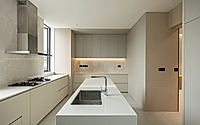
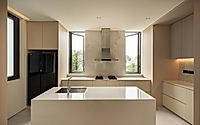
An unconventional move places the main living, dining, and kitchen areas on the second storey instead of the ground. From this elevated level, residents gain broad views to surrounding lush greenery and a more generous sense of sky. Open plan arrangements weave these interior rooms with semi-outdoor terraces that align to the breezeway, so gatherings can spill outward without a hard divide. As one ascends or descends the staircase, framed vistas open to the landscape and to the void itself, setting up layered visual connections across levels.
Façade, Roof, And Screens
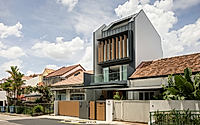
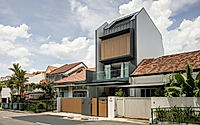
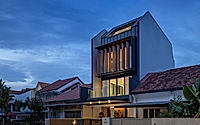
Toward the street, the architecture stays purposeful and understated, relying on proportion and climate logic rather than overt spectacle. A sloping roof runs from attic down to the lower storey, trimming the perceived bulk of the terrace and tying the elevation into a single gesture. Metal sheet cladding expresses the owner’s own expertise as a roofing specialist, turning personal craft into the house’s outer skin. Across this shell, motorized sun-shading screens sit as a second layer, allowing residents to temper daylight intensity, reduce heat gain, and protect privacy as conditions shift.
At dusk, light from within glows through the perforated screens so the house reads like a warm lantern in the neighborhood. Inside, the breezeway keeps carrying air and sound between rooms, holding together the daily rhythm of cooking, resting, and gathering. Climate remains the quiet constant, and Breeze House answers it with a clear, measured architectural response.
Photography by Finbarr Fallon
Visit Mark 12 Architects