Prédio Fanqueiros 156 by João Tiago Aguiar
Prédio Fanqueiros 156 returns a rare surviving apartment building in Portugal to architectural clarity under the hand of João Tiago Aguiar. Behind its restored envelope, the project uncovers historic structure, Pombaline commercial depth, and calm domestic rooms where new interventions negotiate with centuries-old fabric. Every move stays measured, so memory, light, and proportion regain control of the everyday routines threaded through this rehabilitated urban dwelling.


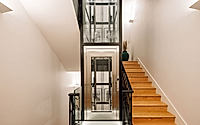
Arches reopen toward the street and daylight runs deep into the plan, touching timber floors and pale walls before settling in the quieter upper rooms. A glass lift glints in the stair core, its transparency framing masonry and geometry that had long stayed hidden behind ad hoc layers.
This project works with a vacant Pombaline building in Portugal as an apartment rehabilitation, led by architect João Tiago Aguiar, and treats the existing structure as primary material. Rather than overwriting history, the intervention restores lost proportions, recovers craft, and introduces new domestic uses through careful insertions that respect load-bearing walls, ceilings, and circulation. The result is a renewed building where contemporary living relies on clarified structure, measured openings, and an honest reading of old and new.
Clearing Back To Structure
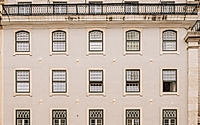
Work begins by stripping away the accumulations that distorted the original commercial ground floor. Later mezzanines give way, revealing the full vertical dimension of the arches and restoring Pombaline depth between threshold and rear wall. With these additions gone, the commercial rooms regain a direct relationship with the street, their transparency once again legible from both sidewalk and interior. Restraint guides every removal, so what remains is structural truth rather than nostalgic reconstruction.
Stair Core And Lift
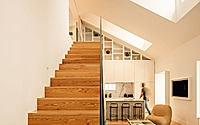
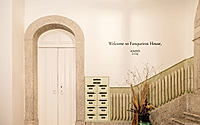
At the heart of the building, the stairwell keeps its rational geometry and quiet dignity. A fully transparent glass lift slides into this core, carefully positioned so treads, landings, and balustrades still read as a continuous historic volume. The lift works almost as an immaterial layer, granting accessibility without competing for visual attention. Old and new share the same shaft, yet the original stair remains the protagonist of the ascent.
Floors, Ceilings And Light
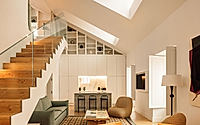
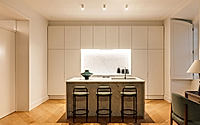
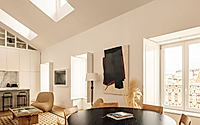
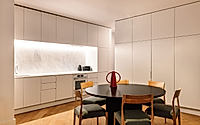
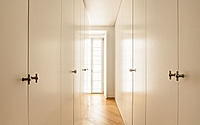
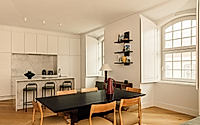
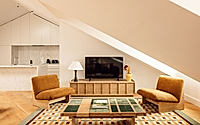
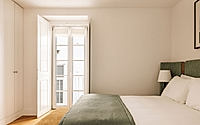
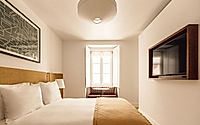
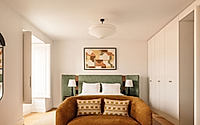
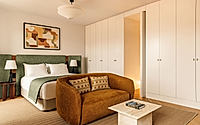
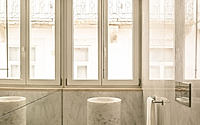
Across the apartments, a wide timber floor unifies circulation and rooms, its diamond-pattern stereotomy drawing quiet reference from historic churches in Lisbon. The pattern brings cadence underfoot, giving everyday movement a subtle rhythm that ties domestic life back to collective memory. Restored decorative ceilings, paired with new timber-framed windows, reclaim height and layered detail while improving thermal and acoustic performance. White walls and pale marble surfaces amplify daylight, so even modest rooms feel clear, calm, and evenly lit.
Domestic Volumes And Thresholds
In the master suites along one vertical stack, bathrooms shift into free-standing volumes set within the larger rooms. These compact constructions pull services away from perimeter walls, allowing original masonry to read continuously and creating a more fluid understanding of the plan. The approach acknowledges contemporary routines yet keeps the historic envelope almost untouched. At the entrance hall, handcrafted tiles by artist Maria Ana Vasco Costa turn the threshold into a luminous antechamber, compressing color and texture before the apartments open out.
Roof Duplexes And Courtyard
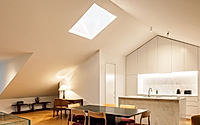
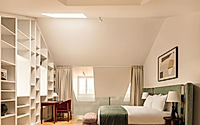
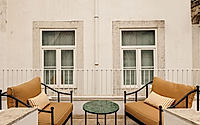
An extension into the roof volume makes room for two duplex apartments, each working with existing slopes and a tight east-facing courtyard. Skylights and dormers punctuate the roof, admitting shafts of changing light that track across floors and walls throughout the day. In one duplex, a double-height living area and bespoke mezzanine heighten vertical reading and lend a sense of breathing room above the city. Strategic openings toward the courtyard distribute daylight across levels, countering its modest size with careful orientation and proportion.
By the end, the building reads with new clarity: structure exposed where it carries, ornament repaired where it counts, and contemporary elements inserted with deliberate lightness. Daily life unfolds between timber, plaster, marble, and glass, always in conversation with the long-surviving shell. Respect for history drives each adjustment, so the renewed apartment house stands as a quiet record of resilience, memory, and constructive honesty.
Photography by Francisco Nogueira
Visit João Tiago Aguiar