Wenatchee River Cabin: Elevated Retreat for Work, Craft, and Play
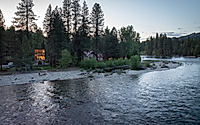
Wenatchee River Cabin stands lightly above the floodplain in Wenatchee, WA, United States, a compact retreat shaped by Wittman Estes for one dedicated outdoor enthusiast. Conceived as a base camp and eventually embraced as a full-time home, the elevated cabin turns a modest footprint into a layered daily routine centered on the forest and river. Simple forms, durable materials, and a clear program keep the focus on lived experience rather than show.


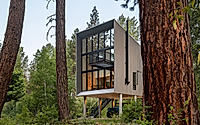
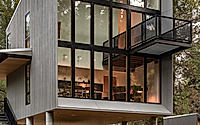
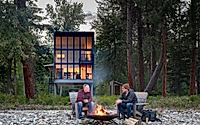
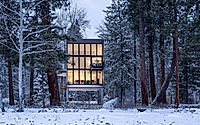
A tall, twenty-foot-wide window wall rises above the riverbank, catching the green of the forest and the changing light along the Wenatchee River. Below, six concrete columns lift the compact cabin clear of the floodplain, leaving the ground open to weather, snow, and the client’s vintage Bronco.
This is a small cabin with a big daily reach. In Wenatchee, WA, United States, Wittman Estes shapes a three-level retreat that keeps program, structure, and routine tightly aligned. The project stays minimal in footprint yet generous in use, moving from covered parking to shared living to lofted bedroom and office without losing sight of the river at its edge.
Stacked Cabin Program
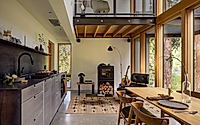
The cabin follows a vertical logic: ground for utility, middle for gathering, top for retreat. On the ground level, the open area under the raised volume doubles as covered parking and a sheltered workshop, where the owner can work on his vintage Bronco in rain or snow. One short climb leads to the middle level, essentially one large room that holds living, dining, kitchen, and a full bathroom in a single continuous volume. Above, the top level pulls quieter functions away from the social core, giving the main bedroom, office, half-bathroom, and loft room to breathe.
Living With The River
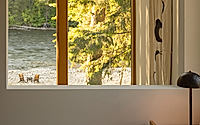
A single twenty-foot-wide by twenty-four-foot-high window wall dominates the middle level, training the primary view toward the river and forest while screening neighboring properties. Daily life gathers at this edge: meals, reading, and work play out against the moving water and filtered light. In the bedroom above, a view portal cuts through the interior, looking down over the living room and outward to the river beyond, so the occupant carries that outlook from daybreak to night. What began as a weekend base camp now structures full-time living around these repeated views and paths.
Crafted Metal Moments
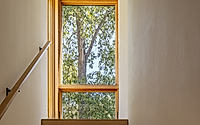
Durable materials support both the environment and the owner’s habits, from floodplain resilience to hands-on making. Concrete columns and steel framing hold the elevated volume steady, while the cantilevered steel deck extends the loft toward open air and tree canopy. Inside, the owner’s lifelong metalworking experience turns everyday elements into personal artifacts, from raw steel kitchen countertops and backsplash to the hemlock and steel dining table. Tube steel and metal mesh guardrails line stairs and edges, giving tactile consistency to the routes between levels.
Interior Rhythm And Heat
The middle level’s living area gathers around a wood-burning fireplace tucked beneath the fir-framed loft, anchoring winter evenings and cool mornings in one clear spot. Minimal interior finishes set a quiet backdrop for nature, light, and artwork, so color and movement arrive mostly from outside the glass or from daily use of the rooms. The open volume keeps the kitchen, dining area, and sitting zone visually linked, encouraging casual shifts from work to cooking to rest.
From Base Camp To Home
Before the cabin, the owner camped on this half-acre for a decade, learning wind patterns, snow, and the reach of the river. That long occupation informs the elevated main floor, the modest 746-square-foot footprint, and the direct connection between car, tools, and home. As work-from-home habits took hold, the project adapted from weekend shelter to permanent residence without changing its essential clarity. Light, structure, and program stay steady while daily life grows into them, turning a simple cabin into a durable routine.
Photography courtesy of Wittman Estes
Visit Wittman Estes