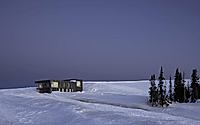
Kirigami by Sparano + Mooney Architecture
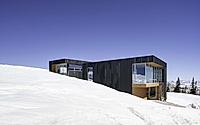
Kirigami unfolds as a finely tuned winter retreat in Eden, United States, shaped by Sparano + Mooney Architecture around the precision of folded steel and timber craft. The project translates the Japanese art of kirigami into an alpine setting, using cuts, folds, and voids to organize a ski-in/ski-out home for multi-generational living. Inside, a clean, modern character frames art, views, and ritual, from onsen bathing to quiet evenings off the slopes.


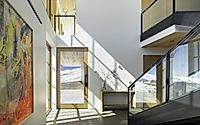
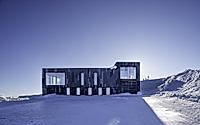
Snow piles against the dark steel skin while light slips into the courtyard and across polished concrete floors. Inside, warm timber softens the hard winter outside.
This retreat is a ski-in/ski-out mountain home in Eden, United States, conceived by Sparano + Mooney Architecture as a three-dimensional translation of kirigami. The art of folding and cutting guides everything from the bent TEKKō steel envelope to the carved-out onsen rooms and decks. A modern, restrained character lets material and craft carry the story, with the build organized around how surfaces meet snow, heat, and human routine.
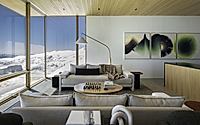
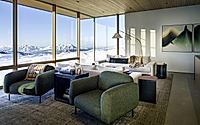
Hem fir, rift white oak, black granite, polished concrete, cedar, and blackened steel set up a clear material hierarchy that runs from outside to in. Structural decisions, cladding choices, and interior finishes all work toward durability in a remote, high-altitude climate, while still keeping rooms calm, bright, and ready for both daily life and seasonal rituals.
Folded Metal Envelope
TEKKō steel wraps the exterior like a folded sheet, bending around the upper level and slipping into the courtyard to tie volumes together. Standing seams turn corners rather than stopping abruptly, reinforcing the sense of a continuous, cut-and-fold surface. One stretch becomes perforated, with standing-seam panels filtered to temper light and views, while adjacent runs stay opaque for shelter from weather and neighboring activity. The highly corrosion-resistant steel-zinc composite is chosen for endurance in snow, wind, and freeze-thaw cycles at altitude.
Warm Timber Core
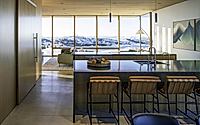
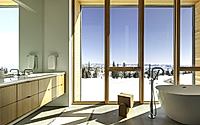
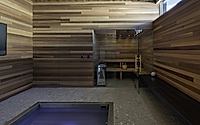
Inside, hem fir lines walls and ceilings to form a consistent, warm shell for daily routines and gathering. Cabinetry in rift white oak introduces a finer grain against the broader sweep of fir, while black granite countertops and accent counters bring weight and shadow around cooking and serving zones. Underfoot, polished concrete floors carry radiant heat, turning a hardwearing surface into a quiet thermal mass that holds warmth through long winter nights. In the onsen area, cedar takes over walls and ceilings for its aroma and color, paired with stone tile floors that ground the ritual of bathing.
Rooms Cut By Level
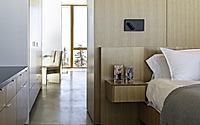
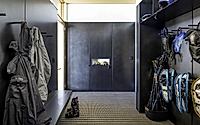
The multi-level layout reads like a vertical series of folds, with each step change marking a shift in privacy and use. A primary suite on the upper level rises 5 feet above the main level, gaining a private deck and steam shower while remaining capable of full separation from the rest of the retreat. Below, two bedrooms and a bunk room with stacked built-in bunk beds sit alongside the spa and onsen area, with a mudroom and ski room detailed in blackened steel for gear-heavy comings and goings. A windowless media room, acoustically isolated on the main level, holds a low-throw projector and protects the quiet of the primary suite nearby.
Framing Daily Winter Life
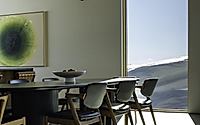
The dining room opens toward the courtyard through a multi-slide door system, turning one gesture into both light source and circulation edge. In the main kitchen, upper cabinets and ceiling-hung fixtures are deliberately absent, allowing a clear visual sweep and unbroken flow of energy between cooking, dining, and mountain views. A scullery kitchen with a small built-in bar tucks near the media room, handling storage and prep while keeping the main volume lean. An elevator stitched into the plan lets residents and guests move from garage to kitchen and living areas, anticipating aging in place and extended family visits.
Building For Altitude
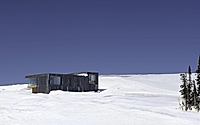
At roughly 8,800 feet, every system responds to remoteness and cold, from the propane-powered infrastructure to highly efficient radiant heating throughout. Southern façades extend overhangs to temper solar gain, while operable windows at key points release excess heat and pull in cooler air when needed. The form sits lightly on the native landscape, with construction focused on minimizing disturbance yet keeping strong points of contact with snow, slope, and view. Positioned along the north and west sides of ski runs, and with the east side held as snow storage, the retreat stays deeply tied to the rhythms of the mountain.
Snow still pushes against the TEKKō steel, but inside, timber grain, stone tile, and warm concrete frame a calm, measured interior. Light tracks across the folded forms through the day, catching seams, thresholds, and the edges of decks and baths. In daily use, the materials earn a soft patina that matches the slow carve of skis outside.
Photography by Matt Winquist
Visit Sparano + Mooney Architecture