Wellington College International by ARCOP Associates
Wellington College International sets a new benchmark for K-12 education in Pune, India, where ARCOP Associates shapes the campus and Education Design International crafts its interiors. The college unfolds as a contemporary learning environment that balances heritage references, community-focused planning, and adaptable teaching clusters across its generous grounds. Students move through a network of courtyards, terraces, and flexible rooms that support both quiet study and energetic collaboration each day.


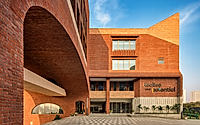
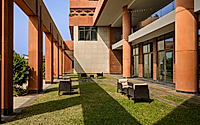
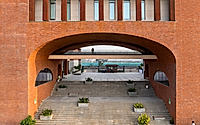
Morning light washes across brick cloisters as students move between courtyards and terraces, drifting from quiet nooks into animated commons. Every turn reveals another place to learn, talk, or pause within this generous K-12 campus.
This college in Pune, India, planned by ARCOP Associates with interiors by Education Design International, functions as a contemporary learning village. The campus works as a connected environment where clusters, commons, and circulation merge into one continuous educational realm. Rather than isolating classrooms, the arrangement choreographs daily life around interaction, choice, and a strong sense of shared community.
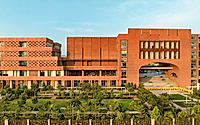
Across 9.3 acres, the college operates as a full K-12 institution whose interior planning revolves around flexibility, adaptability, and evolving pedagogies. Four primary blocks run along an east–west axis, tied together by outdoor play along the river belt, open central courts, and terraces on upper levels. Within this framework, a layered network of learning clusters, co-curricular zones, and informal hangouts encourages students to move freely, partner differently, and claim their own paths through the day.
Learning Village Concept
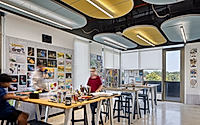
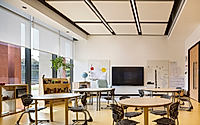
The core idea is a learning village where education unfolds through varied encounters rather than in a single, closed classroom model. Learning clusters serve as the village blocks, each one a multi-zoned environment with rooms that support group work, focused tasks, and shared exploration. Transparent and operable partitions connect these zones, allowing teachers to open up for cross-class collaboration or close down for concentration. Students gain real choice in how, where, and with whom they spend their academic hours.
Clusters And Commons
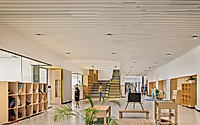
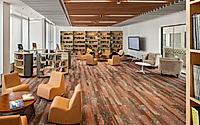
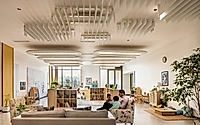
Inside each cluster, flexible studios sit beside open collaboration areas, stepped seating, and quiet corners for reflection. The intent is clear: every learner finds a fitting setting, from social discussion to solitary reading. Early years students gather on broad “learning stairs” that double as circulation and informal amphitheater, turning transitions into shared experiences and casual teaching moments. As children grow, the environment shifts toward more structured, expressive rooms, where deeper tones and bolder materials frame independent study, debate, and project work.
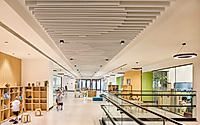
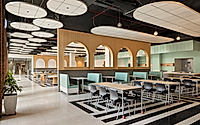
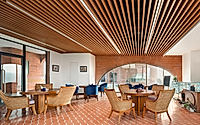
Co-curricular programs occupy central positions rather than edges, pulling arts, activities, and shared events into the daily path of every student. Generous ceiling heights in common zones enhance openness, while acoustic treatments keep conversations controlled enough for simultaneous uses. Informal seating wraps around internal green pockets and overlooks the atrium, so a short break can slip into a small gathering or a quick tutorial. Lightweight furniture across clusters and commons supports rapid rearrangement for lectures, group tasks, or one-on-one mentoring.
Materials For Learners
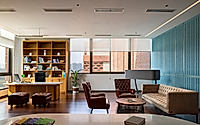
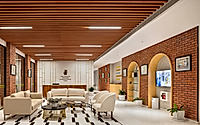
Material choices reinforce the campus experience from the first step inside. Bare brick and concrete continue from the exterior along stairways and cloisters, anchoring circulation routes with tactile honesty and visual continuity. Underfoot, granite and marble create durable, cool surfaces that temper the climate and ground everyday movement. Interior zones lean toward warm, neutral tones, with natural wood and brick adding softness and comfort to long school days.
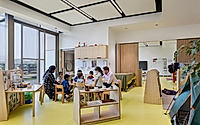
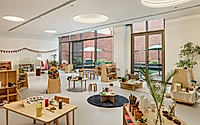
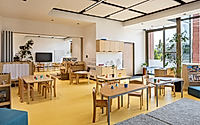
In early and primary years, finishes become warmer and more gentle, with calming colors and intimate volumes that recall home rather than institution. Open planning supports internal transparency and passive monitoring, giving teachers clear sightlines while preserving a sense of independence for young children. Higher grades shift toward deeper colors and more assertive textures, echoing their growing autonomy and more demanding academic lives. Throughout, biophilic elements at the building envelope soften the move from outdoor courts to indoor corridors, threading greenery into daily routines.
Heritage Reinterpreted
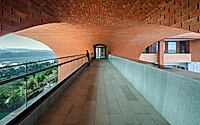
The campus draws on the stately character of Wellington College while responding to Pune’s architectural lineage. Arched openings and refined detailing are distilled into clean, contemporary lines that frame long views and soften passageways. Brick jaalis act as both heritage reference and climatic filter, casting patterned shade while ventilating courtyards and walkways. Across the exterior and interior, a consistent palette of earthy materials creates continuity, with the arch emerging as a quiet emblem that links tradition and modernity.
These heritage cues never overpower the practical needs of a working school day. Instead, they sit alongside adaptable layouts and clear circulation, reminding students of a larger legacy even as they navigate project zones, reading corners, and collaborative terraces. Authenticity lies in the way material, movement, and learning routines intersect, not as ornament alone but as part of daily use.
As the day closes, courtyards mellow, terraces cool, and internal vistas pick up thin bands of evening shadow. Students filter out past brick, greenery, and the familiar curve of the arches. The campus remains ready for the next cycle of classes and conversations, its learning village poised to adapt as each new generation of learners arrives.
Photography by Noughts & Crosses Photography
Visit ARCOP Associates