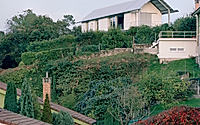
Casa Guadalupe by Hanghar
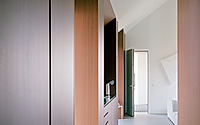
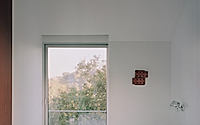
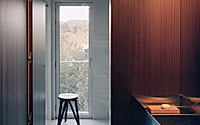
Casa Guadalupe stands on a rural-leaning suburban plot outside Gijón, Spain, where Hanghar tests a precise, industrialized way to build a contemporary house. Prefabricated in a workshop and assembled on site within days, the dwelling leans on local typologies while pushing construction toward a leaner, more controlled future. The result reads as both experimental and grounded in its Asturian setting.


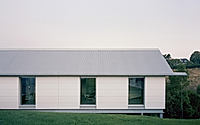
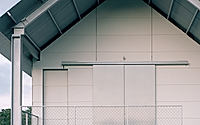
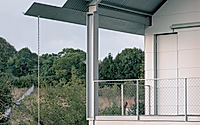
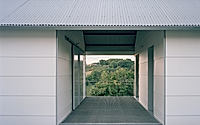
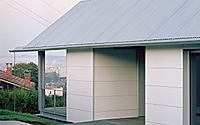
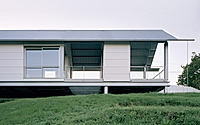
A light volume hovers just above uneven ground, held by a grid of piers and open to the damp Asturian air. Metal panels catch the shifting northern light, while a corrugated roof draws a crisp line against the sky and recalls the region’s agricultural sheds.
This is a house built as a system instead of a one-off object. Casa Guadalupe is a prefabricated house in Gijón, Spain, conceived by Hanghar as a contemporary dwelling rooted in local rural forms and engineered through industrialized construction. The project takes industrial methods, stringent material control, and a dry assembly process as the core logic that shapes both structure and daily life.
Raised on piers within a suburban context that still reads as countryside, the house draws from two Asturian types: the agricultural shed and the casa mariñana. These references give the building its clear volume, its direct touch on the ground, and its measured way of occupying the plot. Rather than copying vernacular forms, the project distills their scale and robustness into a lightweight, workshop-made frame that arrives on semi-trailers and comes together in hours instead of months.
Prefabrication As Method
Every element of the house is fabricated in a controlled workshop environment. That decision shortens construction timelines, sharpens tolerances, and allows finishes to be checked before they reach the site. The main structure lands on the plot and locks together in roughly 48 hours, limiting disturbance to soil, neighbors, and the wider landscape. Industrialization here is less about repetition and more about a flexible kit that can respond to changing domestic needs over time.
Lightweight Structural System
At the core sits a lightweight steel structure that organizes both enclosure and interior rhythm. Slender members carry loads with efficiency, freeing the plan from heavy bearing walls and thick foundations. Around this frame, a ventilated facade of sandwich panels, an insulated air cavity, and a corrugated metal roof form a coherent envelope. Joints remain legible, so the way the house is put together stays readable from outside and inside.
Raised Above Ground
The building steps lightly across an irregular plot by resting on a series of piers that adapt to the existing topography. This approach minimizes excavation, avoids heavy earthwork, and preserves the ground’s natural condition between supports. Air flows under the floor, separating the living areas from damp soil and reinforcing the sense of a precise object set within open land. That gap underlines how little concrete is needed compared to conventional foundations.
Envelope For A Humid Climate
Material choices track the demands of a humid, variable Asturian climate. The ventilated facade and insulated cavity manage moisture and heat, keeping the envelope dry while limiting thermal loss. Metal cladding, steel framing, and factory-applied layers prioritize durability and ease of control during production. This compact assembly proves that industrial systems can deliver both comfort and measured energy performance without abandoning character.
Through its execution, the house treats prefabrication as a rigorous design tool rather than a shortcut. Industrialization coexists with careful detailing, a clear response to climate, and a consistent regard for the wider landscape. As light slips across panels and under the raised floor, Casa Guadalupe reads as a precise experiment in how houses might be built tomorrow with less weight and more intent.
Photography by Rory Gardiner
Visit Hanghar