Bend Hideaway by Feldman Architecture
Bend Hideaway sets a crisp modern house against the wooded edge of Bend, OR, United States, by San Francisco–based Feldman Architecture. The retreat supports recent empty nesters and their visiting family with a linear plan that folds around a lap pool, guest rooms, and shared rooms tuned to forest views. Here, an active daily rhythm meets a quiet, highly edited relationship to the 650-acre preserve next door.


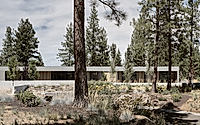
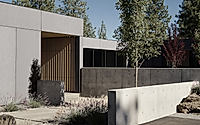
Low volumes stretch across the ground as the driveway bends, and a long private wing draws the eye toward dark trees beyond. Light catches the concrete floor and pale plaster, then slides toward glass that opens directly to the preserve, joining indoor rooms with the cool Oregon air.
This house in Bend, OR, United States, by Feldman Architecture is conceived as a modern retreat for recent empty nesters planning their eventual retirement. The project organizes daily life around clear zones for sleeping, gathering, and exercise, while always orienting movement toward the adjacent 650-acre nature preserve. A long private bar, a perpendicular public volume, and a glazed bridge set up a legible sequence that balances privacy with wide-open views.
The real estate type is a house shaped for an active lifestyle, with a lap pool, home gym, and guest rooms for grown children folded into the plan. Modern geometries and a restrained palette of concrete flooring, black steel, warm wood, and white plaster support the strong diagram rather than competing with it. Circulation threads between protected courtyards, a great room, and patios, so every turn in the plan offers a moment toward garden, sky, or forest.
Organizing Wings And Pool
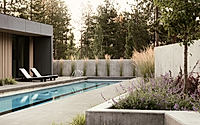
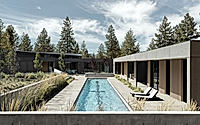
The house reads as two main bars set at right angles, each tuned to a different part of daily life. Along one edge, the private wing stretches out to run parallel with the outdoor lap pool and sitting area, creating a windbreak and buffering views to a nearby neighbor. This long form shelters swimming and quiet lounging, so residents can exercise or sit by the water while screened from the harsher weather of the open site. The public rooms then run perpendicular to this bar, giving the great room direct western exposure toward the preserve and anchoring social life at the crossing point.
Crossing The Glass Bridge
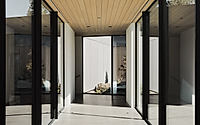
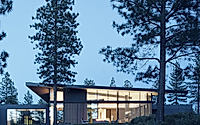
Between the more intimate wing and the shared rooms, a glassy, windowed bridge marks a clear hinge in the plan. Passing through this link, the body feels a brief compression before the volume releases into the great room and its expansive patio. The bridge not only connects two functional zones; it also frames flanking views, so each passage becomes a small ritual of leaving one world for another. That daily walk enlivens circulation, turning a simple hallway into a moment of orientation and pause.
Courtyards In The Private Wing
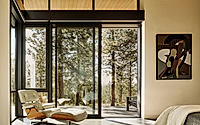
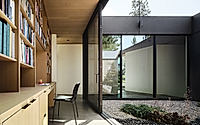
Within the long private bar, planted courtyards cut into the linear form to prevent it from feeling like a single, continuous corridor. These outdoor rooms pull daylight and garden views into guest bedrooms and offices, granting each room its own outlook and sense of address. Moving along the wing, the sequence alternates between enclosed interiors and pocket gardens, making the walk to a guest suite or workspace feel calm and measured. The courtyards also help bring fresh air and a sense of changing seasons into the more secluded parts of the house.
Great Room, Roof, And Canopy
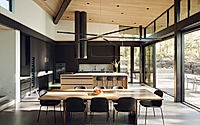
In the great room, a dynamic roof form slices diagonally across the volume, breaking away from the orthogonal plan below. Clerestory windows sit within this geometry and open dramatically toward the surrounding tree canopy, so light washes down from above rather than only from the sides. Large openings slide away to merge the room with an outdoor patio and firepit, creating a protected gathering area during cool Oregon evenings. Here, the plan steps outward into the preserve edge, concentrating family life at a point where architecture, fire, and forest meet.
Material Rhythm Along The Route
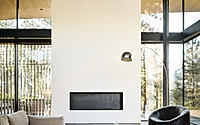
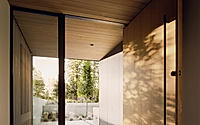
Modern materials reinforce the clear organization of the house, guiding movement along each route. Non-combustible exterior paneling and concrete flooring ground the geometry, while operable wood screens add warmth and control sunlight along glazed stretches. Inside, black steel lines, warm wood elements, and white plaster walls create a consistent background for views outward to snowy trees and darker trunks. That repeated palette keeps attention on the journey from entry to bridge, from courtyard to pool, and from sheltered wing to wide-open preserve.
From the quiet end of the bedroom wing to the animated edge of the firepit, every route passes by water, planting, or tall forest beyond. Morning laps, an afternoon in the home gym, or an evening by the patio all plug directly into that preserved landscape. The house stays low and precise as seasons change, giving its owners a clear, navigable retreat on the threshold of the Central Oregon woods.
Photography courtesy of Feldman Architecture
Visit Feldman Architecture