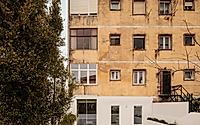
Caxias PR Revives Compact T2 Living
Caxias PR reimagines a compact ground-floor apartment in Portugal through a precise intervention by João Tiago Aguiar. The 1970s T2 unit, once hemmed in by a poorly placed bathroom and underused rear yard, now orients daily life toward a generous, sunlit logradouro. In 2025, this renovation uses color, material, and a clearer plan to bind interior rooms to the reworked outdoor terrace.


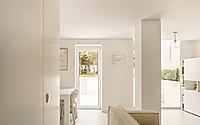
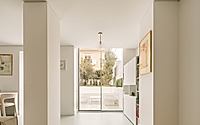
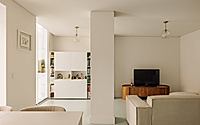
Morning light reaches deep from the garden terrace, sliding over sage green flooring and into the living room. A once-fragmented apartment now reads as a single, calm sequence of rooms.
This is a small T2 apartment renovation on the ground floor of a 1970s residential building in Caxias, Portugal, designed by João Tiago Aguiar. The project concentrates on reorganizing a compact plan and clarifying a generous backyard, using a unified interior palette to link daily routines to the logradouro. Material continuity, especially the persistent sage tone, supports the new flow between private rooms, social areas, and the reformed exterior terrace.
Originally, two street-facing bedrooms and rear social areas were split by a lone bathroom that blocked connection to the backyard. The renovation keeps the bedrooms on the main facade and shifts the existing bathroom toward the hinge between the private zone and living room, freeing the full rear elevation. This move opens the social area to light, supports direct views to the garden, and allows bathroom access from the hall without cutting across shared rooms.
Sage Green Continuity
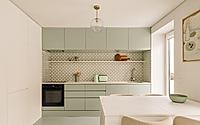
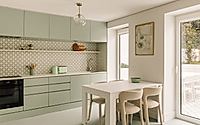
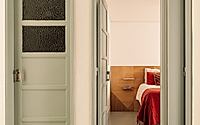
A continuous sage green self-leveling epoxy floor runs through the apartment, tying hallway, bedrooms, living area, and kitchen into a clear visual field. Doors, baseboards, and kitchen cabinetry pick up the same soft tone, so walls read quieter and movement follows color rather than partitions. This chromatic thread gives the compact plan a sense of depth, allowing each room to feel part of a longer, gentle gradient. One material decision quietly organizes how the apartment is read and remembered.
Hydraulic Tile Immersion
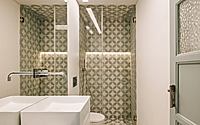
In the wet rooms, hydraulic tile takes over, shifting the sensory register. White and sage green tiles wrap floors and walls and even climb to the ceiling in the shower zone, turning a small volume into a full-color enclosure. The same pattern extends across the impermeable surfaces of the exterior terrace, so the daily route from indoor bath to outdoor threshold passes through a continuous field of texture. Water, cleaning, and outdoor use sit comfortably within this hard-wearing, patterned shell.
Living Room And Open Kitchen
The relocated bathroom allows the full rear facade to serve the social rooms. A new open kitchen shares one volume with the living area, doubling the sense of width and framing garden views from cooking, dining, and sitting positions. Removing the former partition between kitchen and living room makes the terrace visually present throughout daily routines. A compact social bathroom, tucked in the reorganized core, supports guests without disturbing the more private bedroom hall.
Terrace On Two Levels
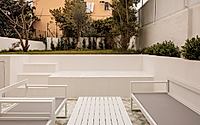
Outside, the logradouro is redrawn on two levels with a change of about one meter. The lower platform, now extended from 1,5 m to roughly 4,5 m in depth, aligns with the apartment threshold and finally has room for an outdoor dining table and a sitting area. Within the step between levels, laundry functions and a long built-in bench are tucked into the rise, supporting use without visual clutter. Beyond the paved terrace, a lawn remains, keeping the ground permeable and setting a softer green against the tiles and sage surfaces.
Private Rooms Rebalanced
Two bedrooms still address the street, preserving the building’s original double-front typology. The shifted bathroom marks a clear transition between this quieter zone and the more active social rooms rather than cutting them apart. Access from the bedroom hall means nightly routines stay contained, while guests move naturally from entry to living area without crossing private thresholds. Within modest dimensions, the apartment gains a clearer rhythm between sleeping, social life, and outdoor use.
By rooting the renovation in one measured palette and a few decisive shifts, the project turns constraint into clarity. Light now reaches past the living room and into daily rituals, tracing sage surfaces and patterned tile. From the street facade to the lawn at the back, each room reads as part of a continuous interior that leans gently toward the garden.
Photography by Francisco Nogueira
Visit João Tiago Aguiar