Weaving the Mood of Life Between Modernity and Nature
Weaving the Mood of Life Between Modernity and Nature is an apartment in Guangdong, China, designed by LH Architecture Design. Completed in 2024, it frames daily life through a restrained modern interior shaped by greenery, stone, wood, and light. The project turns a compact urban condition into a calmer domestic setting, using layered materials and a soft, low-saturation palette to bring nature closer to everyday routines.


Amid a city marked by high-rise towers, this apartment addresses the difficulty of living with nature in limited urban quarters. The project approaches that condition through modern minimalism and the warmth of natural materials, shaping a home that feels calm, restrained, and grounded in daily life. Rather than treating the interior as a composition of rooms alone, it presents a way of living defined by light, shadow, texture, and quiet continuity.
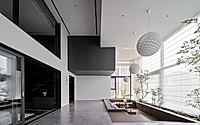
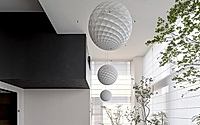
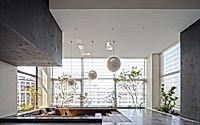
At the entry, a tranquil field of greenery opens gradually, almost like a living landscape painting. Trees, ferns, and low ground cover are layered within planters by the window, where natural stone helps frame a scene that brings a contemporary Eastern character into the home. The effect is gentle but clear, establishing nature as an active part of the interior from the first moment of arrival.
An L-shaped sunken stone seat gives this entrance garden a stable, restrained center. Gray cushions and pillows soften the composition, while a glass coffee table catches reflections of leaves and sky, drawing the exterior and interior into the same visual field. Blankets and books introduce an everyday note, keeping the setting from feeling formal or remote.
More than an architectural extension, the garden works as a prelude to the rest of the home. Restrained materials and living plants are held in careful balance, creating a setting that remains rational in structure yet quietly emotional in atmosphere. Filtered through sheer curtains, sunlight and moonlight cast shifting patterns across branches and walls, slowing the tempo of the interior and softening the presence of the city beyond.
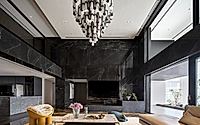
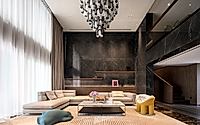
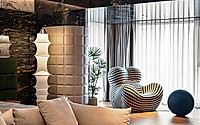
In the living room, a double-height volume brings depth and a stronger sense of vertical scale. Light moves freely through the room, giving the interior a layered, open quality. A black marble wall anchors the composition with a dark, composed surface, its veining recalling the fluid character of ink wash, while slim wooden shelving inserts a warmer note into the stone-heavy palette.
A beige leather sofa shapes the main zone for conversation and rest, balancing softness against the darker backdrop. Nearby, a glass coffee table sits lightly on a carpet with muted geometric patterning, tying together the room’s material and tonal contrasts. Artworks and small objects loosen the formality of the setting, while blue cushions and a yellow lounge chair introduce brief notes of color that sharpen the otherwise calm composition.
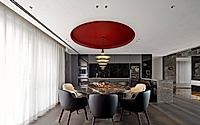
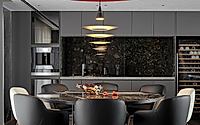
The living room connects openly to the dining and kitchen areas, reducing the usual separation between functions and guiding movement naturally toward the dining table. At the center, a round marble table sets a quiet focal point, surrounded by brown, black, and white chairs that keep the palette ordered and clear. Red pendant lamps and yellow upholstered chairs interrupt the darker tones with a brighter register, giving the room a more animated rhythm.
Across these shared areas, metal, marble, and wood establish a tactile sequence that shapes daily use. Cool, solid, and warm surfaces sit side by side without excess, and soft light settles over them evenly. The result is less about contrast for its own sake than about building a domestic atmosphere that supports family life with steadiness and calm.
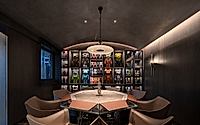
After meals, the game room provides a more relaxed setting. A dark palette and pared-back forms define the room, where a round glass table reflects the geometry around it and gray leather chairs establish a quiet social circle. A softly lit display cabinet introduces memory and collection into the composition, giving the room a more personal dimension.
The master bedroom continues this search for calm through texture and tonal balance. Walls of dark and light marble are paired with green upholstered elements, producing a mood that feels composed rather than dramatic. Wood flooring and soft furnishings bring warm and cool tones into equilibrium, while a sculptural floor lamp throws angled light across the room with a measured, contemplative effect.
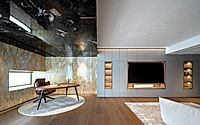
An adjoining balcony extends the bedroom’s use beyond rest alone. An artistic sofa and corner glazing open the room to wider views, and a long horizontal window brings natural light into a more secluded desk area. Here, ordinary routines are given a slower, more deliberate setting.
In the walk-in closet, a symmetrical curved ceiling introduces a sense of formality and ease. Double-sided glass wardrobes keep clothing visible and organized, while a leather stool placed at the center balances utility with visual clarity.
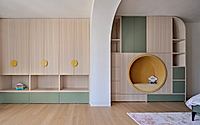
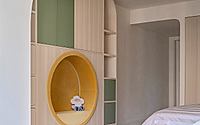
The children’s room shifts to a softer palette of beige, pale green, and light wood. Natural timber elements, generous wardrobes, and open shelving support daily storage, while soft headboards and carpeting make the room feel warm and comfortable. A round yellow nook and bay window area accommodate both play and study, allowing the room to adapt across different routines.
Geometric details bring a playful character to the children’s area. Yellow circular door handles and round wall lamps appear alongside toys displayed in the nook and on bedside surfaces, giving the room a more personal tone. Practical needs remain central, but the interior also considers comfort, safety, and a sense of imagination.
As the noise of the city recedes behind plants, materials, and filtered light, the apartment moves beyond a purely physical enclosure. It becomes a place where nature is brought back into daily life with restraint and clarity. Through a modern vocabulary, the project returns the home to its inhabitants, making room for stillness, reflection, and a quieter rhythm within the city.
Photography courtesy of LH Architecture Design
Visit LH Architecture Design