Painters’ Apartment Reworks a Panel Flat with Art and Plywood Details
Painters’ Apartment is a compact apartment renovation in Prague, Czech Rep., designed by Neuhäusl Hunal for a young family of academic artists. Completed in 2020, the project works within a restricted budget and keeps the plan largely intact, using concrete, plywood, tile, reused furniture, art, and self-built elements to turn a small panel-house flat into a relaxed, flexible home.
About Painters’ Apartment
Lack of money and scarce skilled labor set the terms here. The response is improvisation, playful imperfection, and a clear trust that paintings, plants, and everyday life will complete what architecture deliberately leaves open.
A family of academic artists approached the studio in late summer 2019 to reconstruct a fairly small apartment in a panel house on Červený vrch. The home needed a full renovation to suit a young family with a toddler. The clients chose the atelier after seeing the Concrete apartment, and although the budget was tight, that limit was balanced by a strong mutual understanding between architects and clients.
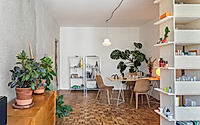
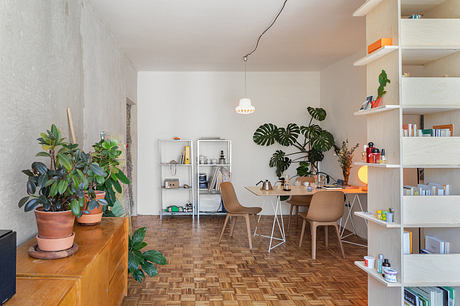
The result is an interior shaped less by finish than by use. Existing furniture from the clients’ former apartment, artwork made by the family and their friends, secondhand lighting, and portions of self-built work all become part of the final composition. Rather than forcing every surface and detail to resolution, the project leaves room for change and for the occupants to keep shaping the rooms over time.
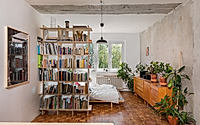
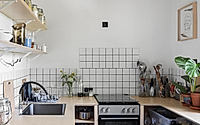
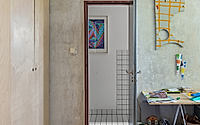
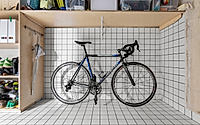
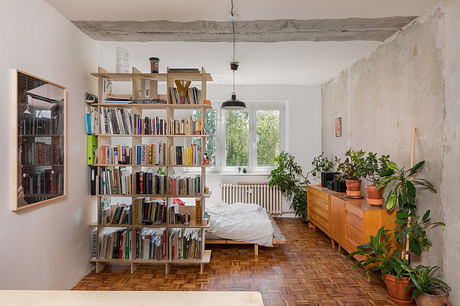
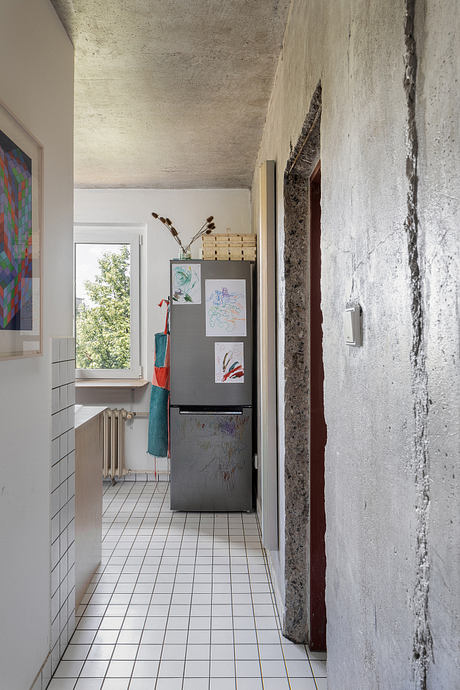
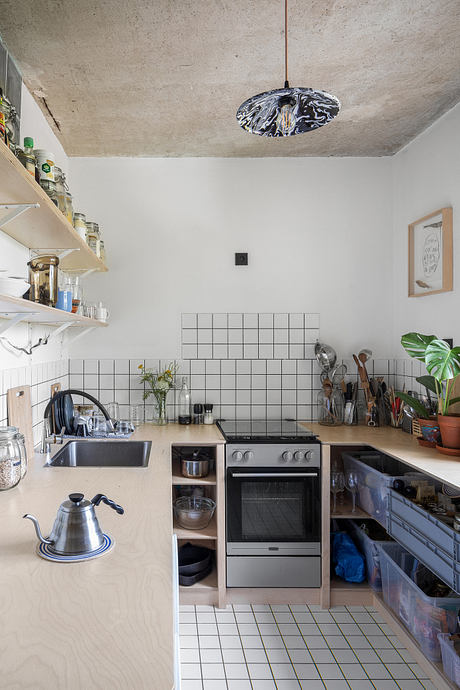
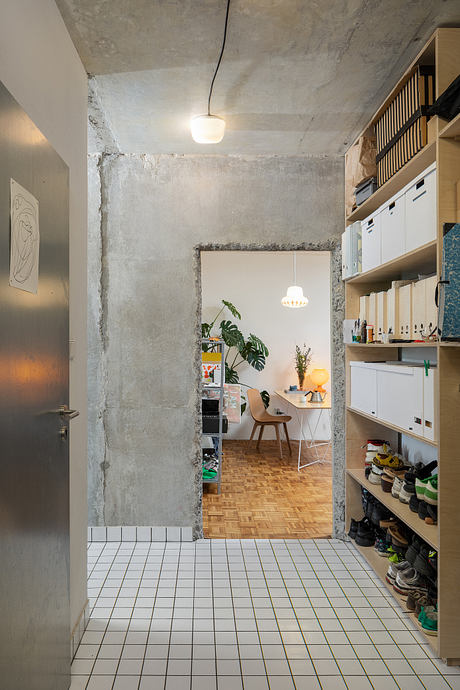
The entrance hall and kitchen are tied together by a direct grid of tiles that continues onto the walls. Above the stove, that grid breaks to form a kind of cooking altar. Glass blocks bring light into the bathroom, where turquoise grout sharpens the color and texture of the room. In the main rooms, the original wood floors were refurbished.
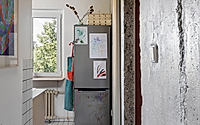
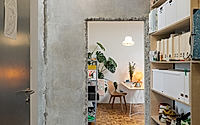
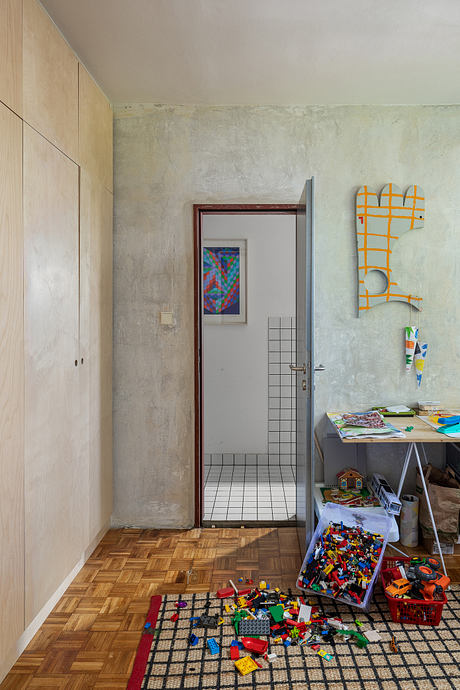
Several existing elements were handled with deliberate roughness. Original doors were removed, and the openings in the concrete walls were left roughly cut. Load-bearing walls and ceilings were cleaned back to concrete as far as possible. Tin doors were then installed, allowing magnets to be used and giving the corridor an avant-garde edge that contrasts with the warmer character of the living areas.
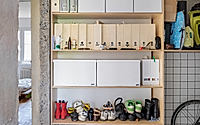
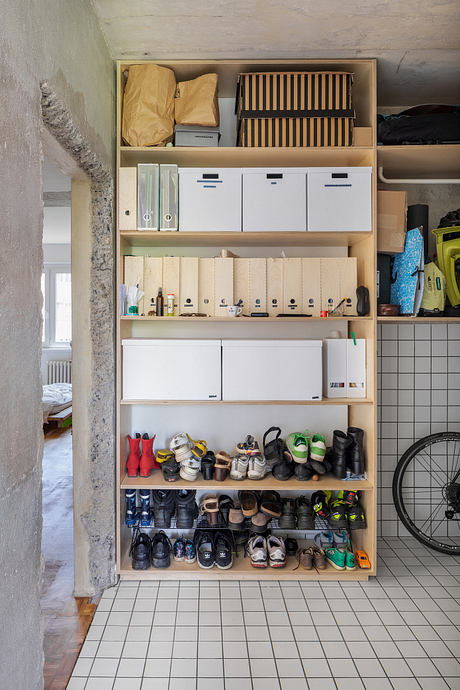
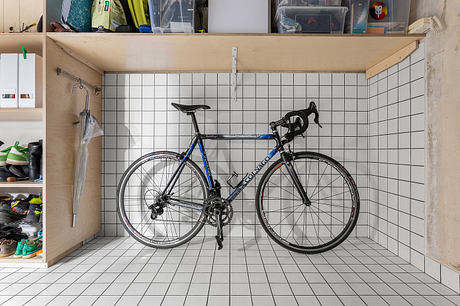
The layout remains largely unchanged in construction terms, but its use shifts in important ways. The living area is functionally connected to the bedroom, which frees up an independent children’s room. Plywood forms the three main built-in interventions: an open multifunctional storage block in the hall, a full wall of cabinets in the main room, and the complete kitchen with its dining corner.
Photography by Radek Úlehla
Visit Neuhäusl Hunal