Backfold House by HAA Studio
Backfold House is a house located in Bangkok, Thailand. Designed in 2024 by HAA Studio, the residential property uniquely embraces internal space and climate considerations with an inward-facing courtyard. The architecture responds to the local environment and social expectations while offering a private space that interacts with external elements, showcasing a design philosophy adept at blending modernist principles with tropics-oriented practicality.
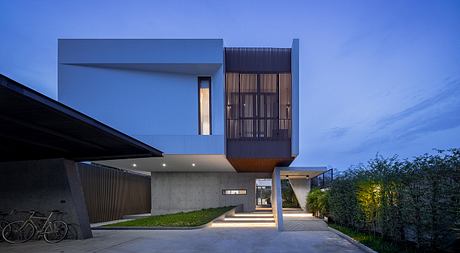
Contextual Response In Bangkok
Amidst the dense urban fabric of Bangkok, Backfold House emerges as a measured response to a narrow 14-by-37-metre plot, one defined by its proportion, setback regulations, and adjacency to neighbouring dwellings. Here, architecture is not a gesture of assertion but a negotiation with the physical and social constraints of the site. With humility yet precision, the design listens more than it proclaims.
A Spatial Strategy Of Backfolding
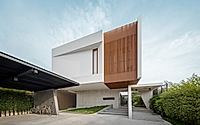
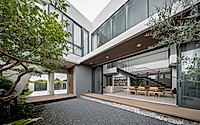
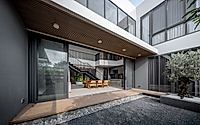
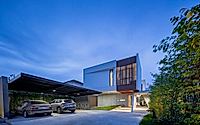
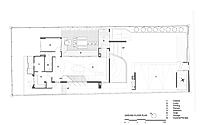
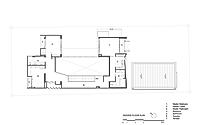
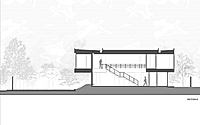
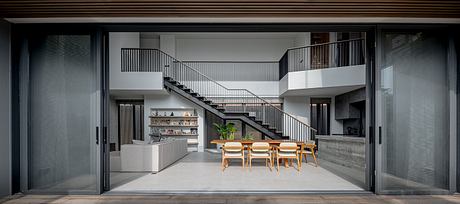
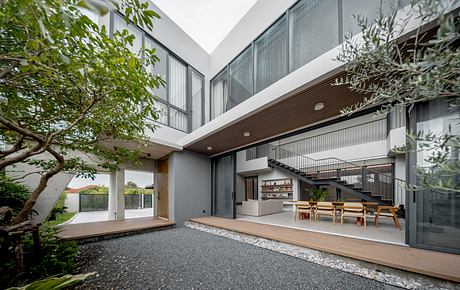
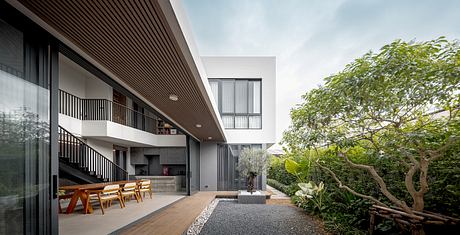
The house derives its name from the spatial strategy at its core: the building mass is folded back from the street and arranged in an U-shape that envelops a quiet northern courtyard. This act of “backfolding” not only expresses a literal retreat from the public edge but also gestures toward an inward turn , a spatial embrace that cultivates privacy and repose.
Addressing Climatic Constraints
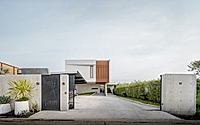
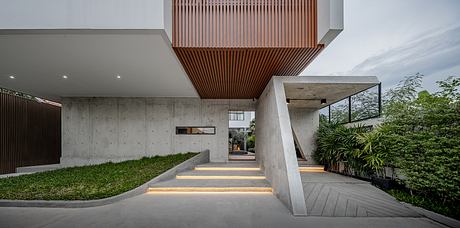
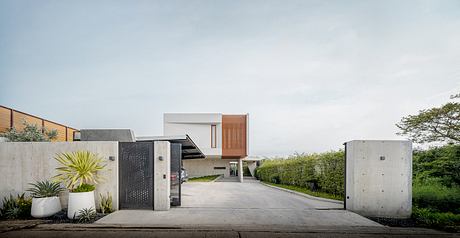
One of the principal constraints lay in the site’s orientation. The front of the plot faces east, while the west, exposed to the harsh tropical sun of late afternoon, presented a climatic challenge. Rather than confronting this condition, the architect opted to recess the house deep into the site, freeing up a generous forecourt and allowing future programs to emerge. The rear service wing, positioned to the west, acts as a thermal buffer without compromising functionality.
Vertical And Horizontal Buffers Signals
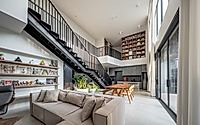
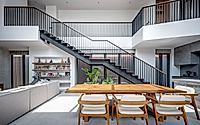
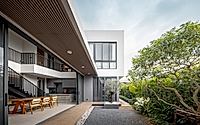
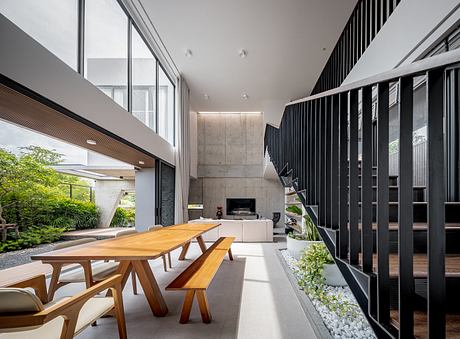
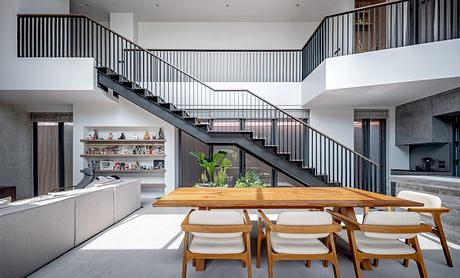
This spatial buffer strategy is echoed vertically: a staircase core lines the southern edge, insulating the living spaces from the adjacent property. The northern side, by contrast, opens fully to an undeveloped plot. Here, the courtyard receives prevailing breezes and diffused light, and also offers the potential for future expansion, reinforcing the home’s latent dialogue with its surroundings.
Natural Ventilation Through Double-height Void
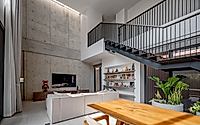
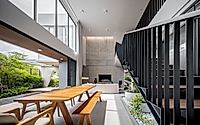
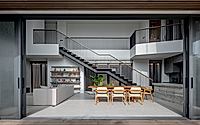
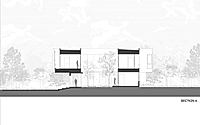
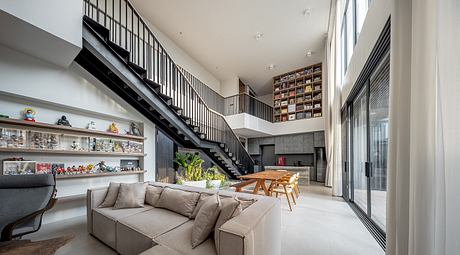
The main living areas are arrayed around this central void. A double-height volume anchors the core, allowing for vertical porosity and natural ventilation. For most of the day, the interior remains comfortable without air-conditioning, only occasional fans are needed at peak midday heat. This is a quiet expression of climate-conscious design: a passive strategy that foregrounds spatial intelligence over mechanical dependence.
Materially Honest With A Wit Of Domestic Warmth
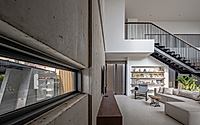
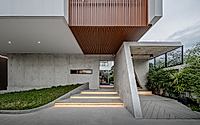
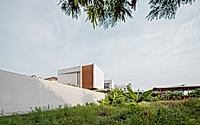
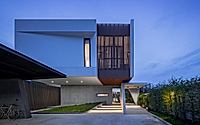
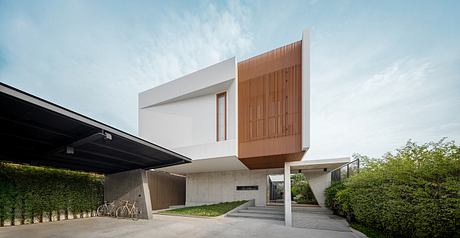
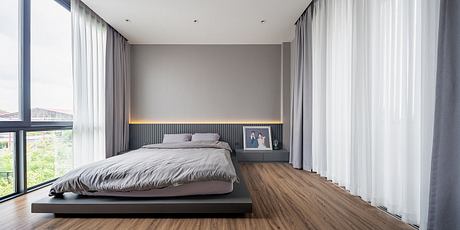
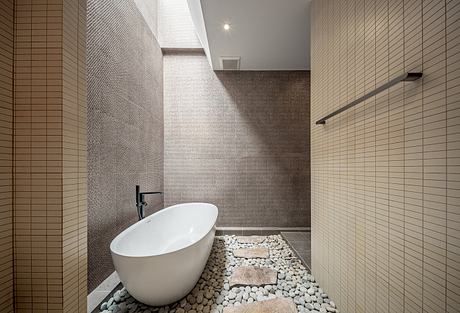
Physically, the house presents itself as a long white box extending along the plot. Exposed in-situ concrete lends a sense of material honesty and permanence, while synthetic timber accents temper the starkness, softening the domestic atmosphere without sentimentality.
A Seminal Example Of Restraint And Humility
In a context where residential architecture often leans toward sealed-off monumentalism, Backfold House pursues an inverse trajectory. It does not seek to be iconic or ostentatious. Rather, it stands as a spatial ethic, a humble, rooted, and quiet architecture, affirming the coexistence of modernist ideals with the realities of tropical living.
Photography courtesy of HAA Studio
Visit HAA Studio