Escondido Beach House by Oppenheim Architecture
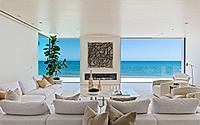
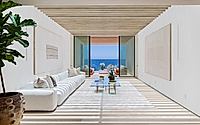
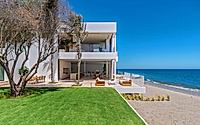
Escondido Beach House sits on Malibu, CA, United States, reimagined by Oppenheim Architecture as a measured renewal of a 1980s beachfront home. The house is stripped back to its structure and rebuilt as a clear, coastal plan that privileges light, air, and the daily pull of the Pacific. What was inward and busy now stretches toward the water with a calm, continuous rhythm across rooms and terraces.


Morning light slips across stone and wood, then moves straight to the horizon. A clear line of travel leads from the road to the surf with no wasted motion.
This is a house reworked in plan, a beachfront renovation in Malibu by Oppenheim Architecture with the sequence and clarity of daily life as its driver. The project removes a busy layout, aligns the structure, and opens routes so rooms meet the Pacific without interruption.
Clear the Core
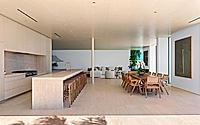
The team carves back to the pure structure and straightens every elevation to reset the framework. A once-labyrinthine plan gives way to rooms that borrow width from former hallways, a reductive move that concentrates living where it matters. One idea holds throughout: align, widen, and simplify so light, views, and circulation work together.
Entry to Ocean
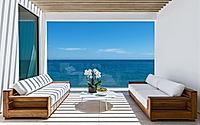
From the road, a landscaped courtyard compresses the approach before a glass front door releases it to the Pacific beyond. That axial move ties arrival to horizon, turning the threshold into an instant orientation—courtyard to ocean in a single breath. Openings expand at corners and along the façade to unlock long views and a calmer interior tempo.
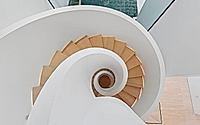
One Stair, Three Levels
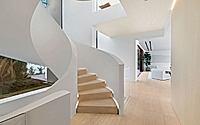
Three separate stairs once fractured movement and diluted usable area across floors. A single sculptural stair now connects levels, consolidating circulation into a legible spine that clarifies how the house is used each day (and frees more room at the edges). With this edit, rooms grow, detours vanish, and the plan reads clean.
Rooms Over Hallways
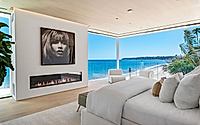
Former corridors fold into living and sleeping areas to reclaim square footage where people actually spend time. The result is a sequence of broader rooms that flow between interior and terrace, with fewer doors and fewer pauses. Edges align, openings widen, and the layout earns a quiet confidence through restraint.
Material as Continuum
A neutral palette of stone, wood, and mineral plaster ties the rooms to the shore outside. Tones and textures echo the coastline, extending indoor-outdoor flow without theatrical moves and letting daily life lead. With recessive architecture at play, the palette supports use rather than declaring itself.
By afternoon, shadows slide along the stair and across broad thresholds before landing on the water. The plan does the heavy lifting—quietly, decisively—so the coast can take over. Inside, everything aligns to that line of light and the reliable draw of the tide.
Photography by Mike Helfrich
Visit Oppenheim Architecture