Jinakachi: A Cliffside Retreat Shaped by Sea Breezes and Tidal Time
Jinakachi anchors a singular hotel room along the Kuniga Coast in Shimane, Japan, reworked by Amane Architects within the long-standing Kuga-so property. The project turns a south-east corner room into a deliberate viewpoint over the Shimamae Inland Sea, giving guests an immediate encounter with wind, water, and the grazing grasslands that define this island setting. Architecture here acts as a lens rather than a spectacle.
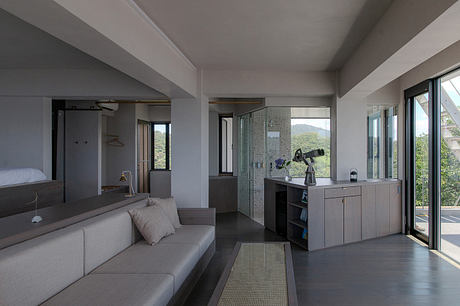
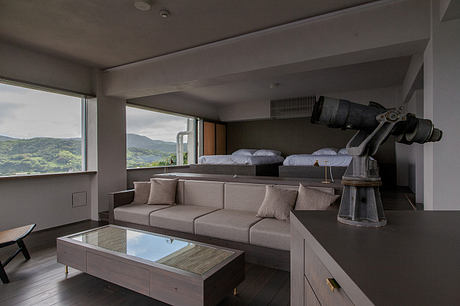
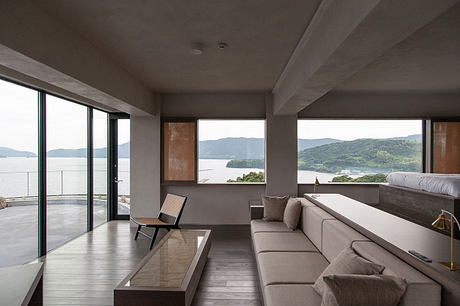
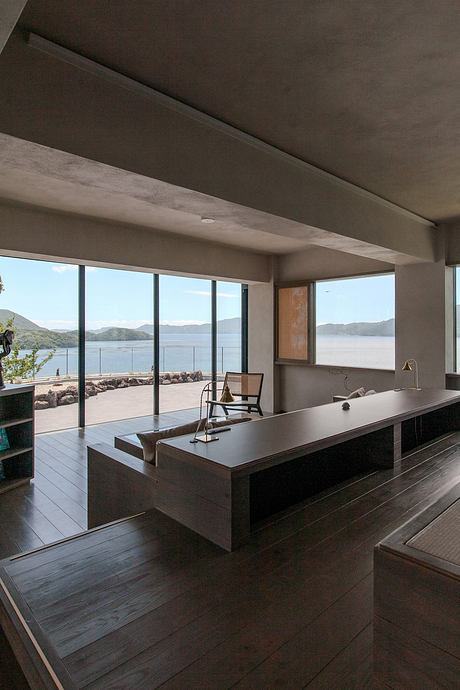
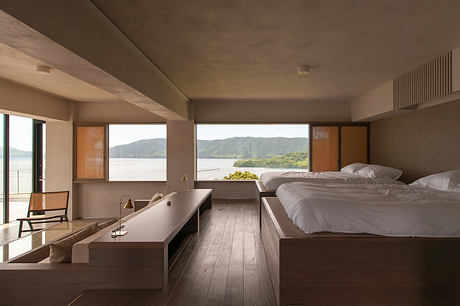


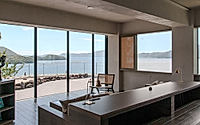
From this height, the caldera-shaped ridges, open grasslands, and Shimamae Inland Sea line up in a broad horizontal band that feels both distant and intimate. A quiet interior waits behind glass, withholding little from the view.
At Jinakachi, a single hotel room becomes an instrument tuned to climate and topography rather than a sealed vessel for generic comfort. Amane Architects work within Kuga-so’s existing structure in Shimane to turn Room 211 into a precise vantage point on Oki’s grazed slopes and working harbor. The project treats wind, light, and horizon as core materials, using minimal intervention to make an ongoing relationship with the island’s weather.
Framing Sea And Grassland
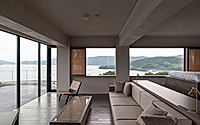
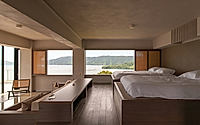
The first encounter is the view, not the room. Window frames recede so the eye runs uninterrupted from raised bed to cliff edge, then out to the Shimamae Inland Sea. A long, low horizon stretches across the glazing, carrying the daily cycle from sunrise to dim afterglow.
Here, grazing pastures prevent the slopes from closing into forest, keeping the landscape open and legible as a human-made grassland layered over tectonic drama. The room’s pared-back outline strengthens that reading, turning a simple corner bay into a place to read the island’s evolving sky.
Room As Viewpoint
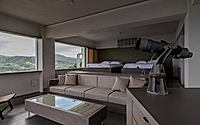
Architecture acts as viewpoint rather than foreground. By raising the bed roughly one metre above floor level, the guests’ sightline clears the sill so the panorama stays constant from waking to dusk. Every daily action, from lying down to sitting at the edge, keeps the sea and grazing slopes in the same broad frame.
Room 211’s position in the south-east corner sharpens this effect, catching first light over the inland sea and the drawn-out color shift toward harbor nightfall. Human occupation, in turn, gives the landscape a narrator, proving how small interventions can unlock immense visual territory.
Air, Light, And The Wind Named
Wind is not an afterthought here. Ventilated openings on the north and south sides set up multiple air passages, so Jinakachi is continually cross-bathed by the regional breeze. Rattan-covered fittings modulate this movement, catching light and flickering slightly as the air passes, making the invisible current legible on interior surfaces.
The project takes its name from a local wind that once guided Kitamae ships toward rest in Uragō harbor, tying maritime memory to daily ventilation. Guests feel that same movement as a gentle pressure along the walls and bed edge, a reminder that climate still shapes comfort.
Timber, History, And Restraint
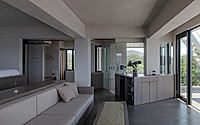
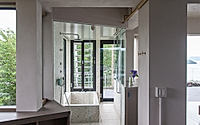
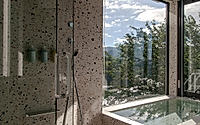
Inside, the palette stays quiet to defer to view and breeze. Existing structural bones remain intact, preserving Kuga-so’s continuity while trimming visual noise to a minimum. Wood finishes carry an “exquisite” blended color, developed through repeated trials to echo solid cedar from Oki and the remembered warmth of the older inn.
This controlled tone connects present works to long local practice, so surfaces feel freshly made yet grounded. Joinery, rattan, and careful alignments support that goal (their restraint lets small shadows and reflections carry emotional weight). Guests aren’t surrounded by spectacle; they are held by a measured, remembered interior.
As day closes, the room turns back toward the coast. Grasslands fade to silhouette while the harbor picks up scattered points of light across the water. Jinakachi holds that slow shift without urgency, giving travellers a vantage point where climate, work, and history stay in gentle conversation.
Photography courtesy of Amane Architects
Visit Amane Architects