CTZ2 House by Pepe Giner
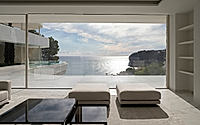
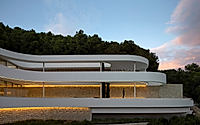
CTZ2 House unfolds on a steep hillside above the Mediterranean in Valencia, Spain, where terraces reach toward Portitxol bay. Designed by Pepe Giner in 2023, the house rises as layered platforms that negotiate the difficult terrain while fixing daily life on a level with sea and sky. Living, sleeping, and moving through the house all orbit an elevated terrace and pool that read as a single, continuous outlook.
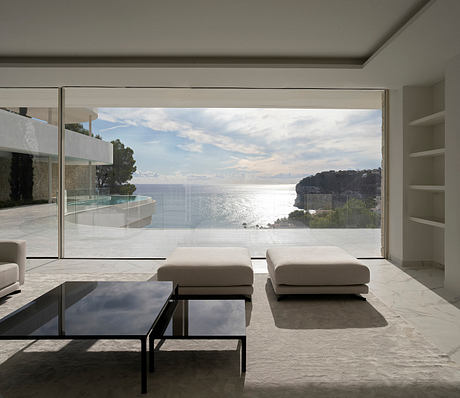
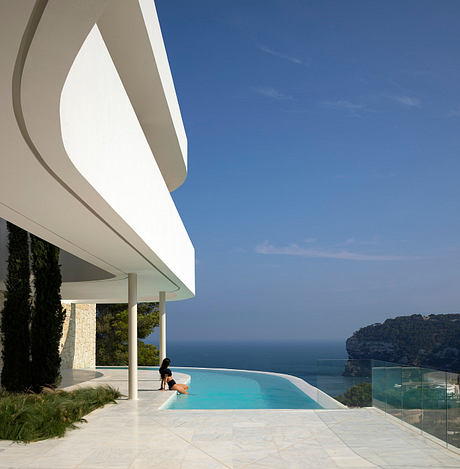
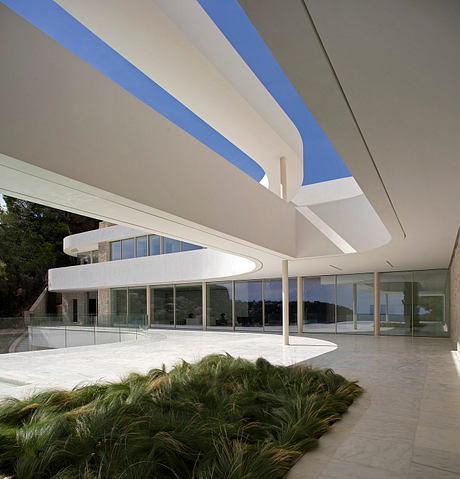
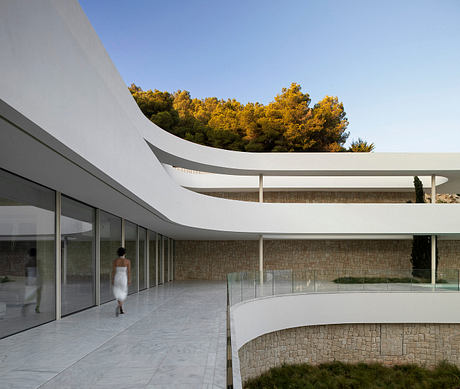
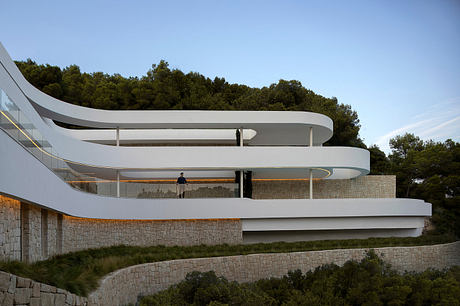
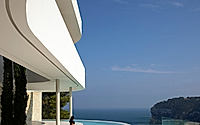
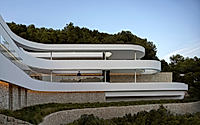
Terraces step out toward the Mediterranean, tracing the fall of the hillside and catching the southern sun. From the bay below, horizontal platforms cut a clean profile against sea and sky.
Set on a steep plot facing Portitxol bay in Jávea, this house is a precise response to terrain, orientation, and long coastal views. Pepe Giner organizes the dwelling as a series of staggered levels that work with the natural slope rather than erasing it, translating rugged topography into a calm sequence of platforms and voids. Structure, circulation, and outdoor rooms all reinforce that geometry, turning the hillside into a layered lookout.
Stacking With The Slope
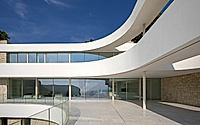
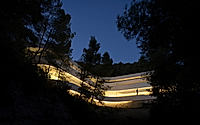
The house reads as sinuous horizontal plates slipping past one another, each one tuned to the land’s shift and the sun’s southern arc. Volumes never fight the gradient; instead, they step down in a staggered manner, so roof becomes terrace and terrace becomes roof as the levels drop toward the sea. These platforms define the southeast façade, their long edges cut sharply against the horizon while their free cantilevers lend the whole composition a sense of weight held in balance.
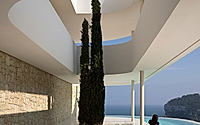
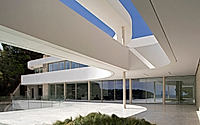
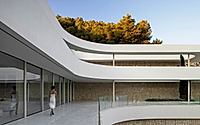
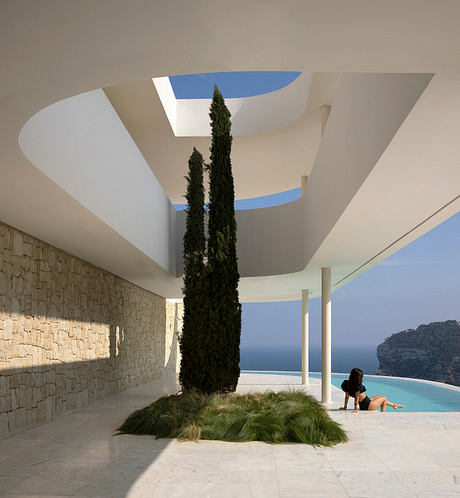
Dry stone walls lock the platforms into the hill and hold the ground in place. Between them, slim metal pillars carry the projecting slabs, setting up a clear duality between heavy, anchoring elements and fine, almost diagrammatic supports that sit back under the robust horizontals.
Wrapping Terraces And Glass
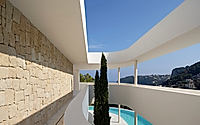
Each floor is wrapped by continuous terraces that trace the glass perimeter, erasing a hard line between interior rooms and their outdoor extensions. That perimeter walk lets daily routines slide from shaded interior to open edge in a single move, always with the Mediterranean as reference. On the ground level, the main platform widens at the center to form a generous terrace where family life can spread outward, then narrows toward the ends to negotiate neighboring conditions and planted ground.
The pool follows the same sinuous logic, its outline drifting along the edge of the terrace and pulling the eye toward the horizon. Water and paving run together so the terrace feels visually detached from the immediate garden, fusing instead with the distant line where sea meets sky.
Garden As Structure
A Mediterranean garden fills the gaps between platforms, conceived as another architectural layer rather than a separate afterthought. Cypress trees rise through deliberate perforations in the slabs, piercing the horizontal plates and reinforcing their long lines. Vertical trunks measure the height between levels, while foliage softens the stone walls and draws dappled shade across terraces during the brightest hours. Planting, stone, and steel therefore work together to stabilize the hillside both visually and physically.
The garden also mediates privacy and exposure. Near the house, planting filters views and frames precise vignettes toward the bay; farther away, it blends back into the natural vegetation of the slope.
Circulation As Spine
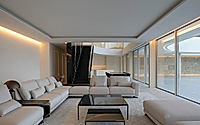
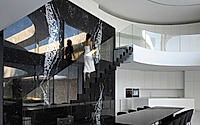
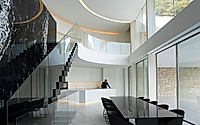
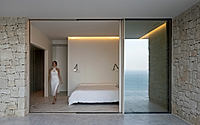
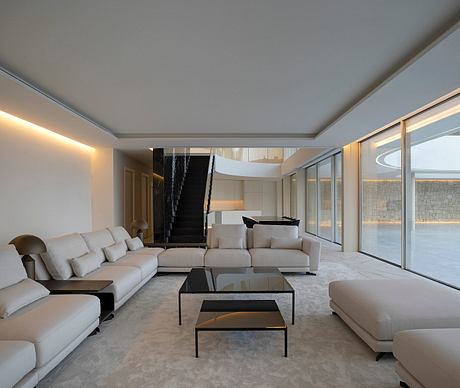
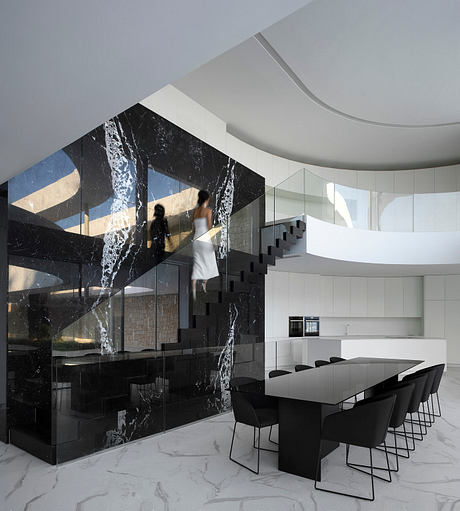
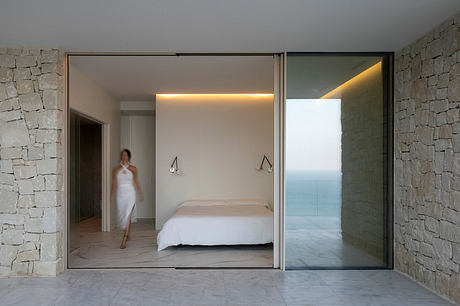
Entry is set on the upper floor, where a hall and three bedrooms open to their own terraces, each one functioning as a small private lookout toward the sea. Just inside the door, a double-height volume marks the start of the vertical circulation core, pulling daylight deep into the plan. A sculptural staircase in black Marquina marble winds through this void, acting as both structural hinge and visual anchor that can be seen from many points in the house.
This stair links the elevated day area, terrace, and pool with the more protected levels below. Moving up or down becomes a constant reminder of the house’s relationship to the hillside, as land drops away and platforms extend further into open air.
By the time the route returns to the main terrace, the composition of stacked horizontals and anchoring walls feels inseparable from the rocky slope beneath. Platforms shade one another, gardens stitch between levels, and every edge carries the geometry of the site out toward the horizon.
Photography by Diego Opazo
Visit Pepe Giner