Ecological Design as the New Standard in Master-Planned Developments
Modern master-planned developments are moving beyond decorative landscaping toward fully integrated ecological design. Water systems, greenery, and mobility are increasingly planned as interconnected frameworks rather than standalone features.

Projects such as Masdar City in Abu Dhabi, Sino-Singapore Tianjin Eco-City, Currumbin Ecovillage in Australia, Civita in San Diego, and Bali at DAMAC Islands in Dubai demonstrate a shared shift in thinking. Lagoon networks, botanical gardens, native planting strategies, and eco-trails now form the structural backbone of communities designed to be resilient, resource-efficient, and genuinely livable.
This approach responds to two growing pressures shaping contemporary urban development: climate adaptation and quality of life. By embedding ecological systems into master plans from the outset, these developments create environments where sustainability and daily living support one another.
Lagoon Systems as Functional Blue Infrastructure
Lagoon systems are among the most powerful tools in sustainable master planning. Beyond visual appeal, they support water management by collecting, storing, and naturally filtering stormwater. When integrated with landscaped edges and wetlands, lagoons help regulate microclimates, reduce surface temperatures, and limit flooding during heavy rainfall.
In well-designed communities, lagoon water is often reused for irrigation and cooling strategies, reducing reliance on potable water. These systems also create ecological habitats that attract birds and aquatic life, contributing to biodiversity within urban environments.
Botanical Gardens and Native Landscaping
Botanical gardens and native planting schemes provide structure to green masterplans. Instead of water-intensive lawns, developers are prioritising indigenous and climate-adaptive species that require less irrigation and maintenance. Native landscaping stabilises soil, improves air quality, and supports pollinators, all while reflecting the natural identity of the region.
Botanical zones often serve as educational and recreational anchors within communities. They create shaded walking areas, buffer zones between residential clusters, and visual continuity across large developments. When connected to lagoons and green corridors, they form living ecosystems rather than isolated parks.
Eco-Trails and Green Connectivity
Eco-trails link water and landscape systems into a coherent experience. These pedestrian and cycling routes encourage low-carbon mobility while drawing residents into daily interaction with nature. Trails are typically aligned along lagoon edges, green belts, or restored natural land, reinforcing both ecological function and lifestyle value.
Green connectivity improves mental and physical health, reduces car dependency, and strengthens community engagement. At a planning level, it also ensures that open spaces remain active and protected rather than fragmented or underused.
Global Examples of Eco-Focused Master Planning
Bali at DAMAC Islands, Dubai reflects a resort-oriented interpretation of ecological planning within a large master-planned community. Lagoon systems, dense greenery, and shaded walkways structure the public realm, supporting climate comfort and outdoor living. Water features and planting are integrated to soften the built environment while creating interconnected pedestrian experiences across the cluster.
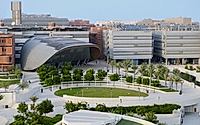
Masdar City, Abu Dhabi demonstrates how ecological design can respond to extreme climates. Shaded streets, compact urban form, water-efficient landscaping, and recycled water systems work together to reduce heat and resource consumption. Green spaces are positioned strategically to support pedestrian movement while limiting exposure to direct sun.
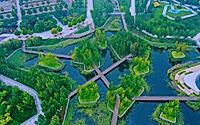
In Asia, Sino-Singapore Tianjin Eco-City integrates large-scale water management into its urban structure. Interconnected lakes, wetlands, and green corridors support stormwater filtration and biodiversity while doubling as public open space. Botanical planting and walkable green networks reduce reliance on vehicles and create a continuous ecological framework across the city.
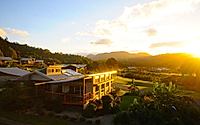
Australia’s Currumbin Ecovillage takes a nature-first approach, prioritising ecosystem restoration over formal landscaping. Native vegetation, low-impact construction, and bushland trails shape a community that functions as an extension of its natural surroundings. Water autonomy and land regeneration are central to the master plan rather than secondary features.
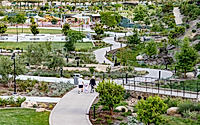
In North America, Civita in San Diego illustrates how former industrial land can be reshaped through landscape-led planning. Terraced parks, green corridors, and pedestrian paths reconnect residents with the site’s topography, transforming open space into a unifying element that supports walkability and social interaction.

Toward Resilient Urban Oases
What distinguishes effective ecological master planning is how these systems are designed to work together. Successful projects reveal a clear hierarchy: water infrastructure shapes public space, landscape design supports climate response, and mobility networks reinforce daily engagement with nature.
Lagoon systems function best when they support cooling and water reuse rather than acting as visual features alone. Botanical gardens and native planting succeed when they form continuous green corridors instead of isolated pockets. Eco-trails become meaningful when they connect homes, public spaces, and natural systems into a walkable whole.
As urban density increases, the most resilient communities will be those where ecological systems guide the master plan from the earliest stages. These projects show that sustainability is a spatial strategy that shapes how people move, gather, and experience their environment every day.
- by Matt Watts