213 Attic in Villa Soranzo: Modern Penthouse Within 16th-Century Shell
213 Attic in Villa Soranzo sits within a 16th-century villa in Fiesso d’Artico, Italy, where MIDE architetti reworks the historic attic into a contemporary penthouse. Daylight, restored beams, and resin flooring define a sequence that shifts from river-facing living areas to an intimate garden-side sleeping zone, tying present-day comfort to the villa’s enduring structure. Vintage and contemporary Italian pieces lend the home a cultured, quietly dramatic tone.


Morning light cuts across the rafters and lands on pale resin floors, turning the former attic into a calm, elevated room above the river. Views track out toward the Riviera del Brenta while the villa’s centuries-old structure frames a sequence tailored to contemporary domestic life.
Within this 16th-century villa in Fiesso d’Artico, MIDE architetti reimagines the upper level as an attic penthouse that balances preservation with modern comfort. The project retains historic plasters and dark timber beams, then layers in neutral finishes and precise furniture to define living, dining, and sleeping zones. Interior palette and furnishings carry the narrative, linking open riverfront volumes with quieter corners near the English-style garden.
Light Across The Attic
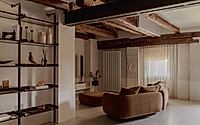
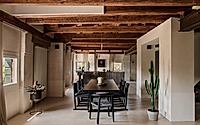
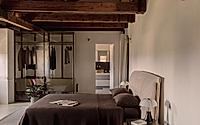
Large openings on all four sides draw daylight deep into the former service level, giving each room a clear relationship with the landscape. Along the riverfront, an open volume brings living room, dining area, and kitchen into one continuous setting, anchored by long views rather than partitions. The more secluded sleeping rooms turn toward the garden, where softer light reinforces a slower, inward rhythm.
Beams, Resin, And Plaster
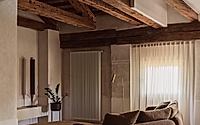
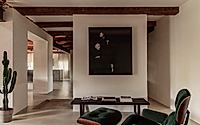
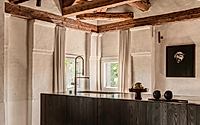
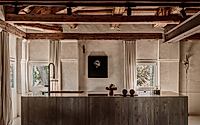
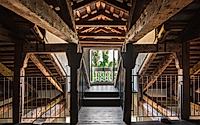
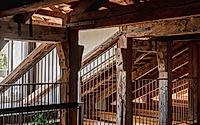
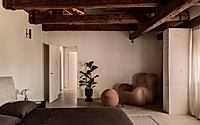
Neutral resin flooring runs throughout, a smooth surface that sets off the weight and grain of the dark wooden beams overhead. Original plasters, carefully restored, carry a textured matte finish that records the villa’s age without overwhelming the new work. Interior volumes sit intentionally below beam level, so sightlines slip under the structure and keep ceilings legible from one end to the other. Old and new share the same frame, yet each retains its own clarity.
Mezzanine For Work And Rest
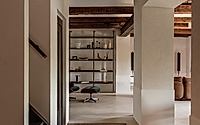
A central stair rises to a mezzanine, set as a hybrid zone for study, reading, and quiet leisure. This upper level connects directly to the dormer window on the main façade, pulling in frontal light and a more intimate view of the villa’s surroundings. From here, one looks back over the open living volume, reading the alignment of beams, partitions, and furniture in a single sweep. The mezzanine becomes both lookout and retreat within the attic.
Art And Iconic Pieces
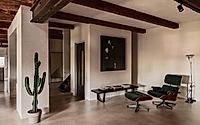
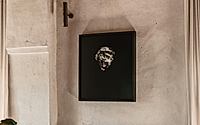
Interior character leans on a precise selection of furniture and art rather than decorative layering. Vitra’s Lounge Chair and Ottoman, Gaetano Pesce’s Up Series armchair for B&B Italia, and Gae Aulenti’s Pipistrello lamps punctuate the rooms with recognizable silhouettes. Artworks by Lorenzo Puglisi hold their own against the beams and plaster, giving depth and a measured intensity to walls and corners. Each piece sits in conversation with the architecture, not in competition.
In daily use, the attic reads as a luminous, intimate home suspended between river and garden. Historic bones stay visible, while contemporary surfaces and furnishings provide the comfort current life requires. The villa’s attic, once peripheral, now carries a renewed role as a refined, quietly expressive penthouse above the Riviera del Brenta.
Photography by Giulia Maretti Studio
Visit MIDE architetti