Apartment in Kichijoji by Roovice
Apartment in Kichijoji renovates a compact apartment in Musashino, Japan, reworking daily life around a larger, more open kitchen by Roovice. The project turns a former 3LDK layout into a generous living–dining–kitchen zone, where exposed structure, oak parquet, and custom carpentry support a brighter, more connected way of living. Every move favors shared rooms and easy circulation while respecting the calm character of a residential neighborhood.
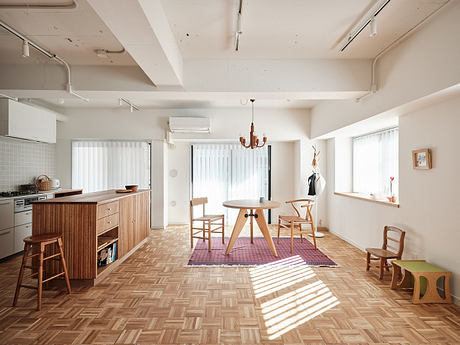
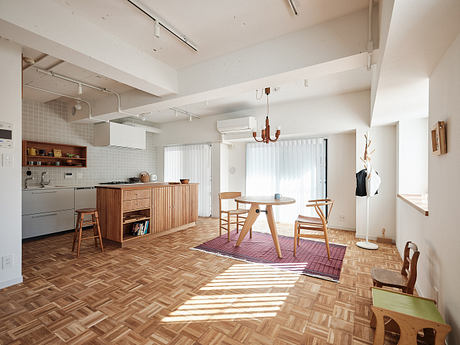
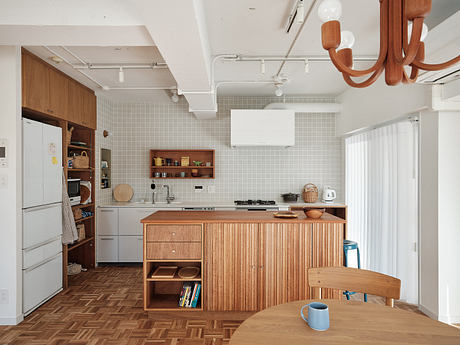
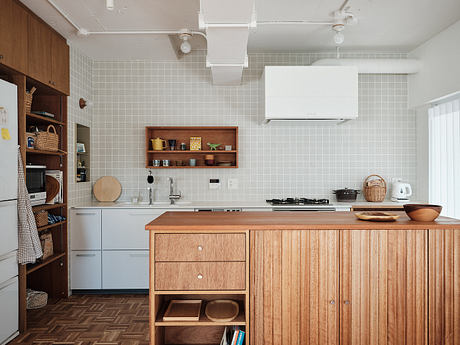
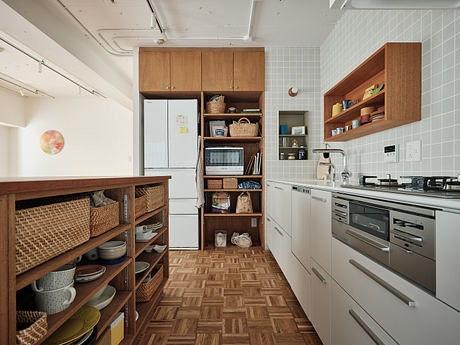
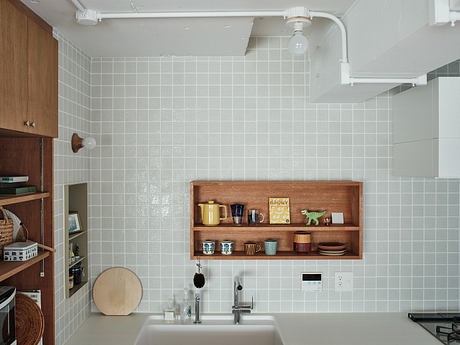
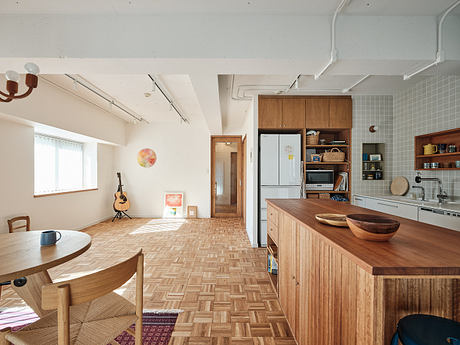
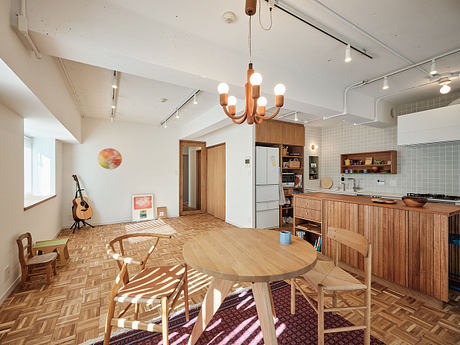
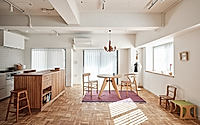
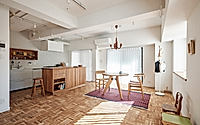
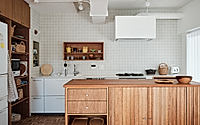
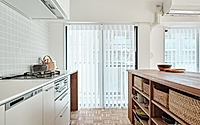
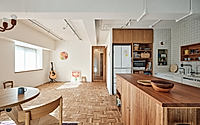
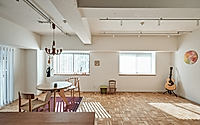
Daylight travels along a newly extended living–dining–kitchen room, picking up the grain of oak parquet and the soft sheen of pearl white tiles. Overhead, exposed concrete and painted ducts shape a taller volume that now feels generous for daily life.
This renovated apartment in Musashino, Japan, is a 75 square meters home reworked by Roovice for clients seeking a larger kitchen and more comfortable shared rooms. The project transforms a former 3LDK plan into a connected living area, guided by careful material choices and custom-built furniture that align storage, cooking, and relaxation. Interior character comes from these elements: a linear kitchen wall, a structured wooden counter, textured tiles, and a calm, simple bedroom.
Expanding The Living Core
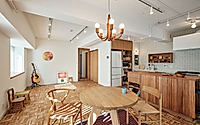
The renovation starts by folding the former tatami room into the living–dining–kitchen, then removing the partition between kitchen and sitting area. This move grows the LDK from about 18 m² to roughly 30 m² (194 ft² to 323 ft²), turning several smaller rooms into one continuous volume with better daylight. The enlarged core now supports cooking, eating, and gathering without hard breaks between zones, so movement feels straightforward and social moments stay connected.
Linear Kitchen And Custom Counter
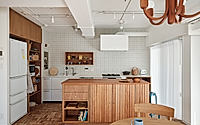
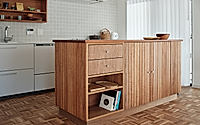
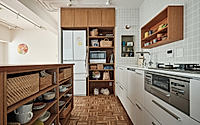
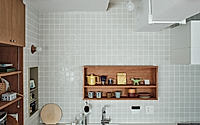
Along one full wall, the kitchen runs in a clear line that reinforces the length of the room. A system kitchen chosen by the clients handles practical needs, while custom interventions bring character and warmth. A structured wooden counter with integrated bookshelves works as worktop, casual table, and low partition, lending the room a clear edge without blocking sightlines. Small-format old kiln tiles in pearl white line the backsplash, their cloth-like texture catching light and giving the restrained palette a subtle depth.
Exposed Ceiling And Storage Wall
Responding to the wish for higher ceilings, Roovice strips away the existing ceiling boards to reveal the building structure. Concrete surfaces, lighting ducts, and other elements overhead are painted in one tone, so the ceiling reads as a quiet plane that heightens the room instead of a patchwork of components. Beside the kitchen, a multifunctional wall unit gathers the refrigerator and household appliances into one aligned volume, with a recessed display shelf carved in to avoid dead corners and keep everyday objects orderly yet close at hand.
Oak, Tatami, And Everyday Calm
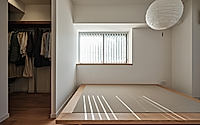
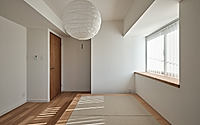
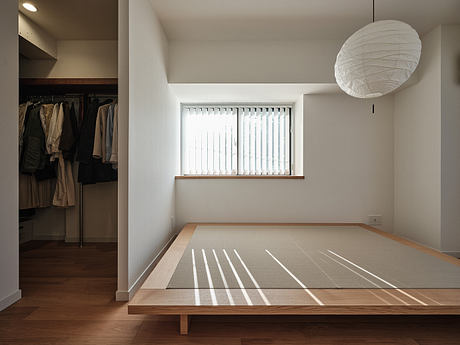
Underfoot, refined oak checkered parquet unifies the living and dining area and continues into the corridor that leads to the entrance. That continuous floor strengthens the sense of one clear route through the apartment and ties shared rooms together with a single, warm surface. At the entry, a custom shoe storage unit handles the practical load of domestic life, yet maintains a composed first impression for anyone arriving. In the bedroom, an open walk-in closet and a minimal tatami bed frame keep the room flexible and visually quiet, supporting routines without clutter.
Through selective demolition, precise carpentry, and a limited material set, Apartment in Kichijoji becomes a brighter and more adaptable home for contemporary urban living. Light moves freely across the enlarged LDK, catching on wood, tile, and concrete while daily life folds around the long kitchen wall. The project closes not with a showy gesture but with a calibrated set of surfaces and built-ins that quietly support the clients’ changing habits over time.
Photography by Akira Nakamura
Visit Roovice