Le Fenil — Prefab Country Retreat
Le Fenil sets a low, assured line across the fields of Québec, Canada, where naturehumaine [architecture+design] grounds a new rural house in former farmland. The single-story retreat uses a barn-inspired volume to choreograph everyday life between panoramic countryside views and sheltered outdoor rooms. Inside, an edited material palette and clear plan organize family routines around a bright central living core that stays closely tied to the open landscape.


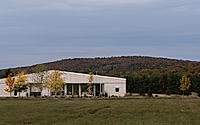
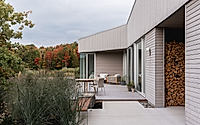
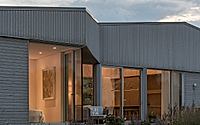
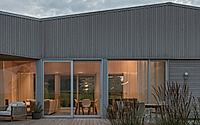
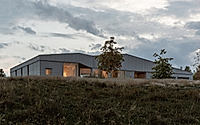
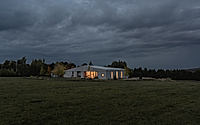
A low horizontal volume cuts across the field, its cedar skin picking up the muted tones of the surrounding crops. Overhead, a sharper, barnlike roof folds into triangular projections that draw light down onto terraces and glass-lined rooms.
This rural house in the Eastern Townships is conceived by naturehumaine [architecture+design] as a primary residence with the clarity of a retreat. The project takes the agricultural hayloft as a starting point, then works through plan and section to choreograph how the owners move between interior routines, outdoor terraces, and the wider ten-acre site. Life unfolds along a north–south axis, with circulation threaded between open gathering zones and tucked-away alcoves.
At the heart of the concept sits the hayloft idea, translated into two interlocking volumes that shape movement across the house. A grounded, horizontal bar contains the everyday program, while the angular roof above reads as a contemporary echo of barn roofs that once stored drying hay. The wooden structure is prefabricated, so elements arrive with precise junctions that allow the plan to stay lean and the footprint minimal on the former cereal fields.
Arriving Through The Field
Approach runs along the open land, so the house gradually reveals its layered form rather than presenting a frontal façade. North and south ends are kept more opaque, protecting privacy from road and neighbors while steering attention toward the east–west horizons. Entry draws visitors into the center of the plan, where a clear opening channels sightlines straight through to rolling hills and distant sky. That axial view anchors orientation immediately, making the landscape the primary reference point for every route through the rooms.
Living Core And Terraces
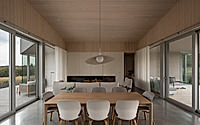
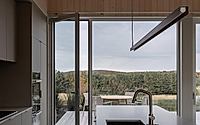
The central living area combines kitchen, dining, and lounge in a single, generous volume that sits between two sheltered terraces. A high ceiling of light pine laths runs overhead, giving the main room a calm rhythm that subtly directs movement toward the glazed openings. Large glass doors slide aside to dissolve the boundary, so daily routines flow out onto the triangular terraces flanking the living zone. One terrace catches brighter light for morning coffee, while the other reads as a more protected outdoor room for late-day meals.
T-Shaped Plan And Alcoves
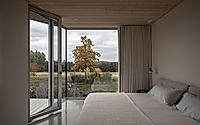
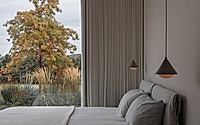
From this central core, circulation branches into a T-shaped plan that separates quieter rooms from shared life without breaking connection to the countryside. Short corridors extend toward more intimate zones, each bend revealing framed views rather than long, exposed vistas. Private rooms pull back from direct sunlight yet still borrow generous outlooks through carefully placed openings. These offsets and recesses build a sequence of alcoves, where movement slows and occupants can pause with a view before turning into a bedroom or retreat.
Material Layers And Views
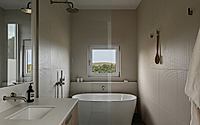
Horizontal gray cedar clads the lower level, reinforcing the grounded bar that carries daily routines along the field. Above, vertical cladding and a sleek metal roof sharpen the barnlike roofline, so the house reads as stacked layers when seen from a distance. Inside, polished concrete underfoot and integrated white oak furnishings keep circulation paths legible and uncluttered, guiding the eye outward to the hills beyond. The restrained palette lets changing light, moving shadows, and the agricultural setting do most of the visual work.
By sitting at the center of the site on a clear north–south axis, the house uses its plan to register subtle shifts across the day. Morning and evening routes pass through the glazed core, always reconnecting inhabitants to the open field and distant terrain. In this measured sequence of thresholds, terraces, and alcoves, the former hayfield supports a new rhythm of rural living that stays in step with the land around it.
Photography by Raphaël Thibodeau
Visit naturehumaine [architecture+design]