Chicureo House by Nicolas Loi Architects
Chicureo House stretches low across its golf-course edge in Colina, Chile, a precise single-family house by Nicolas Loi Architects. The project organizes domestic life between a concrete plinth and a deep timber roof that temper the harsh sun while keeping living areas connected to the landscape. Generous interstitial zones pull daily routines outdoors, from barbecues to poolside evenings, so the house reads as a long porch facing the fairways.
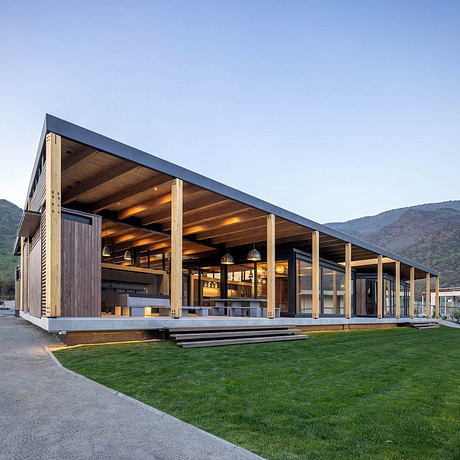
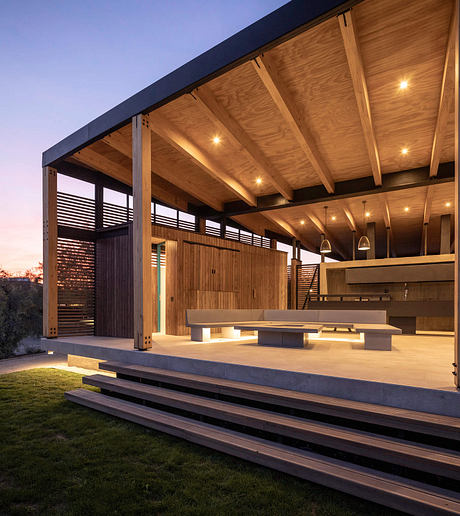
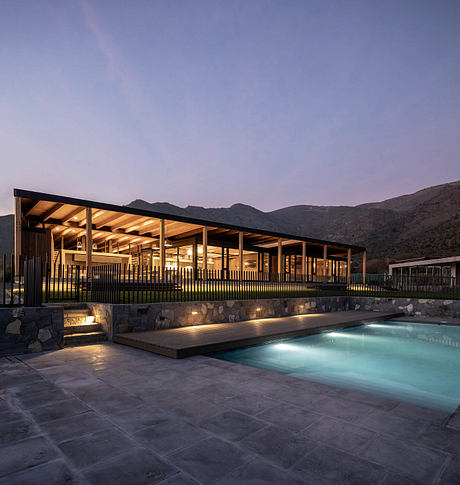
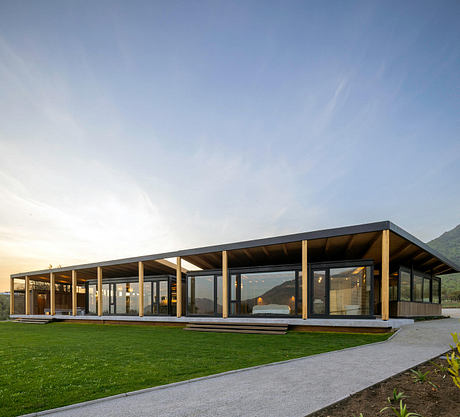
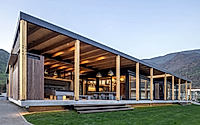
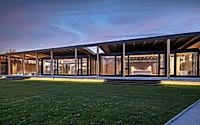
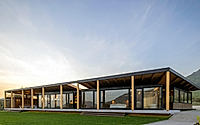
Late light grazes the long concrete plinth as the timber roof hovers above, throwing a wide band of shade toward the golf course. Between them, glassy volumes glow against the green fairways and distant hills, turning the house into a thin, inhabited threshold between inside and out.
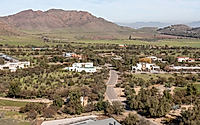
This single-family house in Colina, Chile, by Nicolas Loi Architects sits on a generous plot bordering the Las Brisas de Chicureo golf course. The project arranges daily life between a concrete base and a wooden roof, using that precise construction to manage heat and extend living toward the landscape. Material clarity drives each move, from the glued laminated timber frame to the metal structure that stiffens the long span.
Balancing Two Horizontal Planes
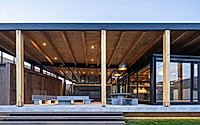
A robust concrete slab lifts the house slightly above the lawn, giving the habitable volumes a calm, continuous datum from which to survey the course. Above, the broad wooden roof projects outward, its deep overhangs throwing dependable shade over glass facades during the six hottest months of the year. Between these two planes, everyday rooms sit like independent pavilions, legible as distinct blocks yet tied together by the relentless horizontal lines of base and canopy. The effect is quiet but strong, a clear tectonic idea holding a generous domestic program.
Framing Volumes And Voids
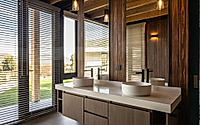
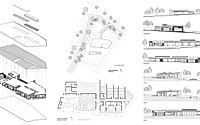
Five main volumes occupy the band between base and roof: public area, master bedroom, secondary bedrooms, playroom, and service zone. Each reads as a solid element set within the structural grid, separated by open voids that become outdoor rooms rather than leftover gaps. The concrete platform steps and edges guide movement across these intervals, while the long roof unites them as one sheltered realm. In use, circulation drifts through glazed rooms and shaded terraces with almost no visual interruption, so views run laterally along the house and outward to the fairways.
Timber Structure And Metal Frame
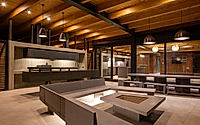
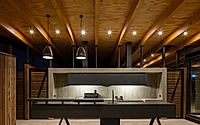
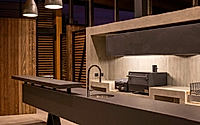
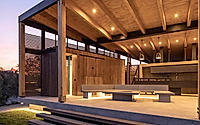
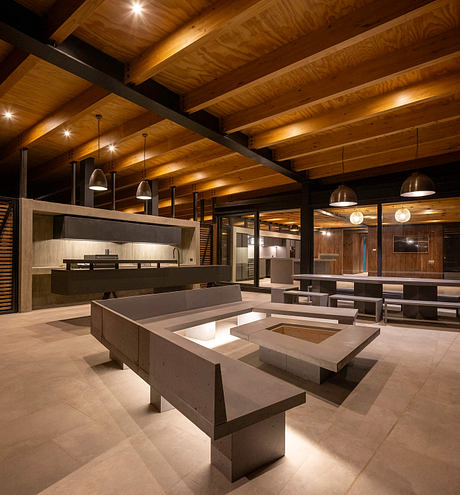
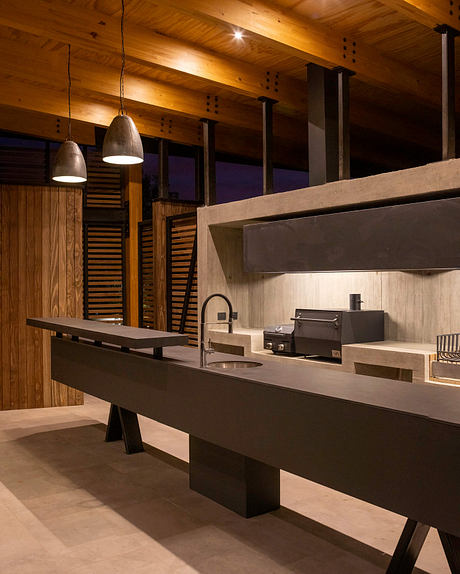
Glued laminated timber columns and beams carry the primary load of the roof, their warm grain visible in both exterior and interior perspectives. Dark metal profiles thread between the wood members, tightening the structure and allowing generous spans over social areas such as the barbecue hall and covered terrace. At night, recessed lighting washes the underside of the beams, turning the structural grid into a luminous ceiling that defines gathering zones without solid partitions. Concrete seating, robust counters, and integrated fire pits anchor this open hall, giving the lightweight frame a grounded counterpart.
Living In The Interstitial Bands
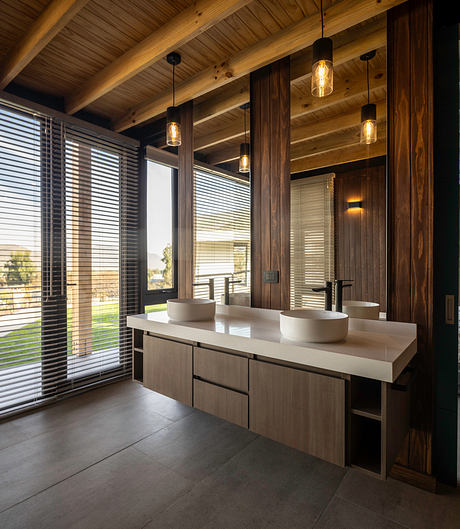
The most active parts of the house occupy the residual bands between interior volumes: barbecue area, covered terrace, service yard, and parking. Under the constant shelter of the overhanging timber roof, these bands feel neither strictly indoor nor outdoor, and they catch breezes while staying protected from direct solar radiation. Sliding glass, timber louvers, and open steps let family life spread outward toward the lawn, pool, and golf course without breaking the unity of the structural rhythm. Everyday routines unfold along this shaded edge, where structure, climate, and landscape meet in continuous use.
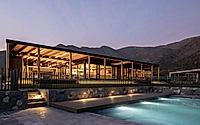
As dusk falls, the long roofline cuts a clear profile against the hills while warm light spills from the timber frame onto the concrete plinth. The house holds its measured geometry as people move easily between pool, terrace, and interior rooms. Material clarity remains evident at every threshold, keeping the experience of Chicureo House firmly grounded between those two horizontal planes.
Photography courtesy of Nicolas Loi Architects
Visit Nicolas Loi Architects