Casa Solis: Calm Coastal Retreat
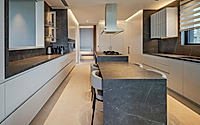
Casa Solis stands on the Aegean coast of İzmir, Türkiye, as a composed summer house by BAD – BasakAkkoyunluDesign. The project arranges two clear volumes across a generous plot in Çeşme, setting up a dialogue between low living areas, vertical bedroom stacks, and the stepped terrace with its pool. Inside and out, the house leans on stone, wood, and light-toned finishes to support relaxed seasonal living.


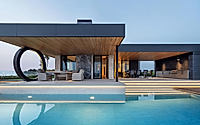
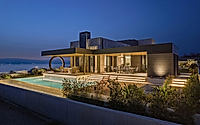
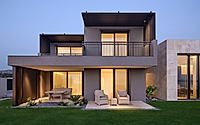
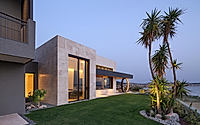
Late afternoon light runs along the travertine planes, catching the edges of the terrace before slipping toward the pool below. From the garden path, the two volumes read clearly against the sky, one low and horizontal, the other stacked and vertical, tied together by stone, plaster, and the broad shade of deep eaves.
Casa Solis is a summer house in Çeşme, on the western edge of İzmir, shaped by BAD – BasakAkkoyunluDesign around a 1033 sqm plot and wide coastal views. The project organizes daily life into two distinct building volumes—single-story living and three-story bedroom quarters—then binds them through a consistent material palette of travertine, basalt, wood, and light interior finishes. Structure, cladding, and landscape work together so terraces, pool, and garden feel part of one continuous outdoor room.
The residence takes cues from its western and southern outlooks, steering the living areas toward the horizon while protecting them from strong sun and wind. One volume gathers the kitchen, pantry, bathrooms, and a high-ceilinged living room with a fireplace; the other stacks bedroom units above service and technical rooms, separating quiet quarters from more active zones. Different facade treatments underline this split, with the living, kitchen, and stair volumes wrapped in honed crosscut travertine, and other surfaces balancing textured plaster and natural stone. Together they give the house a legible, almost diagrammatic form.
Shaping Light And Shade
On the southern side, the exterior line pulls back at the kitchen, carving out an outdoor seating pocket that sits sheltered from northern and western winds. This recessed form pairs with the projecting living room volume to define a shaded terrace, tempering the strong western sun even with wide eaves overhead. The 75 sqm terrace stretches in front of the main rooms, finished in the same material that later lines the pool, reinforcing a strong visual and tactile continuity underfoot. Behind the outdoor kitchen counter, garden storage and a shower zone tuck in discreetly, keeping daily summer rituals close at hand.
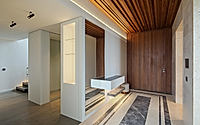
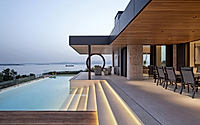
A broad eave on the eastern side, propped on a circular column, frames the view out to sunset and lends the villa its name. Under this deep overhang sits the entrance, its ceiling and primary door lined in iroko wood that subtly shifts color as the light changes through the day. The depth of the eave does practical work, shielding the doorway and entry sequence from glare while marking a clear moment of arrival. It also sets up a contrast between the warmth of wood overhead and the cooler, more mineral character of the surrounding stone.
Stepping Down To Water
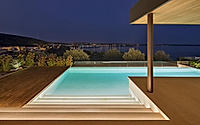
Below the main terrace, an infinity pool anchors the lower garden level and pulls the eye out toward the horizon line. The pool shell and surrounding terrace share the same surface material, so steps dropping into the water read as a continuous plane rather than a separate element. This decision reinforces a calm geometry, with land, terrace, and pool unfolding as a stepped platform rather than discrete pieces. Access from garage and pedestrian gates converges on this outdoor sequence, making the descent toward water part of daily movement through the property.
Perimeter garden walls in exposed concrete trace the edges of the plot but sit only 50 cm above ground level where views must be preserved, their tops finished with transparent railings. On the eastern side, where the street drops away, the walls rise to 110 cm, balancing privacy and outlook. Underfoot, a path of natural stone leads visitors toward the main terrace in front of the kitchen and living areas, setting a rougher texture against the refined finishes of the house. In the northwest corner, a fixed seating zone doubles as a secondary living room, accessible straight from the parking area and edged by planting.
Organizing Rooms Around Views
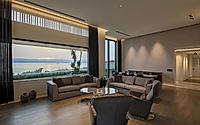
The front door opens beneath the iroko soffit into a hallway that cleanly separates living areas from the bedroom volume. Directly ahead, a framed view toward Chios Island acts as an internal focal point, aligning circulation with the wider coastal landscape. To one side, the living room rises to a 4.2 meter ceiling height, with a dining table positioned by floor-to-ceiling glazing and a generous seating arrangement pulled close to the fireplace. To the other, master bedrooms with en-suite bathrooms stretch along the view, each with immediate access to outdoor terraces so occupants step straight from room to garden.
On the eastern facade, louvered panels screen service areas, allowing light and air to pass while shielding more utilitarian functions from direct view. A stair within the bedroom volume drops to the basement, where technical rooms, storage, and service spaces cluster around light wells and ventilation shafts. The laundry room connects to a chute from the upper floors, reducing vertical hauling of linens and keeping circulation tidy. A maid’s room with its own bathroom rounds out this level, tying back into the building’s functional backbone.
Stone, Timber, And Warm Neutrals
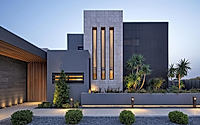
Material choices strengthen the architectural diagram, lending each zone a distinct but related character. Outside, textured plaster and natural stone form the base layer, while the primary facades of living, kitchen, and stair volumes carry honed and unfilled light-toned crosscut travertine sourced from Denizli. These travertine panels, cut to custom sizes, pair with bush-hammered basalt to bring subtle relief and shadow to the exterior, especially around the main living areas. The interplay of smoother travertine and more rugged basalt creates a quiet rhythm as light moves across the walls.
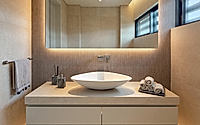
Inside, light-toned parquet and continuous beige ceramic tiles maintain a pale, even surface underfoot, supporting the summer program without visual clutter. A specially chosen gray marble frames the fireplace and lays across the entry floor, its cooler tone keying off the warmer travertine and tying the ground level together. The restrained palette allows the structure of the house—volumes, openings, and eaves—to carry most of the visual weight. In use, that restraint leaves room for changing furniture, textiles, and seasonal life without fighting against the envelope.
As day fades, stone, concrete, and water pick up the last light along their edges, tracing the circulation from terrace to pool to garden seating. The composition of volumes, eaves, and materials keeps that daily cycle legible, from the sheltered kitchen terrace to the lower infinity edge. Casa Solis settles into its coastal plot through these built layers, letting material, proportion, and careful openings do the quiet work of framing the Aegean horizon.
Photography courtesy of BAD – BasakAkkoyunluDesign
Visit BAD – BasakAkkoyunluDesign