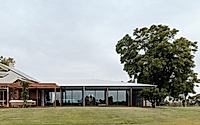
House in the Vines by James Allen Architect
House in the Vines stands on a gentle ridge in Renmark, Australia, looking out across orderly rows of vines and the Riverland horizon. James Allen Architect extends the century-old house for a young family, replacing a dated rear wing with new rooms that keep the original stone walls and rural trees at the center of daily life.


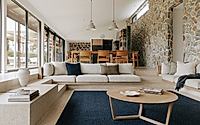
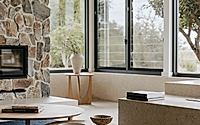
Morning light slides in along the ridge, catching the stone walls and low terrazzo steps before spilling toward the vines beyond the glass. Inside, the new living room stays low and calm, a sunken conversation pit wrapped by built-in platforms that hold books, ceramics, and the day’s scattered toys.
This is a house with history, once tied to the Ministry of Irrigation and the orchards of South Australia’s Riverland. James Allen Architect keeps that story close while reworking the property as a contemporary family house, replacing a 1970s add-on with carefully positioned additions. The project turns on adaptation: preserving original fabric, protecting mature trees, and shaping easy movement for parents and three young daughters.
Reworking The Ridge House
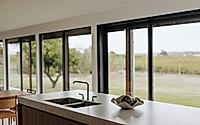
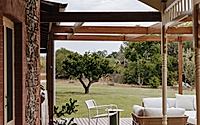
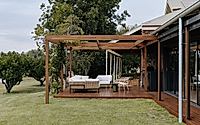
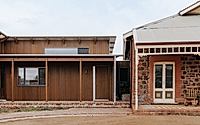
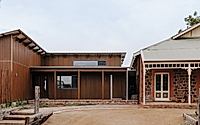
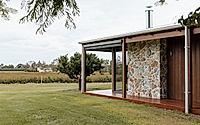
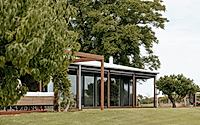
The new wing sits slightly rotated from the 1904 plan, a quiet shift that keeps a jacaranda, orange tree, and established wisteria vine intact. From the lawn, the composition reads clearly, with the taller heritage volume stepping down to a long, low roofline of the addition that tracks the ridge and vineyard view. Full-height glazing opens the kitchen, dining, and living rooms to the landscape, while the original stone house holds more enclosed rooms for retreat.
Stone Walls As Anchor
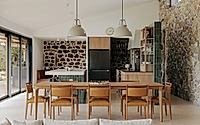
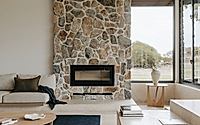
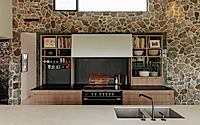
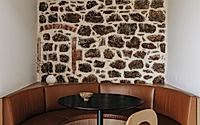
Across the new interiors, stone does the structural and atmospheric work. Random rubble walls run through the open-plan kitchen and dining area, catching shadows from high clerestory windows and grounding the long volume. A stone fireplace mass brackets one end of the living room, its heft balanced by pale walls, low sofas, and a deep navy rug that defines the sunken level.
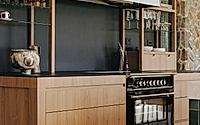
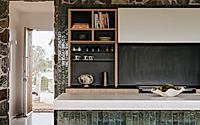
Terrazzo or honed concrete flooring ties old and new together, stepping down to form the lounge platforms and rising again toward the kitchen island. That island stands on a base of glossy green tiles, their irregular surface giving a subtle texture under changing light from the adjacent sliding doors. Timber cabinetry and shelving sit against stone, with open cubbies for cookbooks and crockery turning the working kitchen wall into an everyday display.
Family Rooms In Sequence
Inside the addition, rooms unfold in a simple, legible sequence that suits the family’s routines. The dining table sits between kitchen and lounge, long enough for homework, board games, and shared meals, always with a view down the vines. Beyond the glass, a timber deck and pergola extend the living zone outside, the structure light enough that the ridge line and trees stay visually dominant.
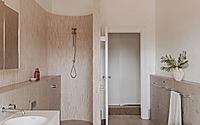
The main bedroom and ensuite occupy the new wing as well, giving parents a direct connection to the garden while kids stay closer to the original rooms. In the bathroom, pale stone tiles, a freestanding tub, and twin basins keep the palette calm, with one curved shower wall softening the otherwise rectilinear plan. Light finishes and simple fittings respect the high ceilings inherited from the early house.
Old Rooms, New Texture
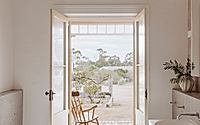
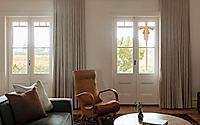
Back in the original portion, more traditional rooms retain their character yet tie into the updated palette. A sitting room holds an upholstered sofa, leather armchair, and patterned rug over timber boards, with tall French doors framing distant vines. Neutral curtains and a modest pendant keep attention on the generous proportions and the thickness of the old walls.
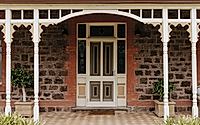
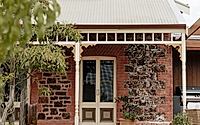
Outside, the original red brick and stone facade still greets visitors, its verandah trim and small porch steps speaking to the 1914 description of a comfortable house. The adjacent contemporary deck sits slightly apart, slender steel posts and timber framing acknowledging the past without mimicry. As the sun drops behind the vines, glow from the long glass elevation marks how this rural house has been re-tuned for another century of everyday family life.
Photography by Christopher Morrison
Visit James Allen Architect