Masseria San Lorenzo Brings Light to a 19th-century Stone Masseria
Masseria San Lorenzo is a recovery project in Ostuni, Italy, by Flore & Venezia. The 19th-century complex returns to use with its stone rooms, vaults, and courtyards carefully brought back into a clear domestic order.
About Masseria San Lorenzo
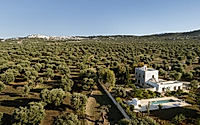
Masseria San Lorenzo returns to life among centuries-old olive trees in the countryside of Ostuni. Through a conservative restoration, the 19th-century complex recovers its unity and regains a clear domestic purpose.
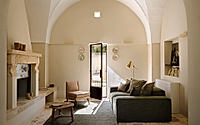
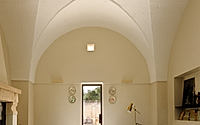
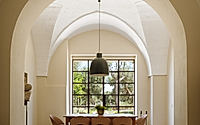
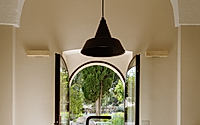
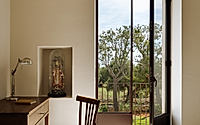
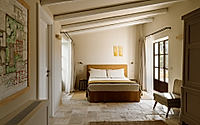
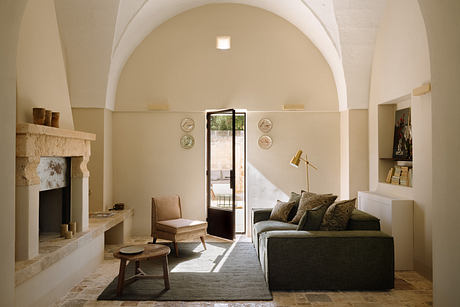
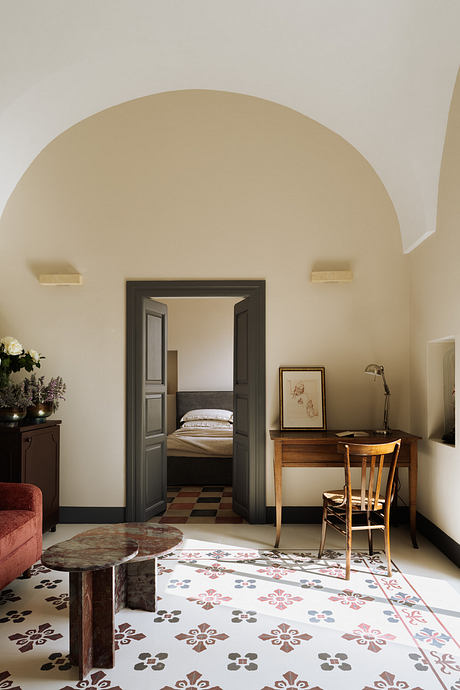
The main building once spreads across two levels and is joined by rooms that formerly serve as storage. Local stone defines the structure, from load-bearing walls to cross-vaulted ceilings and textured surfaces that register the passage of time. At ground level, the original chianche reappear, while upstairs the period cementine are recovered and placed back in use.
The first major gesture is the integration of the main building with the adjacent rooms through a measured extension. That move restores coherence to the plan without erasing the original layout, and it gives the interiors a calmer sequence from one area to the next.
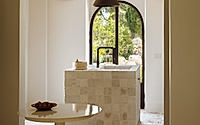
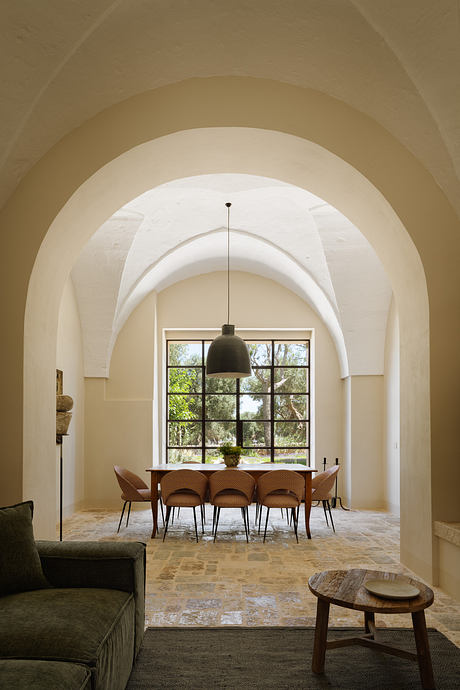
On the ground floor, the living area opens through a large glass wall that draws daylight across the historic materials and frames the surrounding landscape. The living room and dining room feel generous and airy beneath the stone vaults, while the kitchen, arranged across two adjoining rooms, keeps a domestic, rural character through its compact proportions and natural materials.
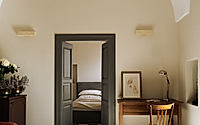
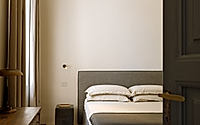
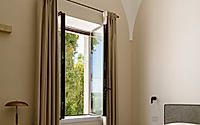
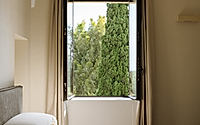
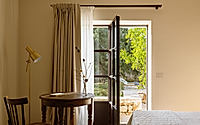
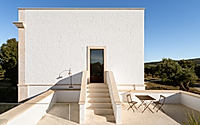
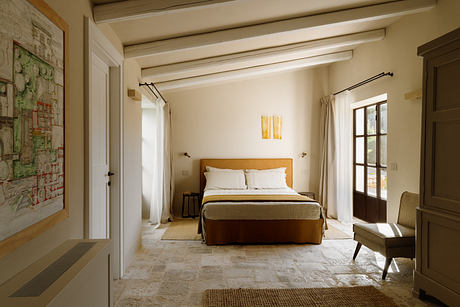
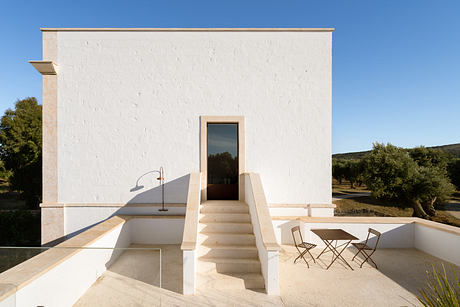
Also on this level, two independent bedrooms with private bathrooms open directly to the garden. Upstairs, an original stone staircase leads to a bright central sitting room and two more en-suite bedrooms. The master bedroom connects to a panoramic terrace with a small hydromassage pool, creating a private place for rest above the courtyard and the trees.
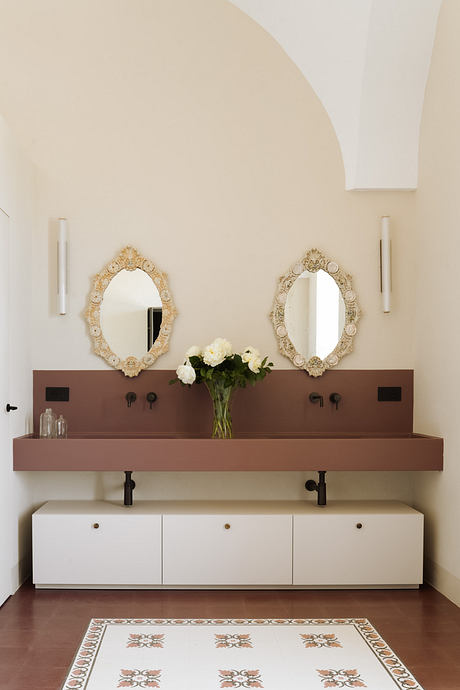
In the first-floor living area, new floral-patterned cement tiles enter into dialogue with the historic flooring in the bedrooms. That exchange ties old and new together without forcing a break in the house’s atmosphere. The result is a careful balance of memory, use, and quiet renewal.
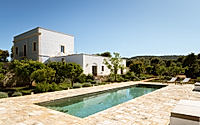
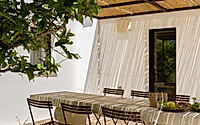
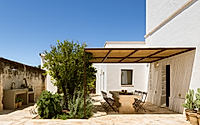
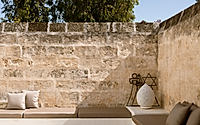
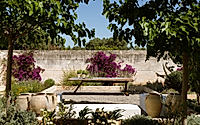
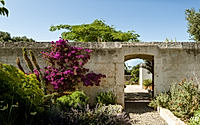
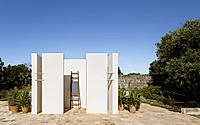
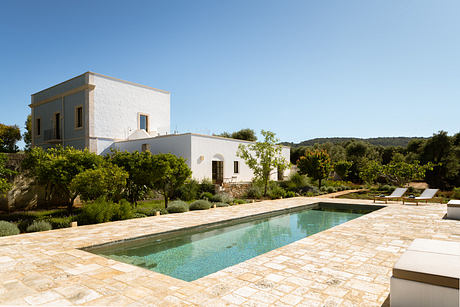
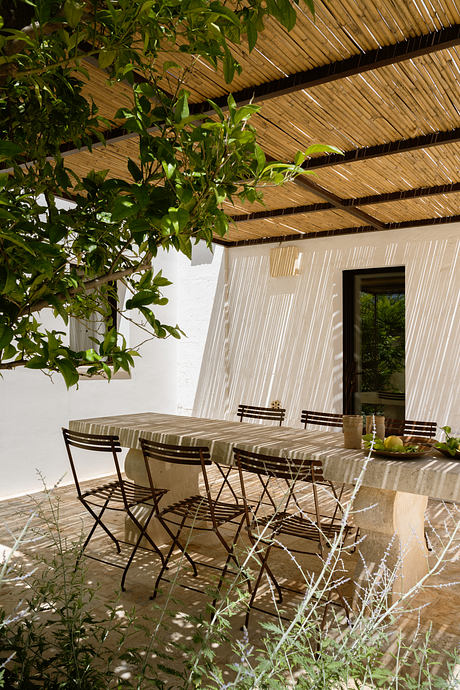
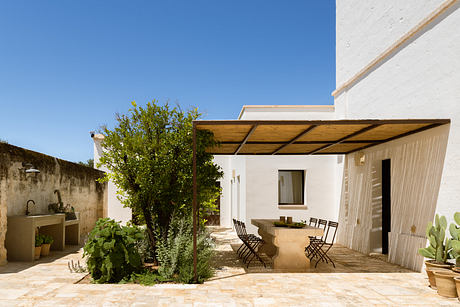
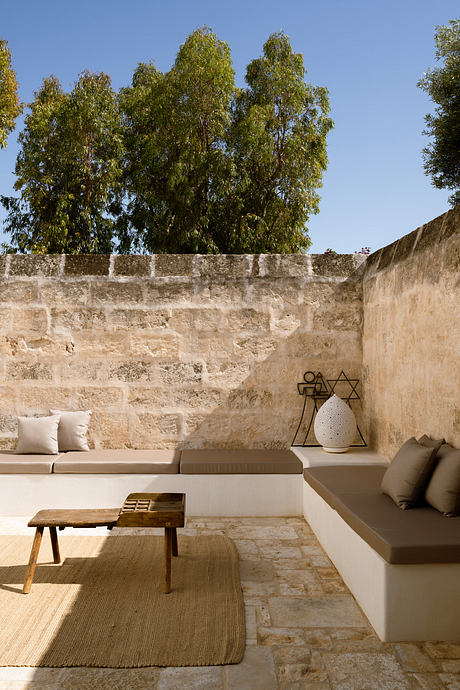
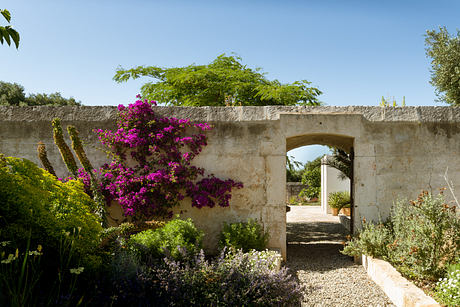
The outdoor areas follow the same measured approach. Two courtyards, one facing the main façade and one set farther back, offer different settings for gathering and pause; the front courtyard uses built-in seating and a river-stone floor edged with blocks of ancient tufo, while the rear court becomes a green room with a citrus grove, dappled shade, and a large stone table. In the larger garden, a swimming pool sits among monumental olive trees, with sunbathing areas and outdoor showers integrated into the landscape.
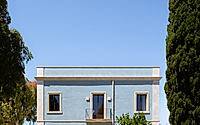
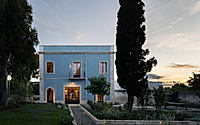
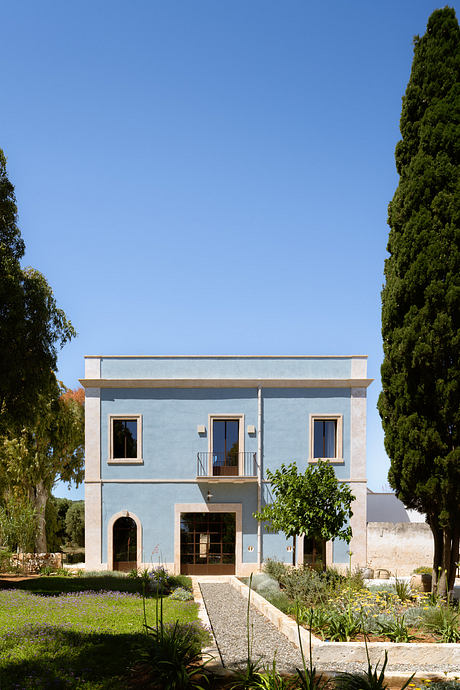
Attention to the main façade completes the project. A stratigraphic study reveals traces of a soft sky-blue pigment in the original plaster, and that color returns as a identifying tone. Masseria San Lorenzo now reads as a residence where comfort and memory remain closely linked, and where restoration works through restraint rather than erasure.
Photography by Carlo Oriente
Visit Flore & Venezia