Clos de la Vila by Ramón Esteve Estudio
Clos de la Vila is a house in Valencia, Spain, by Ramón Esteve Estudio. Set on a hill above a rural town, the project reinterprets the local gable-roof house through offset volumes, a central patio, and a restrained palette that ties the building to its site.
About Clos de la Vila
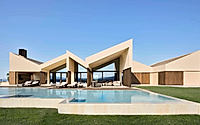
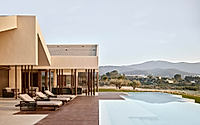
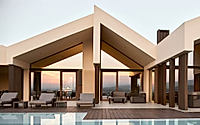
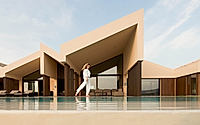
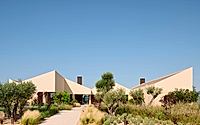
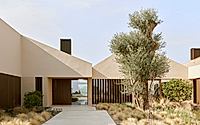
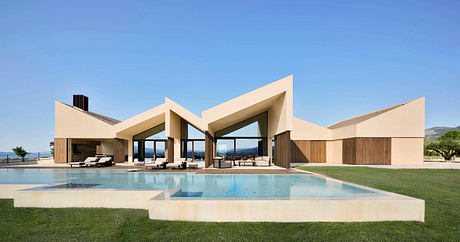
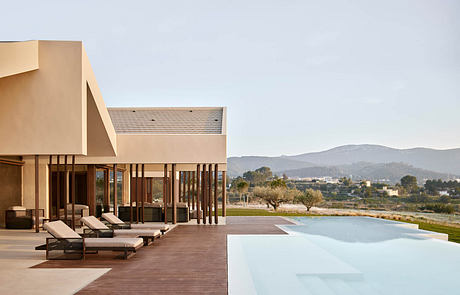
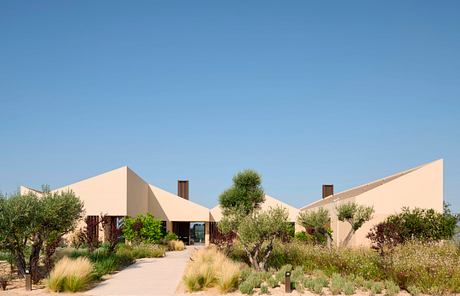
Located on a hill above a rural town in Valencia, Clos de la Vila reinterprets the local gable-roof house through a contemporary architectural language. Rather than copying the vernacular model, the house breaks into adjoining volumes, each topped with a mono-pitched roof. Their alternating directions give the building a more dynamic profile while keeping the whole composition coherent.
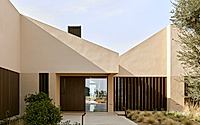
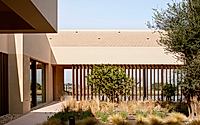
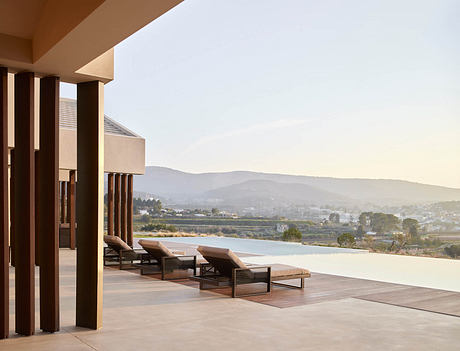
The plan grows from those offsets. Small gaps open where the volumes meet, making room for entrances, terraces, and porches, while roof overhangs provide shade and shelter. A U-shaped arrangement turns the house inward around a central patio, which organizes the program and pulls daylight deep into the interior.
Material continuity gives the project its calm. A stucco plinth, tinted to match the local soil, rises from the ground and frames the openings for doors and windows. Above it, lighter rough stucco covers the walls, and the roof is finished in matching tiles, creating a restrained palette that feels rooted in place.
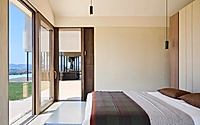
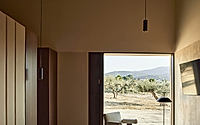
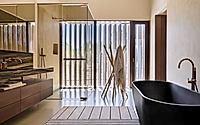
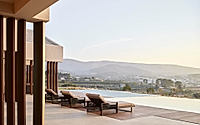
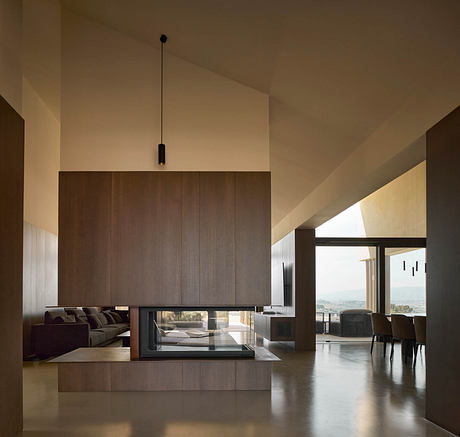
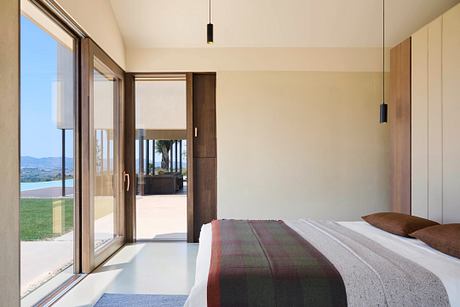
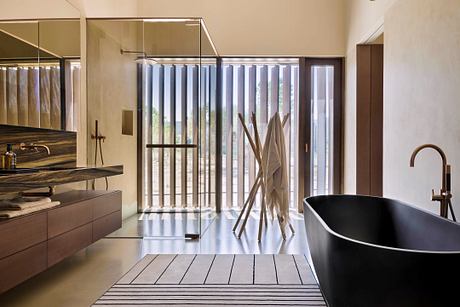
Inside, the same flooring runs through the house and continues outdoors, softening the boundary between enclosed rooms and open-air living areas. That continuity extends to the pool zone, where wooden platforms trace the water’s edge and bring a more intimate scale to the setting.
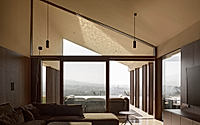
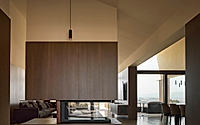
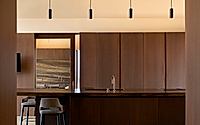
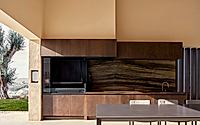
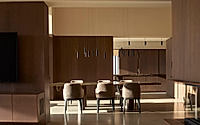
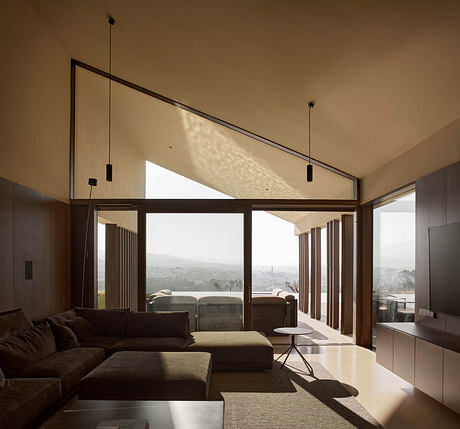
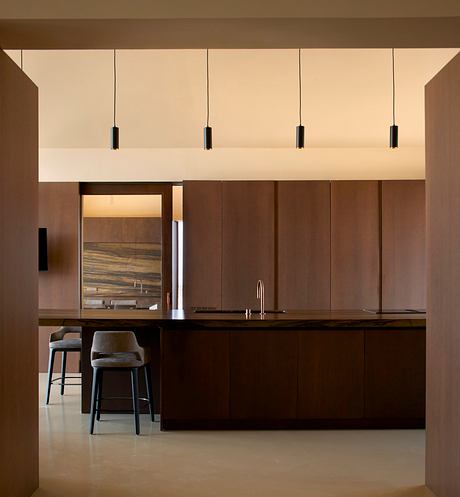
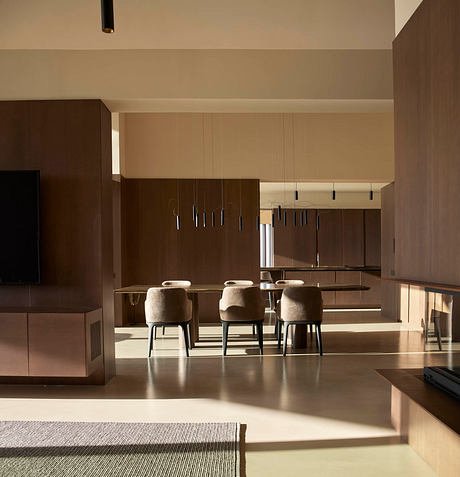
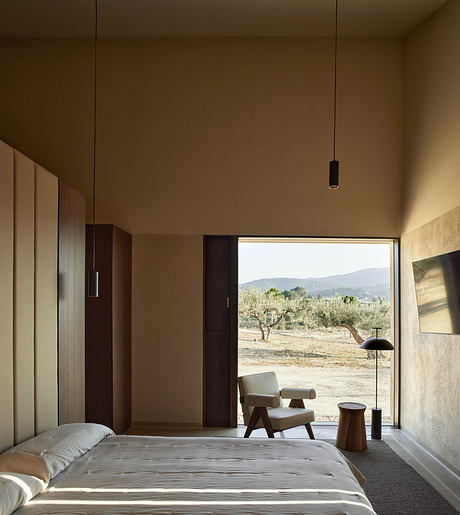
The house is organized on a single level, divided by the central entrance into two clear zones. To one side, the day area brings together the living room, dining room, kitchen, and outdoor barbecue area in an open sequence that stays connected to the terraces and garden. To the other, the night area is more private, with three bedrooms, each with its own bathroom and dressing room, plus a main suite and laundry room.
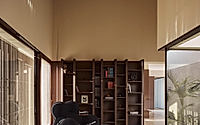
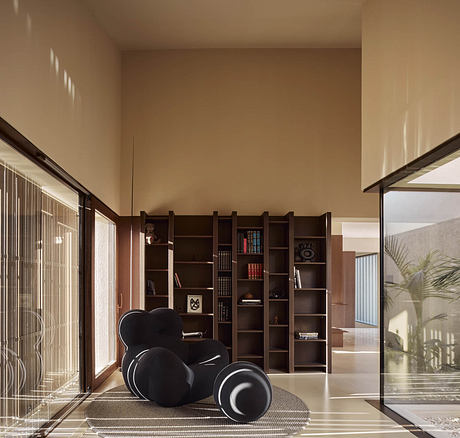
Wood adds warmth throughout. It appears in the exterior doors and window frames, as well as in much of the built-in furniture and interior detailing, softening the mineral character of the stucco and tile. The result is a house that feels both rustic and contemporary, with the landscape always in view. A Valencian garden extends outward around the building, while citrus trees at the entrance and carob, cypress, and hackberry trees beyond reinforce the site’s regional character.
Photography by Mariela Apollonio
Visit Ramón Esteve Estudio