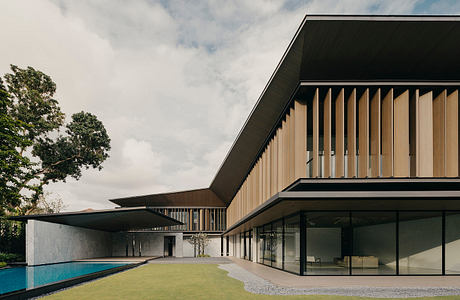
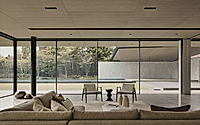
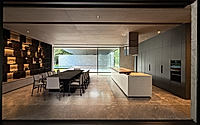
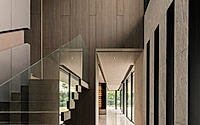
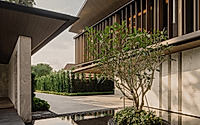
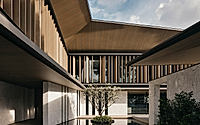
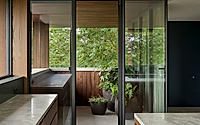
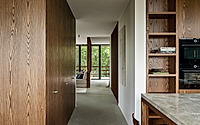
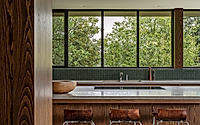
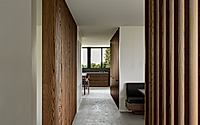
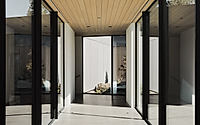
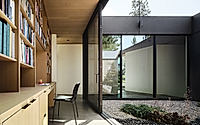
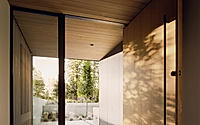
Plumeria Courtyard House unfolds as a new private house in Singapore by K2LD Architects, organized around a remembered grove of plumeria trees. The courtyard at its center anchors a long, screened driveway and an L-shaped composition that protects family life from close neighbors while keeping the beloved garden in view. Angular roofs, operable louvers, and calm interior finishes tie this daily sequence of approach, arrival, and retreat into one coherent experience.
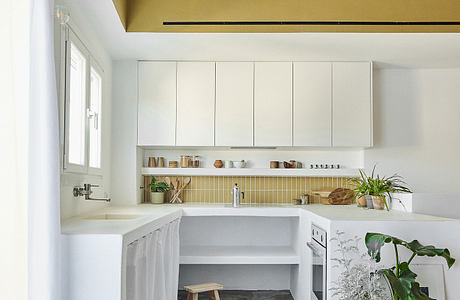
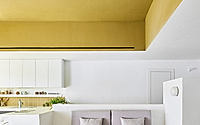
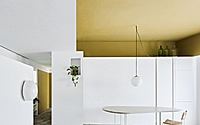
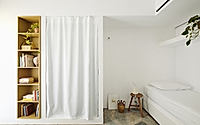
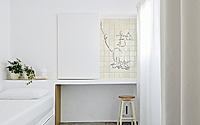
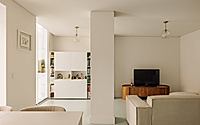
Patrico condenses the idea of a family home into a compact apartment on Paros, Greece, envisioned by DA.CH. Within white walls and an amber-toned dome, the project turns a simple plan into a layered sequence of rooms that feel both sheltered and open. Mineral floors, built-in benches, and low, glowing light shape an interior that treats domestic life as its central subject rather than an afterthought.
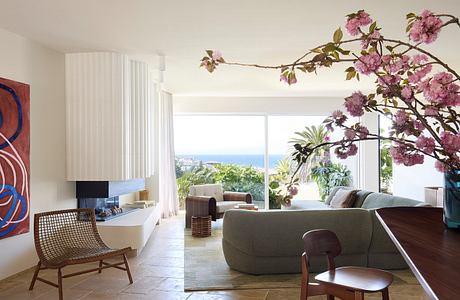
Emerald Sound sits above a quiet bay in Sydney, Australia, where Luigi Rosselli Architects rework a 1970s house into a coastal retreat shaped by glass and light. The renovation leans into the site’s subtropical character, pairing a recycled structure with vivid emerald tones, intricate louvres, and a courtyard garden that draws the landscape inside. Interiors by Atelier Alwill and the clients sharpen this palette, tying house and water together in one clear narrative.
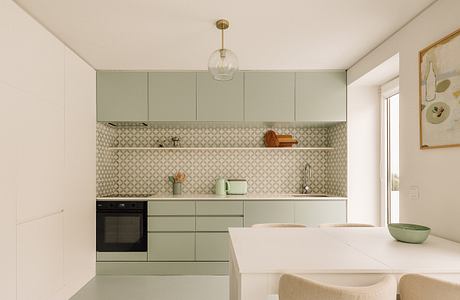
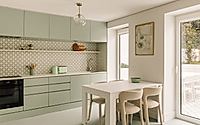
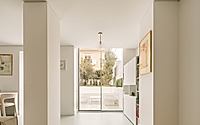
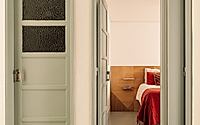
Caxias PR reimagines a compact ground-floor apartment in Portugal through a precise intervention by João Tiago Aguiar. The 1970s T2 unit, once hemmed in by a poorly placed bathroom and underused rear yard, now orients daily life toward a generous, sunlit logradouro. In 2025, this renovation uses color, material, and a clearer plan to bind interior rooms to the reworked outdoor terrace.
Sint-Anna transforms a once-blocky 1970s house in Kortrijk, Belgium, into an elevated retreat by Decancq-Vercruysse Architects. The project inverts the traditional layout, lifting everyday living to the first floor and surrounding it with terraces and trees. What began as an under-budget duplex becomes a calm suburban home, tuned to garden light, shifting seasons, and a quieter pace of life.
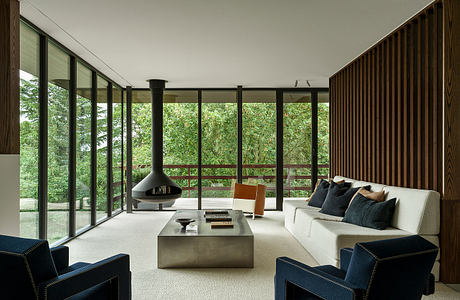
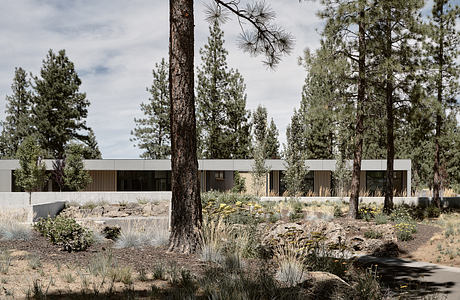
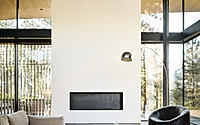
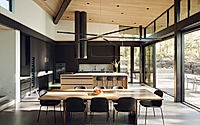
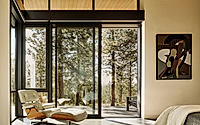
Bend Hideaway sets a crisp modern house against the wooded edge of Bend, OR, United States, by San Francisco–based Feldman Architecture. The retreat supports recent empty nesters and their visiting family with a linear plan that folds around a lap pool, guest rooms, and shared rooms tuned to forest views. Here, an active daily rhythm meets a quiet, highly edited relationship to the 650-acre preserve next door.
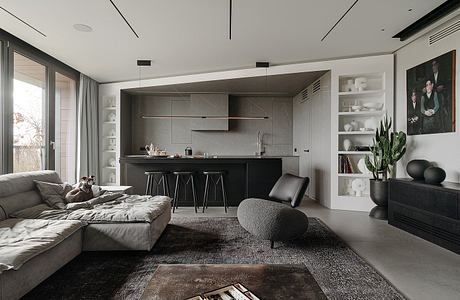
B01 unfolds across a full-floor apartment in Bydgoszcz, Poland, shaped by CXA into a raw yet refined penthouse that reads like a private gallery. Concrete, a black central volume, and curated artworks structure daily life, while concealed systems keep the rooms visually calm. Each area—from the living room library to the child’s mezzanine—extends the same disciplined aesthetic into a rich, highly personal home.
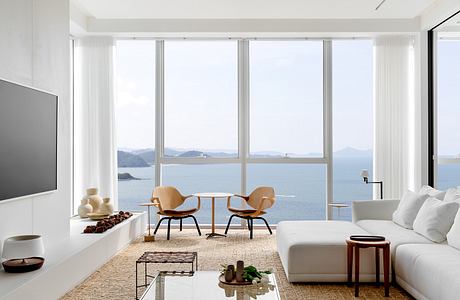
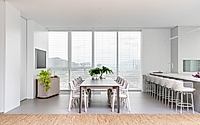
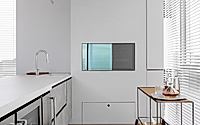
Penthouse with 360° Ocean Views crowns a residential tower in Brazil, where architect Simara Melo shapes an expansive vacation apartment for a young entrepreneurial family. Panoramic Atlantic and city views wrap the single-level layout, which separates social and private zones while holding a pool, gourmet area, and covered terrace. Neutral materials, custom furnishings, and integrated technology keep the rooms bright, practical, and calm for holidays that easily slide into everyday living with three children.