Vista Ostuni Reimagines a Tobacco Factory Into a Coastal Hotel Retreat
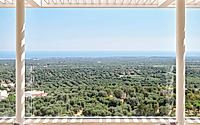
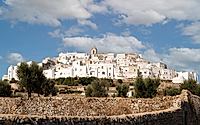
Vista Ostuni is a hotel in Ostuni, Italy, designed by RMA | Roberto Murgia Architetto. Set in the former Manifattura Tabacchi, the project turns a layered civic and monastic past into contemporary hospitality. The conversion restores the building’s generous volumes and stone fabric while aligning with five-star standards and local craft. It reads as both an urban re-opening and a coastal retreat, binding the White City to the plain of olive trees and the sea beyond.
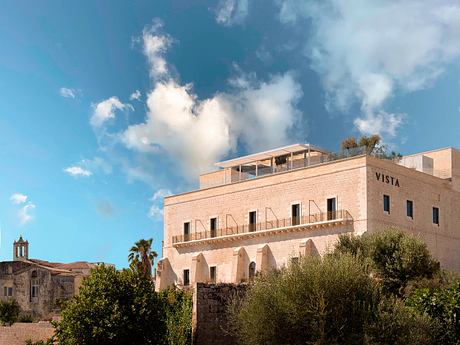
Morning slides across pale stone as the doors swing open after decades of silence. Salt air drifts in from the sea and lays a soft edge on the old factory’s masonry.
This is a hotel made through transformation, not erasure. Vista Ostuni in southern Italy brings an ex–Manifattura Tabacchi back to civic life, guided by RMA | Roberto Murgia Architetto, with a methodology that retains character, repairs fabric, and adds comfort where the old envelope allows.
Unseal The Past
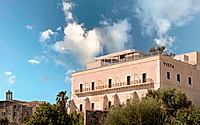
The project starts with reopening: courtyards cleared, thresholds repaired, windows trained again on the White City and the vast plain of olives. Doors that once held labor and charity now admit travelers, and the change in use turns memory into a welcome ritual. History runs long here, from Dominican and Minimi convents to civic care and postwar industry, yet the architecture stays legible and unforced.
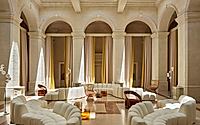
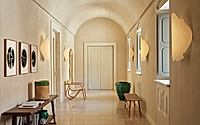
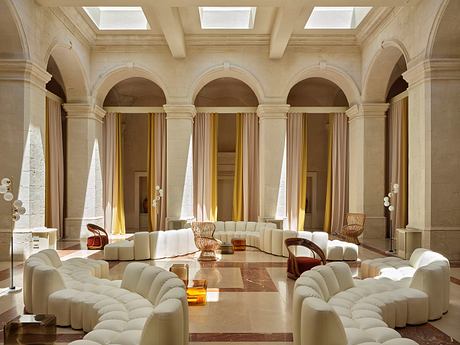
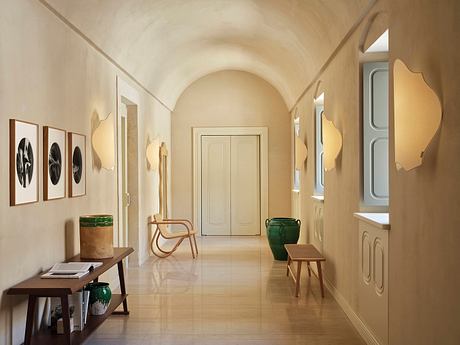
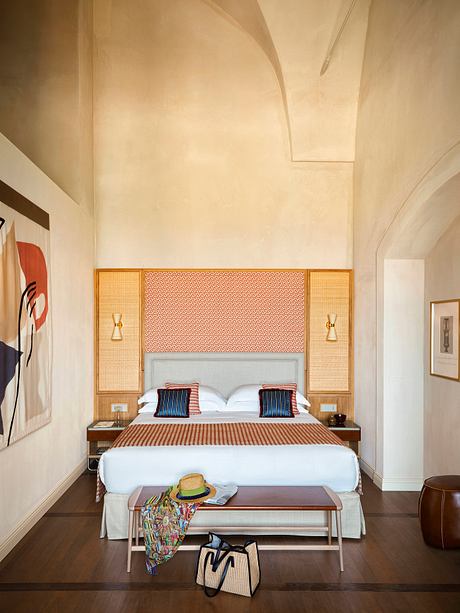
Arches carry the narrative. Stone vaults and half-arched ceilings—local tipologia known as volta “a schifo”—span floors and corridors with workmanlike grace. Load paths remain intact, the cadence of the bays sets the plan, and the new program threads through the given geometry without blunting it.
Repair With Craft
Restoration leans on local hands. Stonecutters recarve cornices and replace weathered portions of the facade, reading the tooling marks and resetting the joints with humility. Blacksmiths cast new pieces for historic parapets, their molds lifted from surviving ironwork to keep the line and weight true.
Materials come from nearby quarries and workshops. Floors and terraces walk in stone and marble—Trani and breccia Sant’Antonio laid by specialists—while glazed cotto and handwoven rugs add warmth underfoot. Timber, jute, and iron round out a palette that bears the region’s climate and color without theatrics.
Light As Structure
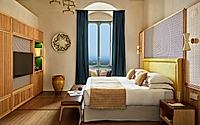
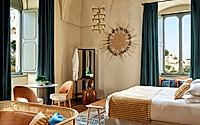
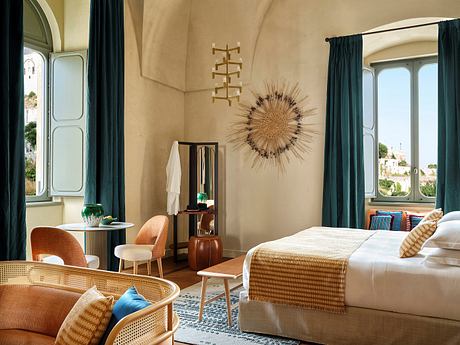
Big windows return to their job, cutting long shafts of daylight that track across thick walls and deep reveals. Rooms hold the light, then release it toward city and sea, and the effect is both practical and calm. In several openings, built-in cocoon seats nest into wall niches nearly two meters deep, turning thickness into a place to pause.
Scale does the rest. Five levels—many with arched soffits, some hybrid half-floor transitions—preserve generous height and cross-ventilation, while new mechanical systems tuck out of sight. The envelope keeps its solidity, and comfort rises to five-star expectations without blurring the building’s bones.
Rooms For Living
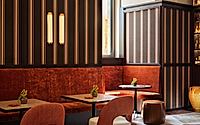
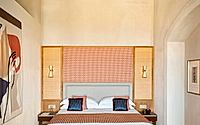
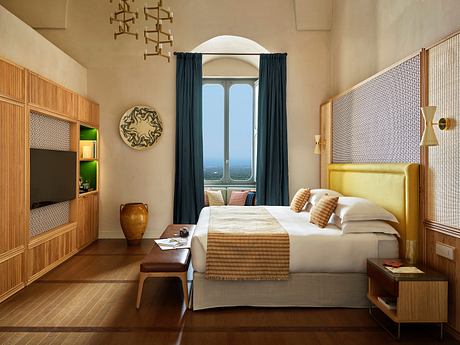
There are 28 rooms, 19 of them suites, arranged to pick up views toward sea, garden, or the White City. Volume sets the tone: tall ceilings, long spans, and wide sills support quiet routines, and each room carries a restrained assembly of stone, wood, ceramic, and woven fibers.
Bathrooms read as rooms, not appendages. Italian marbles and refined fixtures anchor generous layouts, and storage arrives as fitted joinery—wardrobes with seat, mirror, hanging rail, and shelves—so daily life lands without clutter. Night zones gain a valet stand with shoe shelf and tray; small, useful gestures stack up to comfort.
Eat, Pause, Return
Three venues map the day. Bianca Bistrot keeps a light, quick rhythm from breakfast through late bites, threading freshness and a wide vegetarian lane into a simple kitchen. Dinner folds into Berton al Vista, where a starred hand meets Apulian produce and rewrites house signatures—brodo, acqua e sale on frisella, and seasonal orecchiette with cime di rapa—without losing restraint.
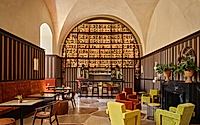
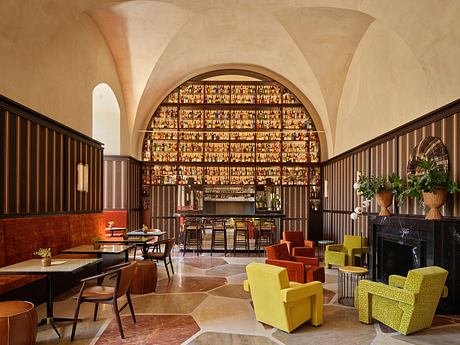
Between the two sits Chiostro Bar. High arches, a wall of bottles, a working fireplace, and framed glimpses of the city create a slow interior, and the all-day menu supports unhurried hours.
Rooftop Horizons
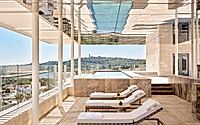
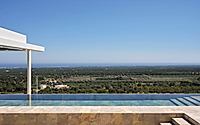
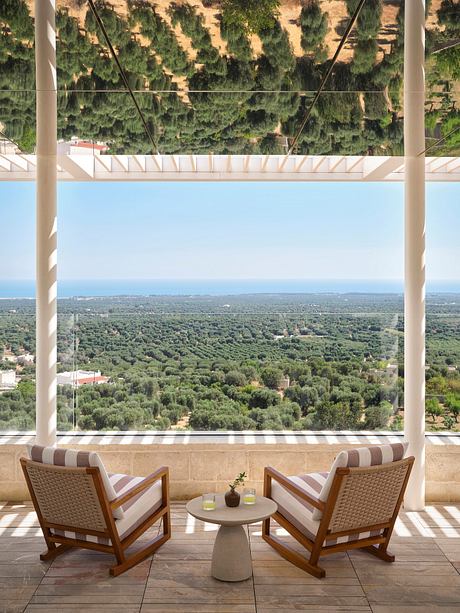
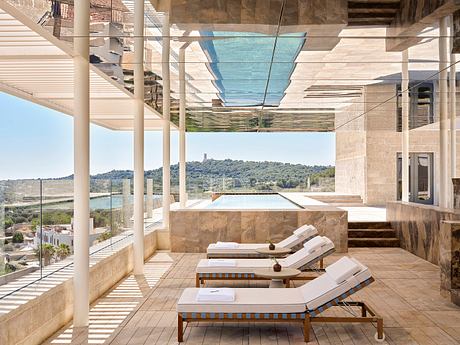
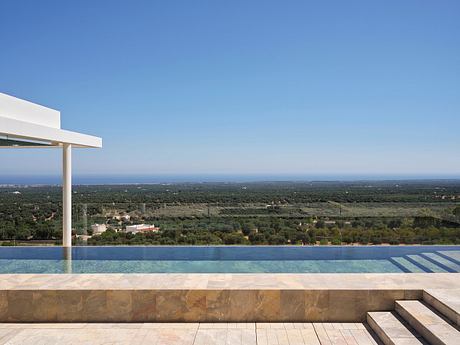
Up top, the building meets the sky. A planted roof garden—cicas, olives, carob, pomegranate, and aromatic herbs—wraps an Infinity Bar and a heated infinity pool, drawing a continuous edge between water, city, and sea. The terrace shifts with the clock: shade and rest at noon, swim and drift at dusk, drinks under moonlight without hurry.
Water returns at different scales. A covered spa pool with hydromassage takes winter months, and outdoors a near 20-meter heated basin runs along old chianche paving and a crisp bicolor checkerboard, with cabanas and loungers set for quiet.
Wellness In Stone
The spa spans 350 square meters in vaulted rooms lined with pale stone and Bisazza mosaic. Single and double treatment cabins support long sessions, and a dedicated beauty room adds salon care so guests can move from pool to dinner without leaving the sequence.
A compact, fully equipped gym brings Technogym machines into the fold. Sauna, relaxation lounge, and the warm pool round out the circuit, and the material envelope keeps sound and light steady.
Garden As Room
Landscape covers three hectares and treats the Mediterranean as protagonist, with design by an international landscape architect who reads the site as a translucent garden. Paths weave through native shrubs and perennials so edges blur, and scents mark wayfinding as much as sightlines.
At entry, elders—olives, carob, palms, and citrus—gather around a fountain that nods to the Italian garden. Elsewhere, dry-stone walls and sinuous benches shape pockets of quiet, and the maquis holds the core with holm oak, mastic, myrtle, heather, and cork oak.
Performance And Stewardship
Sustainability sits in the brief, not as garnish. The conversion aims for LEED certification, pairing the embodied value of reuse with energy efficiency, water savings, and biodiversity through green roofs and habitat repair. Mobility shifts as well, with bicycle parking and electric charging bays supporting lower-impact arrival.
Systems tuck into the old frame. New envelopes respect the stone’s thermal mass, while light design and acoustics calibrate comfort without gloss. The result is measured, and the building’s longevity gains momentum.
By day’s end, shadows tuck into the vaults and the facade warms to amber. Guests lean into a niche, watch the White City cool, and hear the sea’s low rumor.
The building holds both past and present with a steady hand. It welcomes people in again, and the town reads the open doors as a promise kept.
Photography by Davide Lovatti
Visit RMA | Roberto Murgia Architetto