Carcassonne by FMD Architects
Carcassonne reshapes a heritage-listed house in Melbourne’s leafy south-east into a family home by FMD Architects. The project relocates daily life to a stepped, north-facing addition and reopens the original fabric to light and garden views. Across the lot, rooms now connect with both a public front garden and a private rear yard and pool, drawing a clear line between arrival, shared living, and quiet retreat.


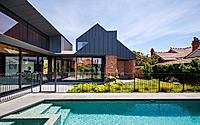
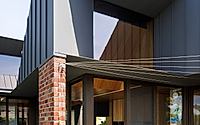
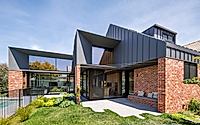
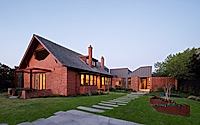
Late afternoon rakes across salvaged red brick and prefabricated metal, catching the ridges of an articulated roof. From the street, a solid profile guards a bright interior and a reoriented family life.
This is a house, carefully reorganized in Melbourne’s south-east by FMD Architects, that hinges on sequence and connection. A new stepped addition shifts kitchen, dining, and living to the north, while revived rooms in the original fabric pick up retreat, study, and sleep. The plan choreographs movement from walled threshold to garden rooms.
Enter Through Carcassonne
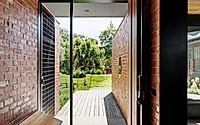
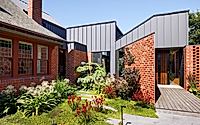
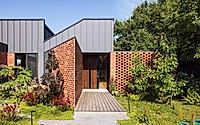
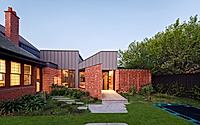
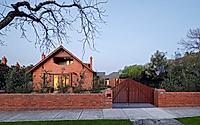
Arrival begins at a splayed brick wall and a timber plank drawbridge, a purposeful gateway that tempers exposure to the busy street. The angled passage compresses and then releases, with solid brickwork sailing indoors to frame a view to the light-filled volume beyond. A hit-and-miss brick screen extends south to conceal a generous bike store, setting an everyday rhythm right at the door. Privacy reads as intent, not retreat.
Stagger Rooms North
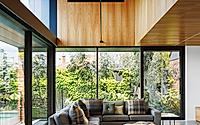
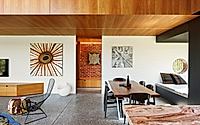
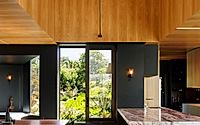
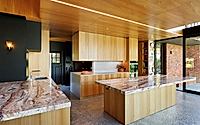
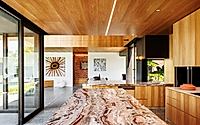
Along the northern boundary, a stepped sequence houses cooking, eating, and sitting—each bay catching sun and passing it along. The interlocking roof forms lift sections of the Tasmanian oak–lined ceiling, where ribbon windows pull in high light and direct views. A honed concrete slab grounds the rooms and stabilizes daily temperature, while deep eaves and smaller operable openings set up cross ventilation. It all reads as one continuous day, moving from breakfast to evening.
Link Front and Rear
Openings are placed to connect both gardens, not just the backyard and pool. From the dining table, sightlines run through to the public-facing front garden, enabling passive surveillance of the whole site. A triangulated daybed tucks into the dining zone, encouraging picnics, reading, and kids’ sleepovers in the middle of the plan. The addition’s robust skin—salvaged red brick paired with crisp metal—keeps that street presence secure while the interior stays transparent to greenery.
Reclaim the Old Rooms
Demolition of a post-war flat uncovered original openings that restore light to the historic wing. Here, a kids’ retreat, a study, and the main bedroom suite sit closer to quiet, with a small porch set to be wrapped in trellised greenery. High-performance glazing and careful shading keep these rooms calm, while short corridors link back to the active heart. Old and new trade glances without confusion.
Family Zones Above
Within the existing roof line, kids’ bedrooms and a play area occupy the upper level. The western room opens to an original balcony lined with timber shingles, a tactile pause above the street. Across the way, the eastern bedroom sits over the extension with a window seat that looks to pool and backyard, giving each child a distinct vantage. Up here, orientation teaches its own map of the house.
Evening returns to the brick threshold, warm air moving through small openings as shadows settle on oak veneer. The plan stays legible—entry, gathering, retreat—while gardens on both edges keep daily life in view.
Photography by Dianna Snape
Visit FMD Architects