House on a Hill: Vertical Living
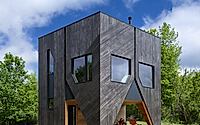
House on a Hill lands in Hillsdale, United States, from FORMA as a measured, modern house shaped by pandemic-era realities and hard-won pragmatism. Sited on a mostly wooded 9-acre lot two hours north of New York City, the project channels constraints into a clear plan: lift the main living rooms for light and long views, tighten the footprint, and keep construction disciplined without losing warmth.


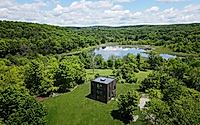
A gravel drive slips through trees and then the hill opens to sky. From that rise, the house lifts its main rooms toward light and a horizon of Hudson Valley green.
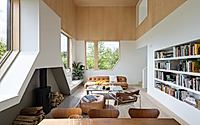
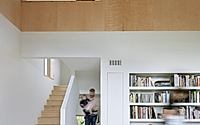
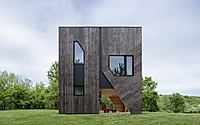
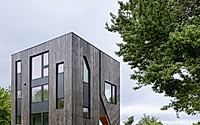
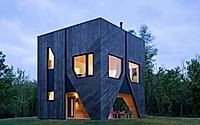
This is a three-bedroom, three-bath house in Hillsdale by FORMA, arranged around a vertical plan that puts the double-height living and dining on the second floor. The move concentrates the footprint to 700 square feet and sets up a clear sequence: arrive low, climb, then look out.
Second-Floor Living
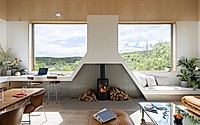
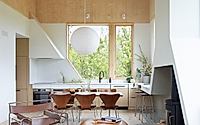
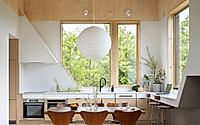
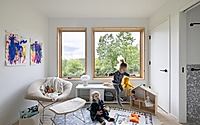
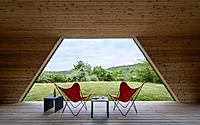
The primary gathering rooms sit one level up to catch daylight and frame long views across the valley. A tall volume stretches over the hill, turning routine mornings into a brief ascent and a broad outlook. Cooking and conversation happen under that height, while glazing sets a measured rhythm that edits the forest and distant fields.
Compact Footprint
A minimized foundation keeps disturbance small and costs in check. With just 700 square feet on the ground, the plan stacks rooms to make every stair count, then frees the perimeter above for light. Compression at entry makes the climb read larger, and the upper level lands like a belvedere over trees (the shift is felt in your shoulders).
Route and Rooms
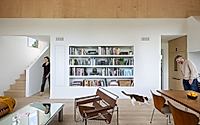
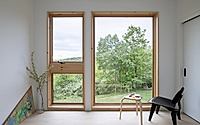
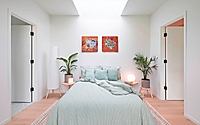
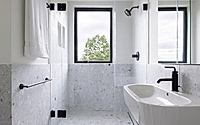
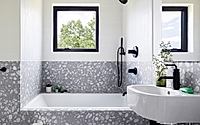
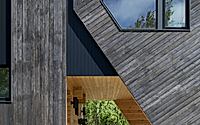
You arrive at a modest threshold, then move past bedrooms and baths tucked with purpose before turning up to the social heart. The stair becomes the reset between daily routines and open outlook, a hinge in the plan that organizes circulation and privacy. Windows place views where they matter—over the dining table, across the main volume, and out to a long horizon.
Constraints Into Form
Pandemic-era costs and labor shortages drove two years of redesign: two full schemes, two drawing sets, and conversations with thirty-five contractors. That pressure hardened the plan into a lean vertical stack, trading footprint for height and shifting the main room up where daylight reduces dependence on artificial lighting. The result holds value—less excavation, fewer foundations, more livable volume for the budget.
Hudson Valley Outlook
Set on a mostly wooded 9-acre parcel, the house uses elevation to clear the understory and pull in sky. Morning light rinses the upper room; evening shadows rake the hill and reset the mood. Quiet bedrooms hold to the lower level, leaving the crest to the social rooms and the view.
The day ends as it began: a brief climb, then a sweep of green and fading light. On this hill, a compact plan carries a wide horizon, and the lessons learned—budget, sequence, restraint—read as built wisdom.
Photography by Devon Banks
Visit FORMA