Les Récoltes: Parallel Lines Shape a Contemporary Working Farm Hub
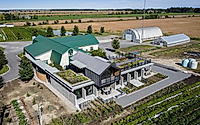
Les Récoltes sits on farmland in L’Assomption, Canada, where Thellend Fortin Architectes rethink a working farm as a precise, linear workplace. The expansion turns a utilitarian building into a hub for administration, commercial production, and rooftop cultivation, threading new geometry between existing barns. Inside and out, the project ties daily agricultural work to a clear structural rhythm that runs from soil to skyline.


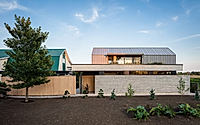
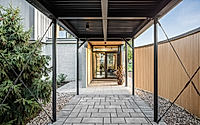
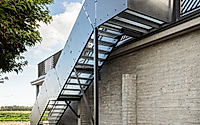
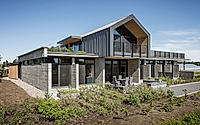
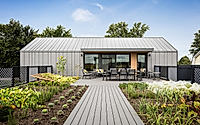
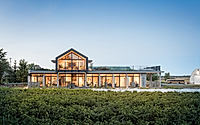
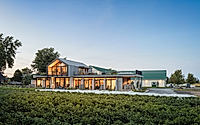
Concrete walls catch the daylight and hold long horizontal shadows. Above them, a gabled metal volume rises over the fields, tracing the line of the older barn roof.
This is a working farm first and an administrative hub second, yet Les Récoltes treats the two as one continuous structure. On cultivated land in L’Assomption, Thellend Fortin Architectes extend a multi-use farm building through a disciplined geometry of parallel lines, from board-formed foundations to the slender slats overhead. Structure sets the tone.
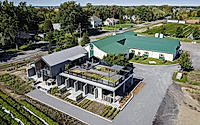
A growing agricultural operation needs a building that can grow with it. The project expands an existing farm building to house administrative rooms, multidisciplinary work areas, a commercial kitchen, and a green roof for crops. Every move, from the concrete plinth to the second-floor volume, follows a clear linear order that links the new work environment to the rhythms of the fields outside.
Recasting Farm Rooflines
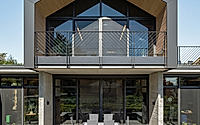
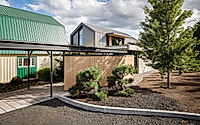
The farm’s original buildings rely on simple mansard metal roofs with standing seams. Les Récoltes takes that familiar outline and stretches it into a clean second-floor volume with a gabled roof aligned exactly to the existing ridge. That upper volume rests on a concrete support, its brushed zinc roof tying visually back to the sheet metal of the older barns. One silhouette meets another, and the farm reads as a single, continuous ensemble.
Drawing With Parallel Lines
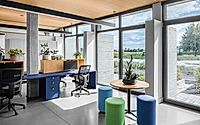
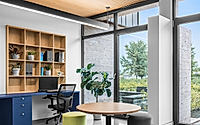
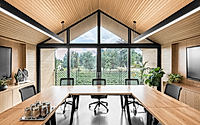
Inside, the expansion is organized around a series of parallel lines that govern both plan and section. Board-formed concrete walls mark these lines, acting as structural spine and built-in furniture for workstations and bookshelves. Above, wooden ceiling slats follow the same rhythm, interrupted at intervals by gypsum bands and aligned lighting. Each room inherits this underlying grid, so circulation, meeting zones, and quiet desks all read as part of one ordered system.
Concrete As Grounded Framework
At ground level, board-formed concrete digs visually into the soil, echoing the furrows cut by agricultural equipment. A sequence of perpendicular concrete walls carves out separate work areas for different teams, turning repetition into a legible pattern of rooms and corridors. The material gives the complex a sense of weight that matches the physical labour of the farm. Hemlock planks in the formwork leave their grain in the concrete, subtly recalling traditional timber farm structures while remaining unmistakably contemporary.
Linking Workrooms And Fields
Above the concrete base, a simple gabled volume with wide windows stretches between two rooftop vegetable gardens. From inside, staff look out toward cultivated beds on either side and then beyond to the larger fields. Administrative tasks, kitchen work, and crop research share this elevated bar, so daily routines remain visually tied to the land they support. The new construction mirrors the adjacent barn in form, closing the gap between agricultural production, planning, and shared meals.
As daylight moves across the site, the linear structure records each shift in long bands of shadow. From the furrow-like ground floor walls to the metal ridge overhead, Les Récoltes aligns building and field without sentiment. The result is a precise rural workplace where every wall, roof, and row follows the same calm, methodical rhythm as the harvest outside.
Photography by Charles Lanteigne
Visit Thellend Fortin Architectes