The Periphery by Locus.studio
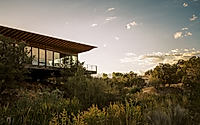
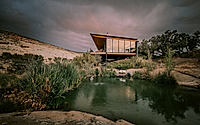
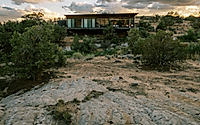
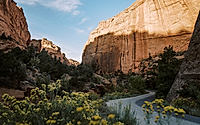
The Periphery rests on a high desert rise outside Boulder, UT, United States, where Locus.studio draws a measured line between refuge and exposure. This two-bedroom house unfolds above slickrock and wetlands, treating the vast Grand Staircase-Escalante boundary as both subject and partner. Sun, wind, and long views shape its concrete, steel, and oak shell, while a craft-led approach keeps the building tuned to the rhythms of its remote setting.


Wind scours the high desert plateau, brushing past juniper and pinyon before catching on a concrete edge that hovers above slickrock. Inside, oak, steel, and glass hold the horizon in a steady frame while thermal mass and deep glazing quietly temper the fierce swings of heat and cold.
This two-bedroom house in Boulder, Utah, by Locus.studio, works as both dwelling and precise instrument tuned to the high desert. The project sits at the edge of the Grand Staircase-Escalante National Monument and leans into material clarity, relying on concrete, oak, and steel to mediate between exposure and shelter. Passive strategies, robust mechanical systems, and a calibrated structural frame work together so daily life stays aligned with desert light and climate.
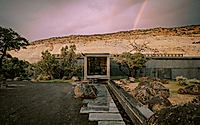
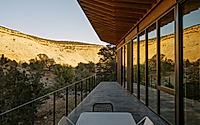
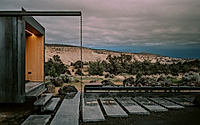
A cantilevered concrete deck lifts the home clear of delicate wetlands, fixing the building to geologic ground while allowing water and vegetation to continue below. At the heart of the plan, a 75-foot thermal mass wall runs long and low, absorbing heat by day and releasing it slowly as temperatures fall at 6,300 feet. That wall is not an abstract gesture; it is the primary environmental engine, backing up passive shading and operable glass to keep rooms stable through wide seasonal swings. Mass, elevation, and orientation perform the heavy work of comfort.
Concrete Deck And Wall
The concrete deck extends beyond the enclosed rooms, becoming both terrace and structural prow that projects occupants toward the open desert. Its cantilevered edge underlines the threshold where built form stops and raw slickrock resumes, a clear line that preserves fragile soil and plants. Alongside, the long thermal wall reads as a continuous spine, tying together living areas, circulation, and environmental control in one material stroke.
Timber And Steel Interior
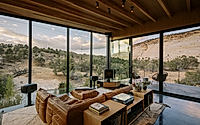
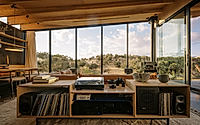
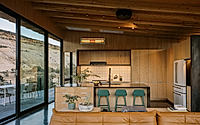
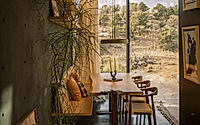
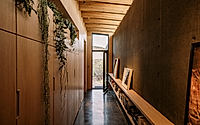
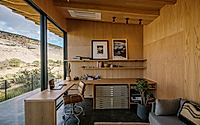
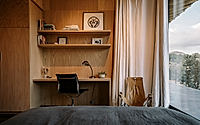
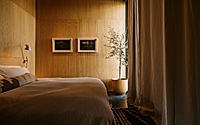
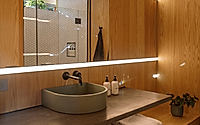
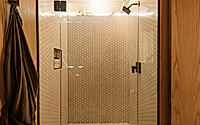
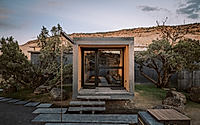
Inside, flush, full-height oak doors and casework set a calm, exact rhythm down the corridor and into the main rooms. Frameless clerestory windows cut close to the ceiling and bring in a band of sky, loosening the boundary between roof and landscape without visual clutter. Steel elements register as lean structure and trim, holding large panes of glass and built-in furnishings in crisp alignment. In contrast, the steam room wrapped in African mahogany compresses scale and warmth, giving one compact interior a markedly different tactile charge.
Crafted Systems For Comfort
Passive strategies set the baseline, from orientation and glazing to the thermal wall that blunts temperature swings between intense sun and cold desert nights. High-performance mechanical systems then refine that baseline, quietly managing air quality and energy use so equipment recedes behind the architectural experience. Generous openings pair with operable panels, encouraging natural ventilation and immediate access to breezes when conditions allow. Light remains the true subject, with long axial views and framed moments turning sun and shadow into daily markers of time.
Outdoor Rooms In Desert
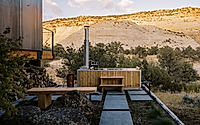
Beyond the compact footprint, the house extends into a sequence of outdoor rooms shaped by careful grading and structure. A sheltered courtyard gathers activity close to the building with a wood-fired hot tub set against concrete and timber, offering warmth as temperatures drop. Farther out, a natural swimming pond takes water from a perennial creek, tightening the relationship between domestic life and the broader watershed. A steel-framed workshop tucks into the terrain, giving the property an additional working arm without shouting in the open landscape.
Construction remains as considered as the finished form, with Locus.studio and a small group of craftspeople self-performing much of the building process. That hands-on approach keeps engineering, detailing, and finish work in constant conversation, from millwork joints to structural junctions out on the deck. In the end, concrete, steel, and wood sit lightly above the desert floor, framing silence, wind, and long views as everyday companions.
Photography courtesy of Locus.studio
Visit Locus.studio